
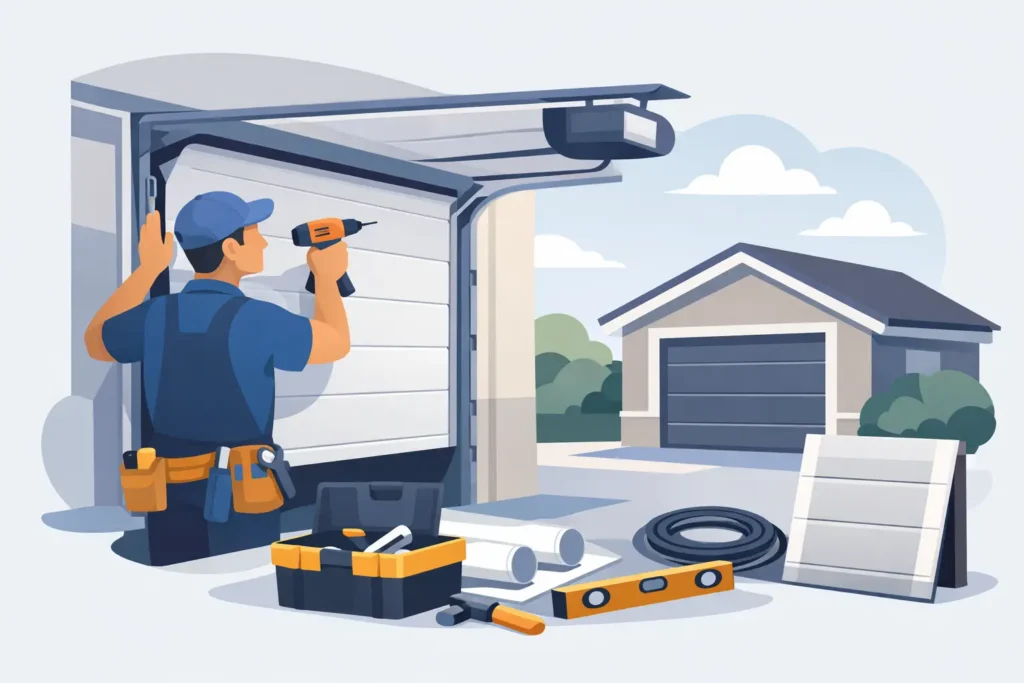
A new garage door changes more than the front of your home. It affects daily access, home security, energy loss from an attached garage, and the way your property looks from the street. A professional garage door installation is also a safety-critical job: the door is heavy, the springs are under extreme tension, and every part must work together correctly.
Whether your existing door is cracked, noisy, outdated, repeatedly breaking down, or simply no longer fits the look of your home, the right replacement begins with a clear plan. Here is what Greater Boston and Rhode Island homeowners should consider before installation day – and what dependable professional service should include.
Start With the Right Door for Your Home
The best garage door is not always the most expensive one. It is the door that fits your opening, daily use, climate, budget, and style preferences without creating avoidable maintenance problems later.
Material is one of the first decisions. Steel doors are a practical choice for many homes because they are durable, low-maintenance, and available in a wide range of colors, panel designs, and insulation levels. Carriage-house steel doors can provide a more traditional appearance without the upkeep often associated with real wood.
Wood doors offer character and curb appeal, particularly on historic or custom homes. They also require more maintenance in New England’s changing weather. Moisture, sun exposure, and temperature swings can affect the finish over time. Aluminum and glass doors create a cleaner, more modern look, but privacy, insulation, and exposure to dents should be considered before choosing them.
Insulation matters most when the garage is attached to the home, has living space above it, or serves as a workshop. A higher insulated door can help moderate temperature changes and reduce outside noise. If the garage is detached and used mainly for parking, a basic non-insulated door may be the more sensible investment. The goal is to pay for features that solve a real need, not features that sound impressive on paper.
Style, Windows, and Color Make a Big Difference
Your garage door can occupy a large portion of the front exterior. Panel style, window placement, decorative hardware, and color should complement the home rather than compete with it. Windows bring in natural light, but they should be placed with privacy and security in mind. Frosted or tinted options may make sense when the garage faces a busy street or sits close to a neighboring property.
A technician can help confirm which designs are available in the correct size and configuration for your opening. Established manufacturers such as CHI Overhead Doors, Amarr, Wayne Dalton, and Clopay offer different looks and construction options, so homeowners do not have to settle for a one-size-fits-all replacement.
Why Accurate Measurements Matter in Garage Door Installation
Garage doors are ordered and installed around exact dimensions. The opening width and height are only part of the measurement. The installer also needs to inspect the side room beside the opening, the headroom above it, the depth of the garage, ceiling obstructions, and the condition of the framing.
This site check catches issues that a quick online estimate cannot. A low ceiling, pipe, beam, storage rack, or uneven floor can affect the track configuration and hardware needed. If the wood jambs are soft, split, or out of square, addressing that before or during installation helps the new door operate properly.
For light-commercial properties, the evaluation should also account for traffic volume, vehicle clearance, and the type of operation needed. A door that works well for a residential driveway may not be the right system for a busy service bay, storage building, or small warehouse.
Choose an Opener That Matches the Door and Your Routine
A new door is the right time to evaluate the opener. An older opener may still run, but it may not have the power, safety features, or reliability needed for a heavier insulated door. Matching the opener to the door weight and expected use helps prevent unnecessary strain on the system.
Belt-drive openers are a popular option for attached garages because they operate quietly. Chain-drive units are durable and often cost less, making them a practical fit for detached garages or more demanding applications. The right choice depends on noise sensitivity, door weight, budget, and how often the door cycles each day.
Smart-opener features can add convenience by allowing homeowners to monitor and control the door from a phone. They are useful when you want to confirm the door is closed after leaving for work, let in a family member, or manage access for a delivery. They are not a substitute for proper safety hardware, though. Every installed system should include properly aligned photo-eye sensors and a tested auto-reverse function.
What Professional Installation Day Should Look Like
A clear process prevents surprises. Before work begins, the technician should review the selected door, scope of work, pricing, and any opener or accessory upgrades. You should know what is being installed and what happens to the old door before anyone starts removing hardware.
The old door, tracks, springs, and related components are removed carefully. This is not a DIY shortcut job. Torsion and extension springs store significant energy and can cause serious injuries when handled incorrectly. Never attempt to loosen, adjust, or reuse garage door springs without the right training and tools.
Next, the installer prepares the opening, sets the vertical and horizontal tracks, installs the sections and rollers, and connects the spring system. The door must be level, balanced, and properly supported throughout its travel. A door that looks fine when closed can still be incorrectly adjusted if it binds, shakes, or drifts while opening.
Once the door is in place, the opener and safety sensors are installed or connected. The technician should run the door through multiple cycles, verify the force and travel settings, test the reversal system, and confirm the photo eyes stop the door when the beam is interrupted. Remotes, wall controls, keypads, and smart controls should be programmed before the appointment is complete.
Finally, the work area should be cleaned up, and the technician should explain basic operation and care. You should not be left guessing which button does what, how to release the door during a power outage, or what normal operation sounds like.
Do Not Reuse Worn Parts Just to Save a Few Dollars
A new door can expose weaknesses in an older system. Frayed cables, worn rollers, bent tracks, damaged bearing plates, and weak springs may keep the door from performing as it should. Reusing serviceable parts can sometimes be appropriate, but it depends on their age, condition, and compatibility with the new door.
This is where transparent recommendations matter. A good installer explains what is required for safe operation, what is recommended for reliability, and what can reasonably wait. There should be no pressure, but there also should be no hidden risk buried in vague language.
Prepare Your Garage Before the Technician Arrives
A little preparation helps installation move faster. Move vehicles out of the garage and clear stored items away from the door opening, side walls, and ceiling area. Make sure the technician can safely reach the opener location and electrical outlet. If a vehicle cannot be moved because the old door will not open, mention that when scheduling so the crew can plan accordingly.
If you have concerns about cold air, water entering below the door, unusual floor slopes, or a door that has been rubbing the frame, point them out at the beginning of the visit. Those details can affect weather sealing, bottom seal selection, and opening preparation.
Know the Signs Your Existing Door Should Be Replaced
Not every garage door problem calls for replacement. A broken spring, worn rollers, faulty sensor, damaged cable, or opener issue can often be repaired quickly. Repair is usually the right first step when the door itself is structurally sound and the problem is limited to a replaceable component.
Replacement becomes more practical when panels are badly damaged, the door has extensive rust or rot, the sections are sagging, the system needs frequent repairs, or the door no longer meets your needs for insulation, security, or appearance. A technician should inspect the full system before recommending either route.
AB Garage Door provides on-site evaluations, clear upfront quotes, and professional installation for homeowners and light-commercial properties across Massachusetts and Rhode Island. The focus should be simple: a properly fitted door, safe operation, quality parts, and no surprises after the work is done.
A garage door should open smoothly, close securely, and stay out of the way of your day. If yours has become noisy, unreliable, damaged, or difficult to operate, scheduling a professional assessment now can prevent a minor inconvenience from becoming a full access and safety problem.