
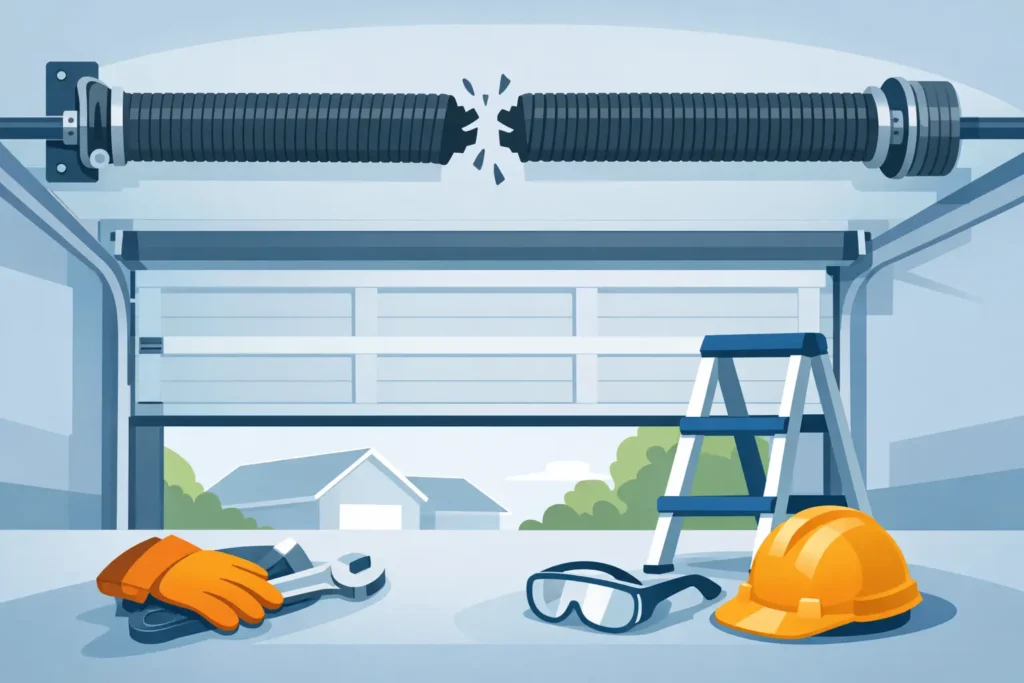
A garage door that opens only a few inches, slams shut, or suddenly feels impossible to lift is often dealing with one specific failure: a broken torsion spring. Broken torsion spring replacement is not a repair to put off or attempt with household tools. The spring carries the force that lifts hundreds of pounds of door weight, and a failed spring can leave your car trapped, your property unsecured, or the entire door system at risk of further damage.
For homeowners and property managers in Greater Boston, Massachusetts, and Rhode Island, the best next move is simple: stop using the door, keep people clear of it, and arrange a professional inspection as soon as possible. A qualified technician can confirm the cause, explain the repair, and restore safe operation without unnecessary replacement work.
How to Tell if Your Torsion Spring Is Broken
Torsion springs sit on a metal shaft above the garage door opening. As the door closes, they wind tightly to store energy. When the door opens, that stored energy helps lift its weight. A torsion spring typically breaks after years of normal cycling, though rust, poor balance, extreme temperature changes, and heavy daily use can shorten its life.
The most recognizable sign is a loud bang from the garage. Many homeowners describe it as a firecracker or a heavy object striking the floor. The sound is the spring releasing its tension when it snaps.
Other signs can be less dramatic. The opener may hum but fail to raise the door. The door may lift a few inches and reverse, hang crooked, move unevenly, or feel extremely heavy when disconnected from the opener. You may also see a two- to three-inch gap in the spring coil above the door. That gap is a strong visual indicator that the spring has broken.
Do not assume the opener is the problem just because the remote no longer opens the door. An automatic opener is designed to guide a balanced door, not lift the full weight of an unassisted one. Continuing to run it with a broken spring can strip gears, bend the rail, damage cables, or turn one repair into several.
What to Do Before Broken Torsion Spring Replacement
A broken spring requires caution even when the door appears fully closed. Keep children, pets, and vehicles away from the door until it has been inspected. Do not pull the emergency release while the door is open or partially open. Without spring support, the door can fall quickly and cause serious injury or property damage.
If the door is closed and you need to leave, use another vehicle or arrange alternate transportation when possible. Some lighter doors can be manually opened by more than one adult, but this is not a dependable or low-risk solution. A door can shift, cables can come off their drums, and lifting a heavy door without proper control can lead to injury.
Avoid loosening the set screws, winding cones, cables, brackets, or center bearing area above the door. Torsion spring systems are under substantial stored tension. The risk is not limited to the broken spring – the remaining spring, shaft, cables, and hardware may still be carrying load. This is why professional spring work requires the right winding tools, secure ladder placement, and training in door balance and cable alignment.
Why Torsion Spring Replacement Is a Professional Repair
A proper repair is more than installing a new spring that looks similar to the old one. Springs must be selected for the door’s actual weight, height, track configuration, cable drums, and expected cycle usage. An incorrectly sized spring may make the door too heavy, cause it to rise too aggressively, or wear out prematurely.
During a service visit, a technician should first inspect the full system. That includes the door sections, tracks, rollers, cables, drums, bearings, center bracket, brackets, and opener connection. A broken spring can expose an existing issue, such as a frayed cable or worn roller, that contributed to uneven movement.
The technician then removes the failed spring safely, installs the correctly rated replacement, and adjusts tension to balance the door. A properly balanced door should stay near its position when tested manually by a trained technician. The opener is then checked to make sure it runs smoothly and its safety reversal system responds correctly.
At AB Garage Door, the goal is repair first. If the door itself is in sound condition, replacing the spring and addressing related wear items is usually the practical answer. If a technician finds severe panel damage, unsafe hardware, or a system nearing the end of its service life, you should receive clear options and an upfront explanation – not pressure to buy more than you need.
Should Both Torsion Springs Be Replaced?
Many double garage doors use two torsion springs. When one breaks, the other has usually completed roughly the same number of cycles. Replacing both at the same appointment is often the more reliable choice because it restores even lifting force and reduces the chance of a second breakdown soon after the first repair.
There are exceptions. Some doors use a single-spring system, while others may have had one spring replaced recently. The right recommendation depends on the spring configuration, condition, and age. A technician should explain whether one or both springs are needed and why.
Spring quality also matters. Standard residential springs are commonly rated for a set number of open-and-close cycles. For busy households, multi-car garages, rental properties, or light-commercial doors, higher-cycle springs may be worth considering. They cost more upfront, but they can offer a longer service life when the door operates many times each day.
What Affects Replacement Cost and Timing
No responsible company should quote a one-size-fits-all price without knowing the door setup. The final cost of broken torsion spring replacement can vary based on the number and size of springs, door weight, high-cycle spring selection, access to the hardware, and whether related parts need attention.
For example, a standard residential door with accessible hardware is usually more straightforward than a heavy insulated door, a custom wood door, or a commercial-style system. If cables have come loose, rollers are worn, or an opener has been damaged by repeated attempts to lift the door, those repairs may need to be included as well.
What should not vary is the clarity of the estimate. Before work begins, ask for an explanation of the failed parts, the recommended repair, warranty coverage, and the total price. Clear answers help you compare options fairly and avoid surprises.
Timing matters, too. A garage door may be your primary entry point, and a stuck door can interrupt work, school, deliveries, or access to equipment. Same-day and emergency service are particularly valuable when the door is open, your vehicle is trapped inside, or your home or business cannot be secured.
Protecting Your New Springs
Springs eventually wear out, but regular maintenance can help the rest of the system operate with less strain. Have the door inspected periodically, especially if it has become noisy, shaky, slow, or uneven. Lubricating appropriate moving parts, checking door balance, tightening hardware, and replacing worn rollers can reduce stress on the springs and opener.
Pay attention after seasonal temperature swings as well. Cold weather can make existing wear more noticeable, while moisture can contribute to rust. If the door starts binding or the opener sounds strained, schedule service before a minor adjustment becomes a full breakdown.
A broken spring is disruptive, but it does not have to become a dangerous all-day problem. Keep the door still, get a clear diagnosis, and choose a repair team that can restore the system safely with the right parts. Your garage door should open when you need it, close securely when you leave, and give you one less thing to worry about.