Your garage door opens halfway, reverses for no clear reason, or refuses to move when you are already late for work. Garage door opener repair can restore daily access quickly, but the opener is not always the source of the problem. A heavy door, broken spring, damaged roller, or misaligned safety sensor can make a perfectly good opener appear to fail.
The safest next step is to stop forcing the door. Repeatedly pressing the remote or pulling on a stuck door can strain the motor, damage the rail, or create a safety risk. A qualified technician can identify the actual cause on site, explain the repair clearly, and give you an upfront price before work begins.
Signs You May Need Garage Door Opener Repair
A garage door opener does more than lift the door. It receives commands from remotes and keypads, operates the motor and drive system, and monitors safety sensors near the bottom of the tracks. When one part is out of adjustment or wearing out, the symptoms can range from a minor inconvenience to a complete loss of access.
An opener that hums but does not move the door may have a stripped internal gear, a failing capacitor, or a disconnected trolley. If the motor runs but the chain, belt, or screw does not pull the door, the issue could be in the drive system rather than the motor itself.
A door that starts down and immediately reverses often points to photo-eye sensors. These small sensors must face each other across the opening with a clear path between them. Dirt on the lens, loose wiring, direct sunlight, or a slight bump can interrupt the signal. Sometimes cleaning the lenses and checking for stored items near the tracks solves the problem. If the sensor lights remain off, flicker, or will not align, professional service is the better call.
Remote and keypad failures are another common source of frustration. A dead battery is easy to rule out, but a remote that still will not work may need reprogramming, replacement, or a receiver inspection. If the wall button works but every remote fails, the problem may be with the opener’s receiver or an electrical issue, not the remotes themselves.
First, Rule Out a Door Problem
The opener is designed to move a properly balanced garage door. It is not built to lift the full weight of a door with a broken torsion spring or extension spring. This distinction matters because replacing an opener without correcting the door problem can lead to another breakdown soon after.
If the door feels unusually heavy, sits crooked, hangs on one side, or will only lift a few inches, stop using the opener. A broken spring is a likely cause. You may hear a loud bang when it breaks, but not always. On a door with torsion springs, a visible gap in the coil is a strong warning sign.
Do not attempt spring, cable, or drum repairs yourself. These components operate under high tension and can cause severe injury or property damage when handled incorrectly. A technician can safely inspect the complete system, including springs, cables, rollers, hinges, tracks, and the opener’s force settings.
You can perform one basic check if the door is closed and it is safe to do so: use the emergency release to disconnect the opener, then lift the door by hand. A balanced door should move smoothly and stay roughly in place when opened halfway. If it is hard to lift, slams shut, or binds in the tracks, the door needs repair before the opener is adjusted or replaced.
Safe Checks Before You Schedule Service
A few simple checks can help you describe the issue accurately and may resolve a minor problem. Start by confirming that the opener is plugged in and that the circuit breaker has not tripped. Check the remote battery, and make sure the opener’s lock or vacation mode has not been activated from the wall control.
Next, look at the photo-eye sensors near the floor. Remove leaves, boxes, snow, or other obstructions from their path. Wipe the lenses with a soft cloth and check that both sensor indicator lights are illuminated. Do not bypass the sensors or tape wires together. Those safety features are there to prevent the door from closing on a person, pet, vehicle, or object.
Listen closely when you operate the door. Grinding may suggest worn gears or a damaged drive component. A clicking sound without movement can point to a sensor, relay, or logic board issue. Loud squeaking or shaking may originate from dry rollers, hinges, or track problems rather than the opener. Those details help a technician arrive prepared with the right parts.
Avoid adjusting the opener’s force or travel limits at random. These settings control how far the door moves and how much resistance the opener accepts before reversing. Incorrect settings can leave the door partially open, cause it to hit the floor too hard, or disable proper reversal behavior.
When Repair Makes More Sense Than Replacement
Many opener issues can be repaired without replacing the entire unit. Sensor alignment, remote programming, worn gears, damaged sprockets, loose wiring, and trolley problems are often straightforward repairs when the opener is otherwise in good condition.
Repair is usually a sensible choice when the unit is relatively new, the motor runs reliably, replacement parts are available, and the door itself is balanced. It can also be the right answer when a recent power surge, accidental impact, or programming issue caused a specific and isolated failure.
A repair-first approach keeps the decision practical. The goal is not to sell a new opener when a safe, durable repair will solve the access problem. At the same time, a low-cost repair is not always the best value if several major components are worn or the opener no longer meets current safety and security needs.
When It Is Time to Replace the Opener
Replacement becomes more reasonable when an older opener has repeated breakdowns, a failed logic board, unreliable reversal behavior, or unavailable parts. An opener that lacks modern safety sensors should be replaced rather than patched. Security is another factor. Older units may use fixed codes that are easier to duplicate, while newer systems use rolling-code technology and offer better control over who can access the garage.
A new opener can also be worthwhile when noise is a daily issue. Belt-drive models are often a strong fit for attached garages with bedrooms or living spaces above them. Chain-drive openers remain durable and cost-effective for many homes, although they are typically louder. For heavy insulated doors or light-commercial applications, the right horsepower and drive type depend on the door’s weight, usage frequency, and balance.
Smart-opener features can add real convenience, but they should not be the only reason to replace a working unit. App-based alerts, remote operation, delivery access, and activity history are helpful for busy households. They also depend on a reliable home Wi-Fi connection and should be set up with strong account passwords. A technician can help you choose features that match how you actually use the garage.
What Professional Opener Service Should Include
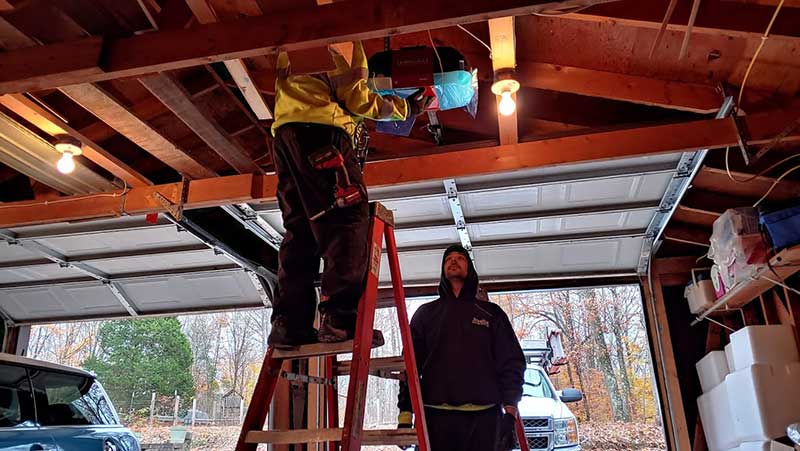
A proper opener appointment should look at the whole door system, not just the motor housing. The technician should test the photo-eyes and auto-reverse function, inspect the drive rail and trolley, check door balance, review the condition of springs and cables, and listen for excessive noise or vibration.
You should receive a clear explanation of what failed, what options are available, and what the repair or replacement will cost before work starts. For replacement, the estimate should account for the opener, installation, programming, safety testing, and removal of the old equipment. Ask about parts and labor warranties so you know what is covered after the technician leaves.
For homeowners across Greater Boston, Massachusetts, and Rhode Island, AB Garage Door provides responsive opener diagnostics, repairs, remote and keypad programming, and smart-opener installation. When the door will not close at night or your car is trapped inside, emergency service can prevent a small disruption from becoming a security concern.
Keep Your Opener Working Longer
Your opener will last longer when the door moves freely. Schedule periodic maintenance for the door’s moving parts, keep the tracks clear, and address unusual sounds before they become a breakdown. Test the safety reversal system regularly by placing a solid object, such as a piece of wood, flat on the floor beneath the door. The door should reverse after contacting it. Also test the photo-eyes by starting the door down and passing an object through the sensor beam. It should reverse immediately.
If your opener begins acting differently, do not wait until the door is fully stuck. A prompt inspection can protect the motor, preserve safe access to your home or business, and give you a clear answer before the next rushed morning or late-night arrival.