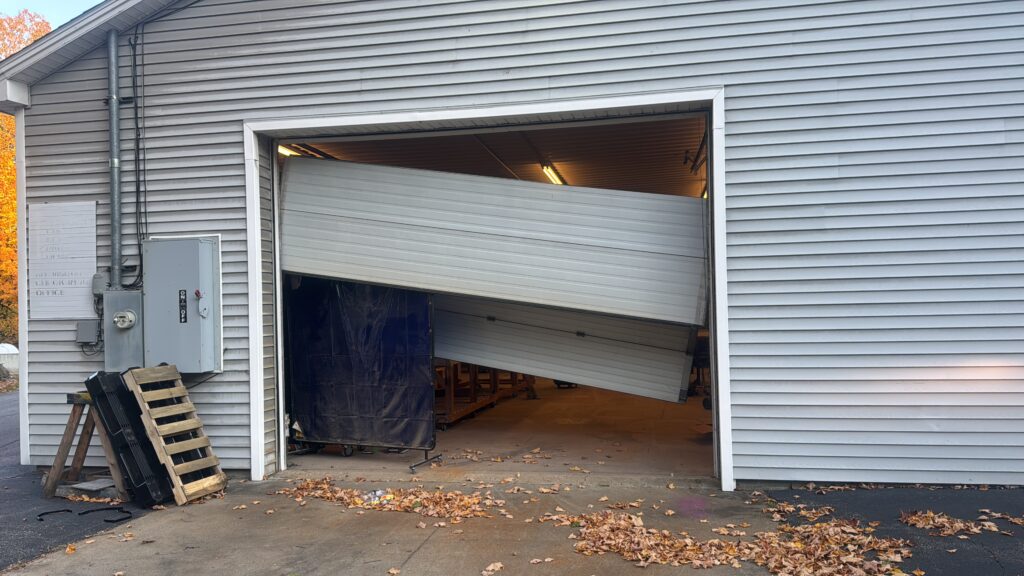
A commercial overhead door that stops halfway at 7 a.m. can hold up deliveries, leave equipment exposed, and put an entire workday behind schedule. Commercial overhead door repair is not just about getting a door to move again. It is about restoring safe access, protecting your property, and preventing a small mechanical problem from becoming a costly shutdown.
For light-commercial properties across Greater Boston, Massachusetts, and Rhode Island, overhead doors often work harder than residential systems. They may open dozens of times a day, handle heavier panels, and operate in cold, wet, and salty New England conditions. When the door starts shaking, dragging, reversing, or making a new grinding sound, do not wait for a complete failure.
Signs You Need Commercial Overhead Door Repair
Some door problems are obvious. A door that is stuck open, off track, or hanging crooked needs immediate professional attention. Other warning signs are easier to overlook, especially when the door still opens and closes. Those early symptoms are often the best time to schedule a repair.
A door that moves unevenly may have a worn cable, damaged drum, bent track, failing roller, or spring issue. If one side rises faster than the other, stop using the opener. Continuing to run an unbalanced door can pull it farther off track and place extra strain on the operator.
Loud operation also deserves attention. Squealing may point to dry rollers or hinges, while grinding can signal worn bearings, damaged rollers, or track alignment problems. A sharp bang may indicate a broken torsion spring. Springs are under extreme tension, so do not attempt to remove, adjust, or wind them yourself.
Watch for slower-than-normal travel, a door that reverses unexpectedly, or an operator that hums without moving the door. These can be caused by opener settings, photo-eye alignment, worn gears, a weak motor, or a door that has become too heavy for the operator to lift safely. The opener is often blamed first, but the real issue may be the door hardware.
A door that does not fully close creates a security concern. It can leave inventory, vehicles, tools, and work areas vulnerable after hours. If the door will not close because of a damaged track, broken cable, or sensor issue, secure the area and arrange service as soon as possible.
Why Overhead Door Problems Get Worse Fast
Commercial door systems are made of connected parts. When one component wears out, the added stress often moves to the next component. A roller that no longer runs smoothly can damage the track. A weakened spring can force the opener to work beyond its intended load. A frayed cable can jump the drum and leave the door crooked or fully off track.
This is why repeated resets are rarely a real solution. Resetting an operator may get the door moving temporarily, but it will not correct a broken spring, failing cable, bent track, or worn lift hardware. The longer the underlying issue continues, the greater the chance of a larger repair, damaged door sections, or an unexpected failure during a busy shift.
Weather is another factor in Massachusetts and Rhode Island. Freezing temperatures can stiffen lubricants and affect seals. Moisture can contribute to corrosion around cables, tracks, and bottom hardware. Road salt and coastal air can accelerate wear on exposed metal components. Regular inspection is not an extra expense when a door sees daily use. It is a practical way to avoid downtime.
What a Professional Commercial Door Repair Should Include
A proper service visit starts with diagnosis, not guesswork. A technician should inspect the door panels, tracks, rollers, hinges, cables, drums, springs, bearing plates, bottom brackets, weather seal, safety sensors, and operator. The goal is to identify both the failed part and the reason it failed.
The technician should also test door balance. With the opener disconnected, a properly balanced door should stay near its halfway point instead of dropping quickly or shooting upward. This test helps determine whether the springs are correctly sized and functioning. It is not a DIY test for an unstable or damaged door, but it is an essential part of professional service.
After the inspection, you should receive a clear explanation of the problem and an upfront repair estimate. In some cases, a focused repair is the most sensible option: replacing a broken spring, worn rollers, damaged cable, or failed operator component. In other cases, especially with severely damaged sections, recurring failures, or an outdated system, replacement may provide better long-term value.
A repair-first recommendation matters. Replacing an entire commercial door is not always necessary, and a reputable technician should explain the trade-off honestly. The right choice depends on the door’s condition, how often it operates, the availability of replacement parts, safety requirements, and the cost of repeated service calls.
When a Repair Becomes an Emergency
Call for urgent help when the door is stuck open, partly open, off track, hit by a vehicle, or unable to secure the building. A broken spring, snapped cable, or damaged bottom bracket can also make the door unsafe to operate. Keep employees, customers, and vehicles clear of the opening until a technician arrives.
Do not pull on loose cables, force the door shut with a forklift or vehicle, or continue pressing the wall button if the door is binding. A heavy overhead door can shift suddenly. Trying to force it into place can damage the panels and tracks further or create a serious injury risk.
If the door is open and the property must be secured, ask the service company what temporary steps are appropriate for your setup. The safest option varies by door type and damage. In many situations, the door should be left alone until it can be stabilized and repaired by a trained technician.
Maintenance That Reduces Unplanned Downtime
Commercial overhead doors need more than occasional attention after something breaks. The best maintenance plan depends on daily cycles, door size, exposure to weather, and whether the door serves a warehouse bay, auto shop, storage area, or multifamily property.
Property owners and managers can watch for changes in noise, movement, and closing behavior. Keep the track area clear of boxes, pallets, debris, and snow buildup. Make sure photo eyes are clean and not blocked. Report a damaged bottom seal, loose hardware, or new vibration before the problem spreads.
Professional maintenance goes further. It includes checking spring tension, cable condition, roller wear, track alignment, fasteners, operator force settings, safety reversal, and sensor function. Lubrication should be applied to the appropriate moving components, but it is not a cure for bent tracks or worn hardware. Using the wrong product can collect dirt and make a problem worse.
For doors that operate frequently, scheduled service can help plan repairs before a busy season or before a component fails without warning. It also creates a record of condition, which can be helpful for property managers responsible for safety and maintenance planning.
Choosing a Commercial Door Service Company
Speed matters when a loading area, vehicle bay, or secured workspace is out of service, but the fastest answer is not useful if the repair does not hold. Look for a company that can diagnose the full system, provide a clear quote before work begins, and use quality replacement parts suited to the door’s weight and usage.
Ask whether the technician will inspect balance and safety features, not just replace the part that appears broken. Confirm warranty coverage on parts and labor. If an operator or door replacement is recommended, ask why repair is no longer the practical choice and what options fit your budget and operation.
AB Garage Door provides local commercial door service with straightforward recommendations, trained technicians, and emergency availability when access or security cannot wait. Whether the issue is a broken spring, off-track door, worn cables, or an unresponsive operator, a clear diagnosis helps you make the right decision without pressure.
A commercial door does not need to fail completely before it deserves attention. If it is getting louder, moving unevenly, or leaving your building less secure, schedule service while the repair is still controlled, safer, and easier to plan around.