
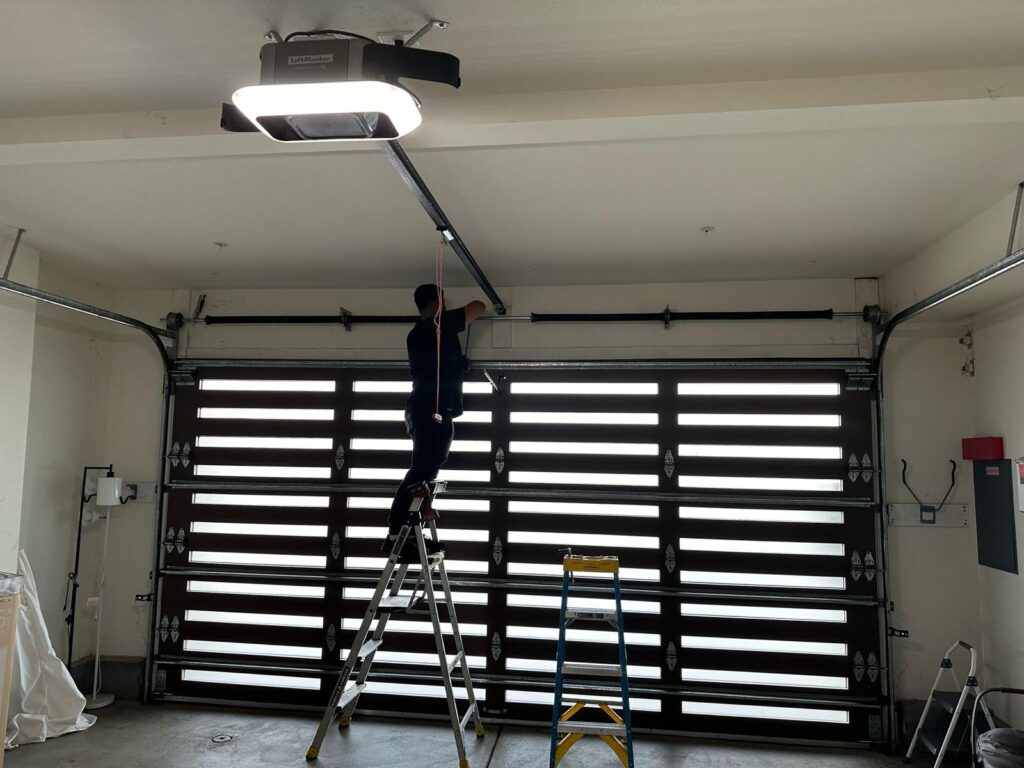
A garage door that will not open is more than an inconvenience. It can trap your vehicle, leave your home exposed, or stop a business from receiving deliveries. A reliable garage door repair cost estimate starts with identifying the failed part, checking for related damage, and explaining the repair before work begins. The lowest number is not always the best value if it leaves a worn cable, damaged track, or unsafe spring system behind.
For homeowners across Greater Boston, Massachusetts, and Rhode Island, the right question is not simply, “What does garage door repair cost?” It is, “What does my door need to operate safely and reliably again?” Here is what goes into that answer.
What Affects a Garage Door Repair Cost Estimate?
Garage doors are connected systems. Springs counterbalance the door’s weight, cables carry tension, rollers guide movement, tracks keep the door aligned, and the opener controls travel. A problem in one area can create symptoms somewhere else.
That is why an accurate estimate requires an on-site inspection. A door that shakes may only need rollers and track adjustment, but it could also have a loose hinge, bent track, worn bearing, or spring issue. A technician should test the door’s balance, inspect moving hardware, check the opener, and look for damage that could cause the same breakdown again.
The main pricing factors include the type of repair, the door’s size and weight, the parts required, accessibility, and whether the issue is an emergency. A standard single residential door is generally less involved than a heavy insulated double door or a light-commercial door used multiple times each day. Custom doors, specialty hardware, and older systems may also require specific parts or additional labor.
Time matters, too. A door that is still moving but squeaks, jerks, or leaves a gap may be repairable with a planned visit. A door hanging crooked, off its track, or stuck open needs prompt attention because continued use can damage more components and create a safety risk.
Typical Garage Door Repair Costs by Problem
Every repair should be quoted after inspection, but these general ranges can help homeowners understand what may be involved. Local labor rates, door type, hardware quality, and the scope of damage will affect the final price.
Broken springs
Spring replacement is one of the most common garage door repairs. Depending on the spring type, door size, and number of springs needed, homeowners often see costs in the range of $200 to $500 or more. Torsion springs sit above the door and hold significant stored energy. Extension springs run along the sides of the horizontal tracks and also require proper safety hardware.
A broken spring may sound like a loud bang in the garage. The door may lift only a few inches, feel extremely heavy, or the opener may strain without moving it. Do not try to force the door or replace springs yourself. Spring work requires specialized tools and training because a sudden release of tension can cause serious injury or property damage.
Cables, drums, and off-track doors
Cable repairs commonly range from $150 to $350, depending on whether the cable has slipped, frayed, snapped, or caused other parts to fail. If a cable comes off the drum, the door can become uneven quickly. One side may rise while the other stays low, leaving the door crooked in the opening.
An off-track door can cost more because the technician may need to safely secure the door, reset rollers, realign tracks, repair bent hardware, and address the original cause. If the door was operated while crooked, the repair may involve cables, rollers, hinges, and track work rather than one adjustment.
Rollers, hinges, tracks, and hardware
Worn rollers, damaged hinges, loose brackets, and misaligned tracks often cause shaking, popping, scraping, or excessive noise. Minor adjustments and lubrication may be on the lower end of the repair range. Replacing multiple rollers or damaged track sections will cost more, particularly on a heavier insulated door.
For many homes, this is a repair worth handling early. A noisy door may still open today, but worn rollers can eventually bind in the track. A loose hinge can place extra strain on panels. Small repairs are often less expensive than waiting for a door to jam or come off track.
Garage door opener repair
Opener repair costs vary widely because the cause can be simple or electrical. A remote or keypad programming visit may be relatively straightforward. Replacing a worn gear, safety sensor, wall control, circuit board, belt, chain, or motor assembly involves different parts and labor.
A typical opener repair may run from about $125 to $400, while a full replacement can range from $450 to $1,000 or more depending on horsepower, drive type, smart features, battery backup, and installation requirements. If the opener is older, unreliable, or lacks modern safety features, replacement may provide better long-term value than repeated repairs.
Before assuming the opener is the problem, remember that a broken spring can make a working opener appear weak. The opener is designed to move a balanced door, not lift the full weight of a door with failed counterbalance hardware.
Panels and weather seals
A dented panel does not always require a new door. If the panel is cosmetic and the door still operates correctly, a technician may recommend leaving it alone or replacing that section if a matching panel is available. If the panel is cracked, bowed, or causing the door to bind, replacement becomes more important.
Bottom seals, perimeter weatherstripping, and damaged retainers are usually less costly repairs, but they make a meaningful difference in New England. A good seal helps keep out wind-driven rain, leaves, pests, and cold air. The exact cost depends on the door width, material, and condition of the existing retainer.
Why an On-Site Quote Is Better Than a Phone Price
A phone conversation can help identify likely issues, but it cannot confirm the repair. Two doors may both be described as “stuck,” while one needs a sensor adjustment and the other has a broken torsion spring with a cable off the drum.
A clear on-site estimate should separate the diagnosis, recommended repair, parts, labor, and any optional improvements. You should know what is necessary for safe operation, what can wait, and why a technician is recommending a particular repair. No-pressure guidance matters when you are dealing with an urgent access problem.
At AB Garage Door, the repair-first approach means technicians assess whether a safe, durable repair is practical before recommending replacement. If replacement is the smarter choice because the door has widespread rust, severe panel damage, unavailable parts, or repeated failures, the reason should be explained plainly.
When Repair Makes Sense and When Replacement May Cost Less
Repair is often the right choice when the door itself is in good condition and one component has failed. Replacing springs, cables, rollers, sensors, seals, and many opener parts can restore dependable operation without the cost of a new door.
Replacement may be worth considering when repairs are becoming frequent, panels are badly damaged, the door has poor insulation, or safety features are outdated. For a light-commercial property, downtime and daily cycle volume also matter. A cheaper repair that fails again during business hours may cost more in disruption than installing a more suitable door system.
A technician should not push a new door simply because a repair is possible but inconvenient. At the same time, a customer deserves to know when putting more money into an aging system is unlikely to provide a lasting result.
How to Avoid Bigger Repair Bills
Most garage doors give warning signs before a complete failure. Pay attention to new grinding noises, slow movement, a door that reverses unexpectedly, visible gaps in springs, frayed cables, or a door that no longer sits level. Stop using the door if it is crooked, hanging from one side, or visibly off track.
Basic maintenance can help extend the life of moving parts. Keep tracks clear of debris, test the photo-eye sensors, and avoid hitting the door with a vehicle or lawn equipment. Professional maintenance is especially useful for doors that see frequent use, since a technician can check spring balance, fasteners, rollers, cables, and opener force settings before a minor issue becomes an emergency.
If your garage door is stuck, loud, uneven, or unresponsive, do not guess at the repair or force it open. Request a clear estimate from a qualified local technician, ask what caused the issue, and make the repair decision with the full picture in front of you. A safe fix completed at the right time protects your home, your schedule, and the people who use the door every day.