A garage door rarely fails without giving a warning first. It may start squeaking during the morning rush, hesitate before opening, shake on the tracks, or leave a small gap at the floor. A professional garage door maintenance service finds the worn, loose, and misaligned parts behind those symptoms before your door gets stuck closed, hangs crooked, or becomes a safety concern.
For homeowners across Greater Boston, Massachusetts, and Rhode Island, maintenance is less about making a door look new and more about protecting dependable access to the garage. For light-commercial properties, where a door may cycle many times a day, scheduled service can prevent costly interruptions to deliveries, staff access, and building security.
What a Garage Door Maintenance Service Checks
A garage door is a moving system, not just a set of panels and an opener. The door, tracks, rollers, cables, springs, drums, hinges, brackets, safety sensors, and opener all need to work together. If one part starts wearing out, it can put extra strain on the rest of the system.
During a professional visit, a technician begins by operating the door and listening for changes in sound and movement. A smooth door should travel evenly, stay aligned in the tracks, and open and close without jerking, grinding, or excessive vibration. A new noise is not always an emergency, but it is often useful evidence that a part needs attention.
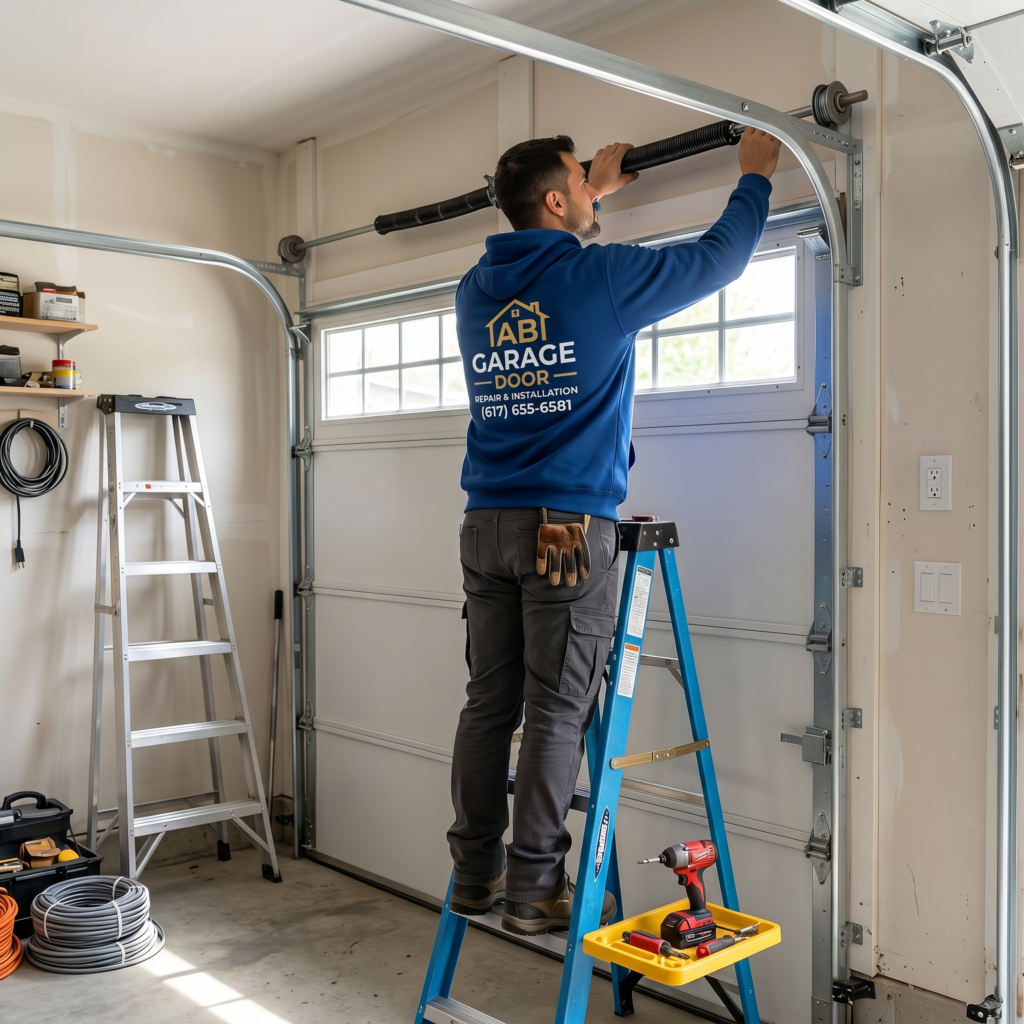
The technician then inspects the hardware that carries the door’s weight. This includes rollers, hinges, track alignment, cables, drums, and mounting brackets. Loose hardware can cause rattling and shaking. Worn rollers can make the door noisy or rough. Frayed cables can eventually snap or come off the drum, leaving the door uneven or stuck.
Spring condition and balance are another major part of the appointment. Springs do the heavy lifting so the opener does not have to. When a torsion or extension spring weakens, the opener may strain, the door may feel heavier than usual, or it may not open fully. Because springs are under extreme tension, this is not a DIY adjustment. A trained technician should handle spring inspection, adjustment, and replacement.
The opener also needs more than a quick check of the remote. Maintenance typically includes testing the wall control, remote, keypad, force settings, travel limits, chain or belt condition, and safety reversal system. The photo-eye sensors near the bottom of the tracks should be clean, aligned, and able to stop or reverse the door when something crosses their path.
Why Small Problems Turn Into Major Repairs
A garage door can weigh well over 100 pounds, and larger insulated doors may weigh substantially more. The spring system is designed to offset that weight. When the balance changes, the opener becomes the part trying to compensate, even though it was designed to guide the door, not lift its full weight.
That is why a door that is slow, loud, or uneven should not be ignored. A worn roller may seem minor, but it can contribute to track wear. A loose cable can damage a drum or pull the door out of alignment. An opener that keeps reversing may be dealing with sensor issues, force-setting problems, or resistance elsewhere in the system.
Maintenance does not mean every part will last forever. Springs, rollers, cables, and opener components all have service lives. The advantage is knowing what is wearing out and making a clear repair decision before the door stops working at the worst possible time.
There is also a safety issue. A door that is off-track, poorly balanced, or supported by damaged cables should not be forced open or shut. Pulling the emergency release without understanding the condition of the door can create additional risk, especially if the door is open and the spring system has failed.
How Often Should You Schedule Service?
For most homes, annual service is a practical baseline. It gives a technician the chance to identify normal wear, lubricate moving components as appropriate, test safety features, and make small corrections before winter weather or daily use exposes a larger issue.
The right schedule depends on how the door is used. A household that uses the garage as its main entrance may put several cycles on the door every day. Homes with heavy wood doors, oversized insulated doors, or older openers may benefit from closer attention. Coastal Rhode Island conditions, road salt, moisture, and New England temperature swings can also affect hardware over time.
For light-commercial doors, service may be needed more frequently. A door used for deliveries, equipment access, or employee traffic experiences more cycles and more wear than a typical residential door. A maintenance schedule should reflect the door’s size, usage level, and the cost of unexpected downtime.
Warning Signs That Should Not Wait
Some issues can wait for a scheduled appointment. Others call for prompt repair. If the door will not open, is hanging at an angle, has a visible broken spring, has a loose or broken cable, or has come off its tracks, stop using it. Do not try to force it with the opener or manually move it without professional guidance.
Call for service quickly if you notice any of the following:
- The door opens only a few inches, then stops or reverses.
- One side of the door sits lower than the other.
- The opener runs, but the door does not move.
- You hear a loud bang from the garage and the door suddenly feels very heavy.
- Cables look loose, frayed, or wrapped unevenly around the drums.
- The door shakes hard, binds in the tracks, or leaves the tracks entirely.
A loud bang is often associated with a broken spring. It can be alarming, but the safest response is simple: leave the door in place, keep people clear of it, and arrange a professional inspection. Do not attempt to replace or wind springs yourself.
What Homeowners Can Do Between Appointments
There are a few safe habits that help you spot trouble early. Watch the door as it moves once a month. It should travel evenly and should not scrape, sway, or make sudden popping sounds. Keep the photo-eye lenses clean and make sure stored items, trash bins, and tools are not blocking the sensor path.
You can also check that the tracks are clear of leaves, dirt, and obvious debris. Avoid applying heavy grease to the tracks, which can collect dirt and interfere with roller movement. If you use a garage-door lubricant on hinges or rollers, follow the product directions and avoid spraying springs, cables, or electrical parts indiscriminately.
Do not tighten spring hardware, loosen cable brackets, adjust bottom fixtures, or change opener force settings to overcome a door that is binding. Those actions can hide the real problem or make the system unsafe. A good rule is that anything connected to a cable, spring, or bottom bracket belongs in a technician’s hands.
Repair First, Replacement When It Makes Sense
A maintenance visit should not automatically become a sales appointment. Many problems are repairable: worn rollers, loose hardware, sensor alignment, damaged cables, aging springs, and opener issues can often be addressed without replacing the entire door.
Replacement may be the better value when a door has extensive panel damage, serious corrosion, recurring structural problems, poor insulation, or an opener that is no longer reliable or compatible with current safety features. The right recommendation depends on the condition of the whole system, not just the part that failed that day.
At AB Garage Door, technicians explain what they find on site, provide upfront options, and recommend the repair that fits the condition of the door. That gives you the information to decide without pressure or surprises.
A well-maintained garage door should be easy to overlook because it simply works when you need it. If yours has become noisy, uneven, slow, or unpredictable, schedule service before a minor warning turns into a blocked driveway, an unsecured garage, or an emergency repair.