
- Services
- Garage Doors
- Service Areas
Attleboro, MA
Bellingham, MA
Canton, MA
Framingham, MA
Franklin, MA
Franklin, MA
Mansfield, MA
Milford, MA
Natick, MA
North Attleboro, MA
Uxbridge, MA
Walpole, MA
Woonsocket, RI
Ashland, MA
Ashland, MA
Blackstone, MA
Cumberland, RI
- About
- Contact
- Services
- Garage Doors
- Service Areas
Attleboro, MA
Bellingham, MA
Canton, MA
Framingham, MA
Franklin, MA
Franklin, MA
Mansfield, MA
Milford, MA
Natick, MA
North Attleboro, MA
Uxbridge, MA
Walpole, MA
Woonsocket, RI
Ashland, MA
Ashland, MA
Blackstone, MA
Cumberland, RI
- About
- Contact
Need a quick offer? Call us now
(617) 655-6581
- Open 24/7
- Emergency Repair
Commercial Garage Door Service in Walpole, MA
A 14-foot sectional door on a loading dock off Robbins Road doesn’t behave like the single-car door on a Walpole colonial. It runs on bigger torsion springs, a heavier gauge track, and an opener built to lift hundreds of pounds dozens of times a day. When that door stalls half open in front of a truck trying to load, the business behind it stops moving too.
Walpole has a real mix of commercial stock – warehouse and flex space off Route 1, smaller retail and service bays along East Walpole, and older industrial buildings near the former Walpole mill sites that have been converted to light commercial use. The doors on those buildings range from well-maintained steel sectional units to older doors that have been patched more than once.
We work on the mechanics of the door itself – springs, cables, drums, track, and the opener’s force and limit settings – not just the symptom you called about. A door that drags, slams, or reverses for no reason is usually telling you something specific is out of adjustment or worn out, and we find out which before we touch anything.
Commercial Garage Door Service in Walpole
Most commercial calls in Walpole come down to one of a handful of failures. Torsion springs on a commercial door are rated for a cycle count, not a calendar date, and a door that opens and closes forty or fifty times a day burns through that rating faster than anyone expects. When a spring lets go, the door is suddenly too heavy for the opener, and you’ll hear the motor strain or see the door stop moving entirely.
Cable and drum wear shows up differently – a cable that’s starting to fray will throw the door out of level, so one side drops before the other and the door binds in the track. On older doors we still see in East Walpole’s converted mill buildings, the track itself has sometimes been bent from a forklift or pallet jack clipping it, which throws the rollers off alignment and chews up the door edge over time.
On the opener side, commercial units typically run heavier duty circuit boards and higher horsepower motors than residential openers, but the same principles apply – if the limit settings are off, the door either stops short or slams the floor, and if the force setting is too high to compensate for a spring that’s losing tension, the safety reversal stops working the way it’s supposed to. We repair or replace the specific failed part – spring, cable, drum, track section, or opener logic board – rather than swapping the whole unit unless the door has genuinely reached the end of its service life.
What we look at
Door balance and movement
We disconnect the opener and move the door by hand. A properly balanced commercial door stays put at any point in its travel. If it drops on its own or you can feel the springs straining to lift it, the spring tension no longer matches the door’s weight, and that’s often the root cause of an opener that’s been struggling for weeks before it finally quits.
Spring type and cycle rating
We check whether the door is running torsion or extension springs and what cycle rating they’re built to. A high-cycle commercial door that’s been fitted with a standard-duty spring will fail far sooner than it should. Matching the spring to the actual usage – a dock door opening fifty times a day looks nothing like a side door opened twice – is part of getting the repair right the first time.
Cable and drum condition
Lift cables and their drums take a steady beating on commercial doors, especially wider ones where the load isn’t perfectly even. We look for fraying strands, cables sitting unevenly on the drum, and drum grooves that have worn enough to let the cable slip. Any of those is a sign the cable is close to failing, and when a lift cable snaps, the door can come down hard on one side.
Track, opener, and safety operation
We check the track for bends or gaps at the joints, confirm the rollers are seated and not cracked, and test the opener’s travel limits and force setting against what the door actually weighs. Then we run the safety reversal test – the door has to stop and reverse the instant it meets resistance near the floor. On a commercial door moving faster and heavier than a residential one, that test matters more, not less.
Homes in Walpole
Walpole’s commercial and light-industrial buildings don’t follow one era. There’s newer flex and office space along Route 1 with standard-sized overhead doors built to current commercial specs, older brick and mill-style buildings near the center and East Walpole that have been repurposed from manufacturing use, and smaller standalone service buildings scattered through town with a single bay door each. The doors on the older converted buildings are more likely to be original or long overdue for a hardware upgrade.
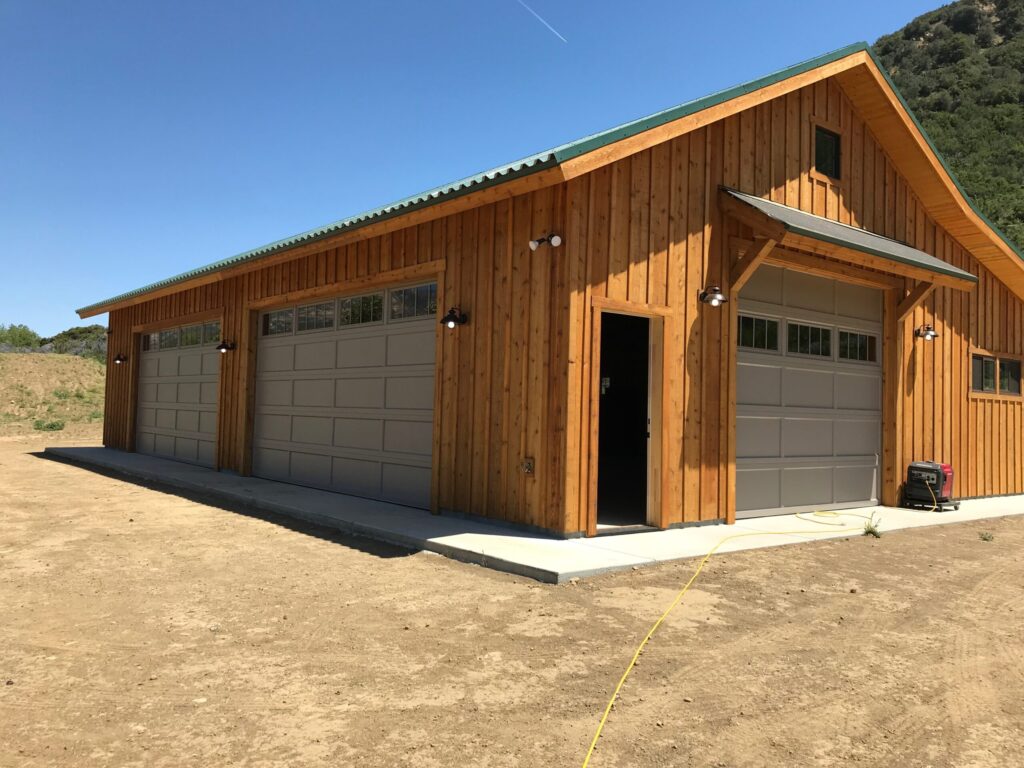
Attached garage bays on commercial properties in Walpole tend to run single or double-width depending on the business, while the larger warehouse and distribution sites carry full-height sectional doors sized for truck access. We see very few wood commercial doors left in service here – most have been replaced with steel sectional doors over the years, though the springs, cables, and openers on those replacements are often original to the install and due for inspection.
Whatever the building, the diagnosis works the same way – balance, spring condition, cable and drum wear, track alignment, and opener settings, checked in that order so we’re not guessing at what’s actually wrong.
What it costs
Commercial repairs in Walpole typically run between {PRICE_LOW} and {PRICE_HIGH}. Spring replacement cost depends on the size and cycle rating of the spring the door actually needs, cable and drum work depends on how much of the hardware needs replacing, and opener issues range from a quick adjustment to a board or motor swap. A full door replacement on a larger commercial opening costs more than a single-bay residential door, mainly because of the heavier materials and the opener needed to lift it. We give you a number after we’ve looked at the door, not before.
How fast we can get there
Walpole is about 7.5 miles from our base in Bellingham, a short run down Route 140 or 1A depending on where in town you are. We don’t quote a fixed response time here because commercial jobs vary – a stuck dock door gets prioritized differently than a scheduled inspection – but the distance isn’t a factor that slows us down.
Got Questions?
Emergency Repair FAQs
Do you work on dock-height and high-cycle commercial doors in Walpole?
Yes. We work on standard commercial sectional doors as well as dock doors and higher-cycle setups common in warehouse and flex space. The spring and opener specs differ from a residential door, and we size the repair to match.
Can you repair a commercial torsion spring the same day it breaks?
Often, yes, depending on the spring size needed and our schedule that day. A broken torsion spring on a commercial door should not be handled by anyone on site – it's under far more tension than a residential spring and the repair needs the right bars and technique.
My commercial opener runs but the door barely moves. What's wrong?
That's usually a balance problem, not an opener problem. If the springs have lost tension, the opener is trying to lift weight it wasn't built to carry long-term, which strains the motor and can burn it out. We check balance before touching the opener.
Do you service older doors in East Walpole's converted mill buildings?
Yes. Those buildings often have original hardware that's well past due for inspection, even if the door itself still looks fine. Bent track and worn cable drums are common there.
Is a licensed, insured contractor required for commercial garage door work in Massachusetts?
We work licensed and insured in MA ({LICENSE_MA}) and NH ({LICENSE_NH}). For commercial buildings, check with your property manager or insurer whether your policy requires documentation from the contractor.
Request a Free Quote
For a non-urgent repair, upgrade, or new commercial door install in Walpole, reach out for a free quote. We’ll ask a few questions about the door and the building, and if needed, come take a look before giving you a firm price.
Schedule Commercial Garage Door Service
If a commercial door in Walpole is stuck, off its track, or making noises it shouldn’t, call us and describe what’s happening. Knowing whether the door is stuck open or shut, whether the opener is running, and roughly how old the door and opener are helps us bring the right parts the first time.