
- Services
- Garage Doors
- Service Areas
Attleboro, MA
Bellingham, MA
Canton, MA
Framingham, MA
Franklin, MA
Franklin, MA
Mansfield, MA
Milford, MA
Natick, MA
North Attleboro, MA
Uxbridge, MA
Walpole, MA
Woonsocket, RI
Ashland, MA
Ashland, MA
Blackstone, MA
Cumberland, RI
- About
- Contact
- Services
- Garage Doors
- Service Areas
Attleboro, MA
Bellingham, MA
Canton, MA
Framingham, MA
Franklin, MA
Franklin, MA
Mansfield, MA
Milford, MA
Natick, MA
North Attleboro, MA
Uxbridge, MA
Walpole, MA
Woonsocket, RI
Ashland, MA
Ashland, MA
Blackstone, MA
Cumberland, RI
- About
- Contact
Need a quick offer? Call us now
(617) 655-6581
- Open 24/7
- Emergency Repair
Emergency Garage Door Repair in Woonsocket, RI
A torsion spring usually fails the same way: a loud bang from the garage, then a door that won’t lift past a foot or two, or an opener that strains and stops. If that just happened to you, stop trying to open or close the door by hand or by the opener. You’re not dealing with a jammed hinge. You’re dealing with a spring or cable under several hundred pounds of stored tension that has to come off the door correctly.
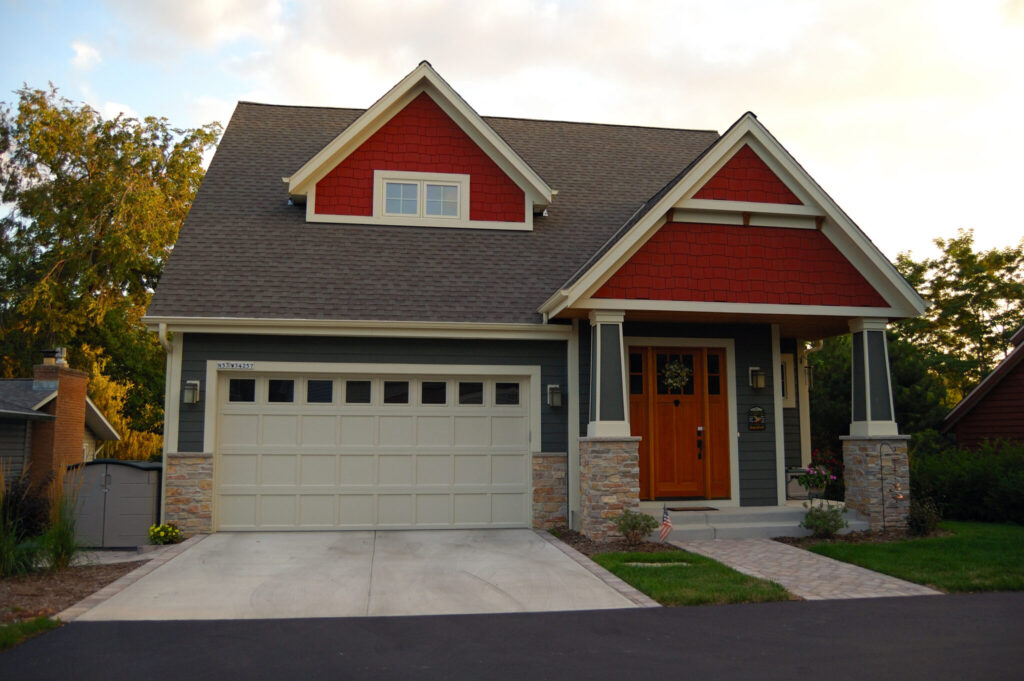
Do not pull the emergency release cord while the door is sitting part way up. With the spring gone, the door has nothing holding its weight, and the release is what lets it travel on the track freely. Pull it on a door that’s already lifted and you can get a fast drop onto anything, or anyone, underneath. Leave the door where it is, keep the car and anyone in the house clear of the opening, and get someone qualified to look at the spring, cables, and drums before anything moves again.
Emergency Garage Door Repair in Woonsocket
Most of what we get called out for in Woonsocket is one of a short list: a broken torsion spring on the two-car doors that are common on the city’s postwar and 1960s-70s colonials and ranches, a snapped lift cable on older single-car doors in the triple-decker and duplex neighborhoods near the mill districts, or an opener that runs but won’t lift the door because the spring has already lost tension and nobody’s noticed yet. Torsion springs sit on a shaft above the door and store the energy that does the actual lifting. Extension springs, found above the horizontal tracks on older setups, do the same job differently and fail differently. Either way, replacing one isn’t a tightening job. It means winding a new spring to the correct tension with the door properly supported, then checking that the drums, cables, and track are still doing their part correctly. If the issue is a cable off the drum or a roller that’s jumped the track, that’s a separate repair, but it gets diagnosed the same way: look at the whole system, not just the obvious broken part.
What we look at
What we look at
Call it out and we’ll walk through the same checks every time, in the same order, because skipping one is how a repair fails again in six months.
Door balance
With the opener disconnected, a correctly balanced door should hold its position anywhere on the track under hand power alone. If it drops when let go or shoots up on its own, the springs are doing the wrong amount of work for the door’s weight, and that’s often the root cause of an opener failure that looks electrical but isn’t.
Spring type and cycle rating
We confirm whether you’ve got torsion or extension springs, the wire size and length currently installed, and the cycle rating that matches your door’s weight and daily use. A spring rated for the wrong cycle count or the wrong door weight will fail early, sometimes within a year, regardless of how well it was installed.
Cables, drums, rollers, and tracks
Lift cables fray at the drum end long before they snap outright, and a fraying cable on one side throws the door off square the moment the other spring takes over the full load. We check cable condition, drum alignment, roller wear, and whether the track has pulled away from the frame anywhere, which is common on older wood-frame garages around Woonsocket where the structure has settled.
Opener settings and safety reversal
If the opener is still in the picture, we check the force and limit settings and run the safety reversal test. Standing on the garage floor, a door that contacts a 2×4 laid flat on the ground must stop and reverse immediately. If it doesn’t, that’s not a convenience issue, it’s a safety failure that needs correcting before the opener goes back into regular use.
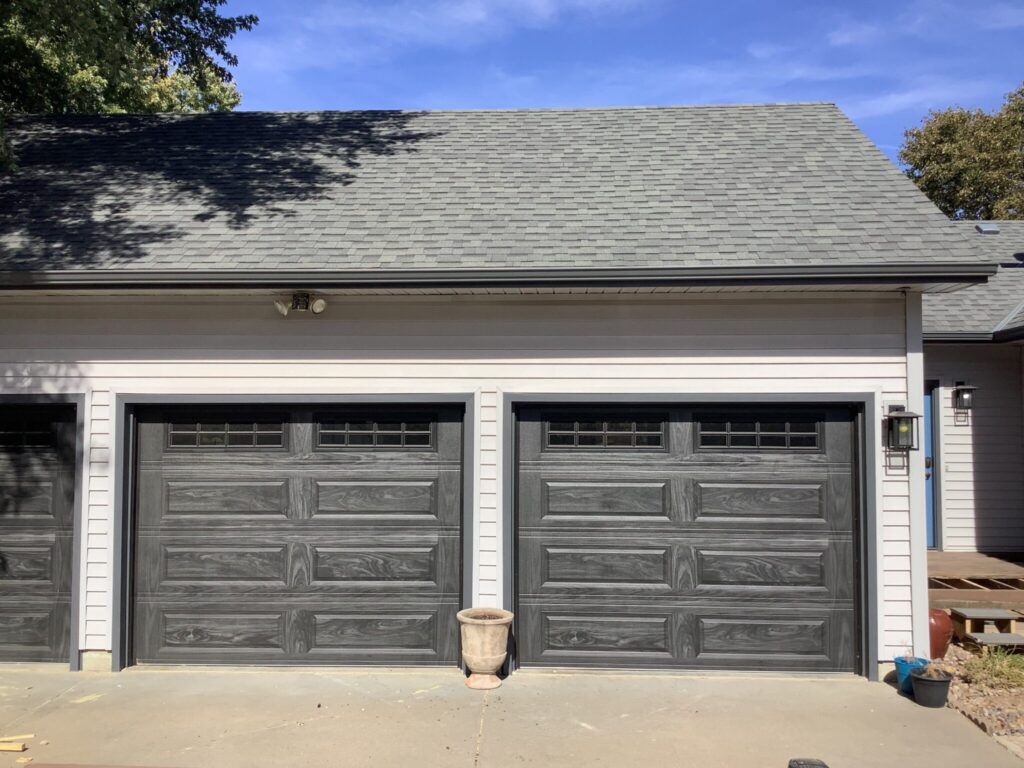
Homes in Woonsocket
Woonsocket’s housing stock runs older than most of the towns around it, shaped by the city’s mill history. You’ve got dense neighborhoods of triple-deckers and duplexes near the Blackstone and the old mill complexes, many with single-car detached garages or none at all, alongside postwar single-family streets further out toward the Cumberland and North Smithfield lines with attached two-car garages built in the 1950s through the 1970s. It’s a mixed building stock, and the garage doors reflect it.
On the older detached single-car garages, we still find original or early-replacement wood doors with extension spring setups, sometimes decades old, where the hardware was never upgraded along with the rest of the house. On the newer attached two-car garages, it’s almost always torsion springs on steel or insulated steel doors, sized for the wider openings. Either way, age matters: an extension spring system on a 60-year-old wood door needs a different eye than a torsion system installed in the last 15 years, and we treat them differently.
What it costs
None of this is guesswork once we’re looking at the door in person. Everything above is what gets checked before any part gets replaced, which is the difference between a repair that holds and one that comes back.
What it costs
A single torsion spring replacement on a standard residential door typically runs between {PRICE_LOW} and {PRICE_HIGH}, with the final number depending on spring type, door weight, and whether one or both springs need replacing (if one has failed, the other is usually close behind and worth doing at the same time). Cable, drum, or roller repairs sit at a different point in that range depending on how much hardware is involved. An opener repair or adjustment, separate from spring work, is typically a smaller job. We’ll give you a number for your actual door before any work starts, not an estimate over the phone based on guesswork.
How fast we can get there
There’s no flat rate that’s honest across every door, and anyone quoting one sight unseen is guessing the same as you would be.
Got Questions?
Emergency Repair FAQs
My door won't budge and the opener just clicks. Is that the spring?
That's one of the most common signs of a broken torsion spring. A clicking or straining opener with no real movement usually means the spring has let go and the opener is trying to lift the full weight of the door on its own, which it isn't built to do. Don't keep running the opener once you notice this.
Can I at least open the door myself to get my car out?
If a spring has broken, manually lifting the door means fighting the full weight of it with no assistance, and it can come down hard and fast. If the door is already partway open, do not pull the emergency release cord, since that disengages the opener and lets the door drop freely. Leave it as is and call for a repair.
Do you work on the old wood garage doors common in Woonsocket's older neighborhoods?
Yes. Many of the detached single-car garages around the mill districts still run original wood doors on extension spring systems. We service and repair these the same as newer steel doors, matching parts to the hardware that's actually installed rather than pushing a full replacement unless the door genuinely needs one.
Is it worth replacing both springs if only one broke?
Usually. Torsion springs are installed and age in pairs, and if one has failed from normal wear, the other has gone through the same number of cycles and is typically close to the end of its life too. We'll tell you the condition of the second spring when we're there so you can decide.
Are you licensed to do this work in Rhode Island?
AB Garage Door is licensed and insured in Massachusetts and New Hampshire. We serve Woonsocket and nearby Rhode Island communities from our Bellingham base, and we're glad to answer questions about licensing directly if you call.
How fast we can get there
Woonsocket is about 9.3 miles from our base in Bellingham, a short run down into the city from the Massachusetts side. We don’t quote a guaranteed arrival window here because it depends on where our trucks are when you call, but it’s a distance we cover regularly and it doesn’t add meaningful delay to getting a tech to your door.
Call AB Garage Door
If your door is stuck, off track, or making a noise it shouldn’t, call {PHONE}. Tell us what you’re seeing and hearing, including whether the opener is still running, and we’ll get the right parts and the right tech headed your way. AB Garage Door is licensed and insured in Massachusetts and New Hampshire, serving Woonsocket and the surrounding Rhode Island line towns from our Bellingham shop.
Request a Free Quote
Prefer not to call right away? Send us the details of what’s happening with your door, including the make and age of the door if you know it, and we’ll follow up with a straight answer on what it likely needs and what that typically costs before we ever step into your driveway.