
- Services
- Garage Doors
- Service Areas
Attleboro, MA
Bellingham, MA
Canton, MA
Framingham, MA
Franklin, MA
Franklin, MA
Mansfield, MA
Milford, MA
Natick, MA
North Attleboro, MA
Uxbridge, MA
Walpole, MA
Woonsocket, RI
Ashland, MA
Ashland, MA
Blackstone, MA
Cumberland, RI
- About
- Contact
- Services
- Garage Doors
- Service Areas
Attleboro, MA
Bellingham, MA
Canton, MA
Framingham, MA
Franklin, MA
Franklin, MA
Mansfield, MA
Milford, MA
Natick, MA
North Attleboro, MA
Uxbridge, MA
Walpole, MA
Woonsocket, RI
Ashland, MA
Ashland, MA
Blackstone, MA
Cumberland, RI
- About
- Contact
Need a quick offer? Call us now
(617) 655-6581
- Open 24/7
- Emergency Repair
Emergency Garage Door Repair in Cumberland, RI
If your door is stuck halfway with a bang still ringing in your ears, that is almost always a torsion spring that has let go. Do not pull the emergency release cord while the door is sitting part way up. With the spring gone, nothing is holding the weight of the door except the opener arm or whatever is jamming the track, and releasing it can bring the whole door down fast.
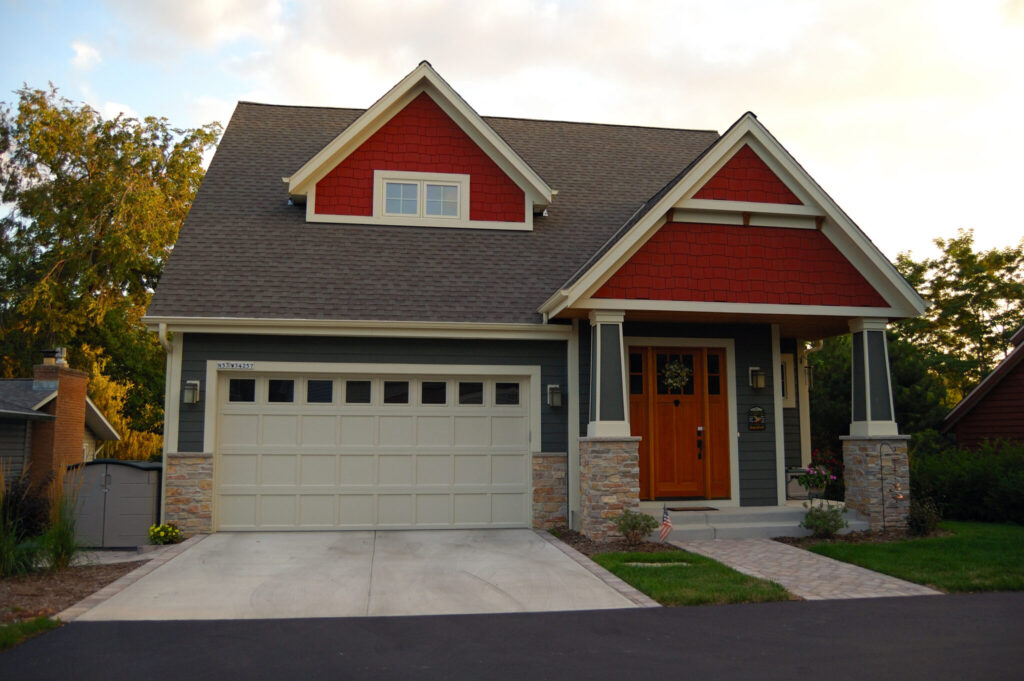
Leave the car where it is. Do not try to force the door up by hand, do not get under it to look at the springs, and do not run the opener again if it already stalled or reversed once. None of that fixes anything and all of it puts you closer to the door or the cable at the moment something moves. Step back, call, and we will talk you through whether it is safe to wait or whether it needs looking at straightaway.
Emergency Garage Door Repair in Cumberland
Most emergency calls we get from this part of Rhode Island come down to one of a small number of failures. A torsion spring snaps, usually with a loud crack, and the door becomes too heavy to lift by hand or by opener. An extension spring on an older setup stretches or breaks, and you will often see the cable hanging loose at one side. A cable jumps the drum or frays at the bottom bracket, which throws the door off level and can let one side drop. Rollers wear out and jump the track, especially on doors that get used several times a day. Or the opener itself has lost its limit settings and either stalls short or slams down with no resistance, which points to a force or limit adjustment problem rather than the motor itself.
Each of these is a different repair. A broken torsion spring means replacing the spring under controlled tension with the correct bar and winding cones for your door’s weight, never something to attempt yourself. A jumped cable means re-seating or replacing the cable and checking the drum for wear. A roller problem might be a straightforward roller swap or it might mean the track has bent and needs realigning. We tell you which one it is before we start, not after.
What we look at
What we look at
Before any part gets touched, we go through the same checks every time. It takes a few minutes and it tells us what actually failed, not just what the symptom looks like.
Door balance
With the opener disconnected, a correctly balanced door should sit still at any point when you lift it by hand. If it crashes down or shoots up, the springs are no longer matched to the door’s weight, whether from a break, a stretch, or someone having fitted the wrong springs in a past repair. This is the single biggest cause of premature opener failure, because the motor ends up doing the lifting job the springs are supposed to do.
Spring type and cycle rating
We confirm whether your door runs torsion springs above the opening or extension springs along the horizontal tracks, and what cycle rating they were specified for. A higher cycle-rated spring lasts longer under daily use, which matters more on a door that opens several times a day than on a seldom-used detached garage.
Cables, drums, rollers, and tracks
We check the lift cables for fraying at the drum and at the bottom bracket, look at drum wear where the cable winds, and run the door through its full travel to check the rollers aren’t binding or jumping the track. A track that has been knocked out of alignment, often from a car bump or a ladder leaning on it, will show up here even if the door still seems to run.
Opener settings and safety reversal
We test the safety reversal, which is the mechanism that makes the door stop and reverse if it meets resistance on the way down. We also check the up and down limit settings and the force setting, since an opener fighting an out-of-balance door will often have its force cranked up to compensate, which is exactly the setup that leads to a crushed obstruction not being detected properly.
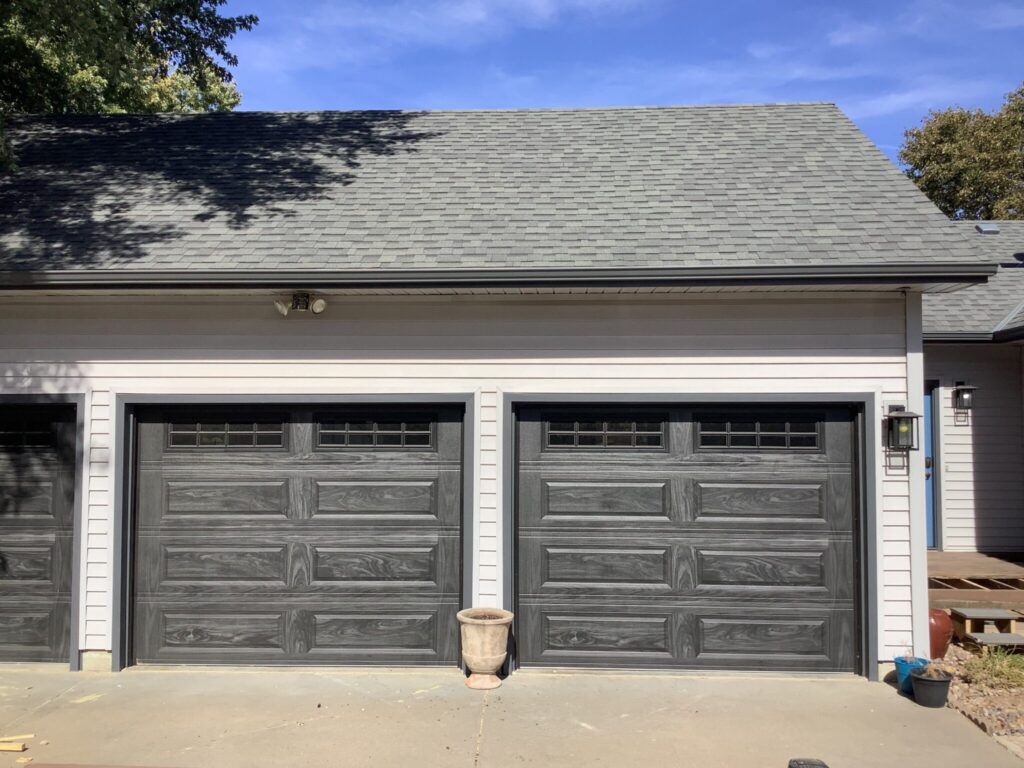
Homes in Cumberland
Cumberland has a wide mix of housing stock, from older homes near the Blackstone River and around Diamond Hill with detached single garages, some still running older wood-panel doors on extension springs, through to the ranch and colonial-style homes built from the 1960s onward with attached two-car garages and standard steel sectional doors. The newer developments toward the Lincoln and Woonsocket lines tend to run double-wide doors on torsion springs with openers already fitted from new construction.
What that mix means in practice is that we see both ends of the job on the same day: a detached garage door on an older extension-spring system that needs careful handling because parts for it are no longer a standard stock size, and a modern 16-foot double door where the fix is a straightforward torsion spring swap or a worn roller set. Knowing which type you have before we arrive saves time once we’re there.
What it costs
None of this changes based on guesswork. We look at the door in front of us, tell you what broke, and give you the choice before any repair starts.
What it costs
Cost depends on what actually failed, not on the fact that it is an emergency. A single broken torsion spring replacement sits toward the lower end of the range, typically between {PRICE_LOW} and {PRICE_HIGH}, while a job that involves replacing both springs, cables, and a set of worn rollers on an older double door runs higher. Opener adjustments and limit resets are usually quick and inexpensive on their own. We give you a number before we start work, not after, so there is no surprise on the invoice.
How fast we can get there
If a part needs ordering, for example a non-standard spring size on an older wood door, we will tell you that up front too rather than leaving you to find out when the job is half done.
Got Questions?
Emergency Repair FAQs
My garage door is stuck half open with my car inside. What should I do right now?
Do not force it and do not pull the emergency release cord while it is part way up. A door in that position with a broken spring can drop suddenly once the release is pulled. Leave the car where it is and call us so we can tell you whether it is safe to wait.
Is a loud bang from the garage always a broken spring?
It is the most common cause. A torsion spring failing under tension makes a sharp crack that people often describe as a gunshot or a car backfiring. It can also be a cable snapping, which is quieter but still means the door should not be operated until it is checked.
Can I replace a broken torsion spring myself to save money?
No. A torsion spring is wound under extreme tension to lift the full weight of the door, and winding or unwinding one without the right bars and cones has caused serious injuries. This is a job for someone trained to do it, every time.
Are you licensed to do garage door repair in Rhode Island?
AB Garage Door is based in Bellingham, Massachusetts and the site currently lists licensing for Massachusetts and New Hampshire. If you need confirmation of our standing to work in Rhode Island specifically, ask us directly before booking.
Do older wood garage doors in Cumberland need different parts?
Often yes. Some older detached garages here still run wood panel doors on extension spring systems, and the hardware sizes on those can differ from what's standard on a modern steel sectional door. We check this before quoting so there are no surprises if a part needs ordering.
How fast we can get there
Cumberland sits about 8.4 miles from our base in Bellingham, which keeps it a reasonably quick run for us compared with towns further out. We do not promise a fixed response time because traffic on Route 295 and the time of day both affect it, but it is one of the closer calls we take and we will tell you honestly when we’re on the way and roughly how long out we are.
Call AB Garage Door
If your door is stuck, off its track, or making a noise you have not heard before, call us and describe what happened. That alone usually tells us what parts to bring so the first visit is also the last one.
Request a Free Quote
Not urgent yet but you have noticed a spring looking stretched, a cable fraying, or a door that is starting to sound different when it runs. Get in touch for a free quote before it becomes an emergency call.