
- Services
- Garage Doors
- Service Areas
Attleboro, MA
Bellingham, MA
Canton, MA
Framingham, MA
Franklin, MA
Franklin, MA
Mansfield, MA
Milford, MA
Natick, MA
North Attleboro, MA
Uxbridge, MA
Walpole, MA
Woonsocket, RI
Ashland, MA
Ashland, MA
Blackstone, MA
Cumberland, RI
- About
- Contact
- Services
- Garage Doors
- Service Areas
Attleboro, MA
Bellingham, MA
Canton, MA
Framingham, MA
Franklin, MA
Franklin, MA
Mansfield, MA
Milford, MA
Natick, MA
North Attleboro, MA
Uxbridge, MA
Walpole, MA
Woonsocket, RI
Ashland, MA
Ashland, MA
Blackstone, MA
Cumberland, RI
- About
- Contact
Need a quick offer? Call us now
(617) 655-6581
- Open 24/7
- Emergency Repair
Emergency Garage Door Repair in Milford, MA
If a torsion spring just let go with a bang off Main Street or up near the Granite Street side of town, the door is probably sitting crooked or won’t move at all, and the car behind it isn’t going anywhere this morning. That loud bang is almost always a broken spring, not a motor failure, and it is the single most common reason we get called out around Milford.
Before anything else: do not force the door up by hand, do not pull the emergency release cord while the door is sitting part way open, and do not stand or let anyone stand underneath it. A door held by a broken spring or a slipped cable has nothing supporting its weight but the track and whatever is left of the lift system. Leave it where it is until someone qualified looks at it.
Emergency Garage Door Repair in Milford
Most emergency calls in Milford break down into a short list of failures. A torsion spring mounted above the door snaps after years of cycling and the door drops or won’t lift past a few inches. An extension spring, the kind running along the horizontal tracks on older setups, can snap or a cable can jump its drum, leaving one side of the door hanging lower than the other. Rollers wear out and bind in the track, which strains the opener until it stalls or trips its own safety limit. Less dramatic but just as common: the opener runs but the door reverses itself, which usually points to a misadjusted safety reversal system or a limit setting that’s drifted out of range.
Each of these has a specific fix. A broken torsion spring gets replaced with a spring matched to the door’s weight and cycle life, never just swapped for whatever is on the shelf. A jumped cable means pulling the drum, checking it for wear, and reseating the cable under proper tension. A binding roller gets replaced and the track it was riding in gets checked for being bent or pulled away from the frame. None of this is something to attempt with the door still under spring tension – that part of the job stays with us.
What we look at
What we look at
Before we touch anything, we run through the same checks regardless of which part actually failed. A door that’s been limping along on a bad component usually has two or three things wrong with it, not just the obvious one.
Door balance
We disconnect the opener and lift the door by hand to see where it holds. A properly balanced door stays put at about waist height on its own. If it drops, the springs are no longer carrying their share of the weight, and that mismatch is often what caused the failure in the first place.
Spring type and cycle rating
We confirm whether the door runs on torsion springs above the opening or extension springs along the tracks, measure the wire size and length, and check what cycle rating fits the door’s weight and how often it’s used. A spring rated for light residential use on a door that gets opened a dozen times a day will fail early every time.
Cables, drums, rollers, and tracks
Lift cables fray at the drum end long before they snap outright, so we check them under tension rather than just glancing at them. Drums get inspected for cracks, rollers for flat spots or seized bearings, and tracks for the kind of slow bend that comes from a door being forced when it was already binding.
Opener settings and safety reversal
We test the force and limit settings on the opener itself, then run the safety reversal test – the door has to stop and back off when it meets resistance a couple of inches off the floor. If it doesn’t reverse, that’s a safety fault, not a minor adjustment, and it gets fixed before we call the job done.
Homes in Milford
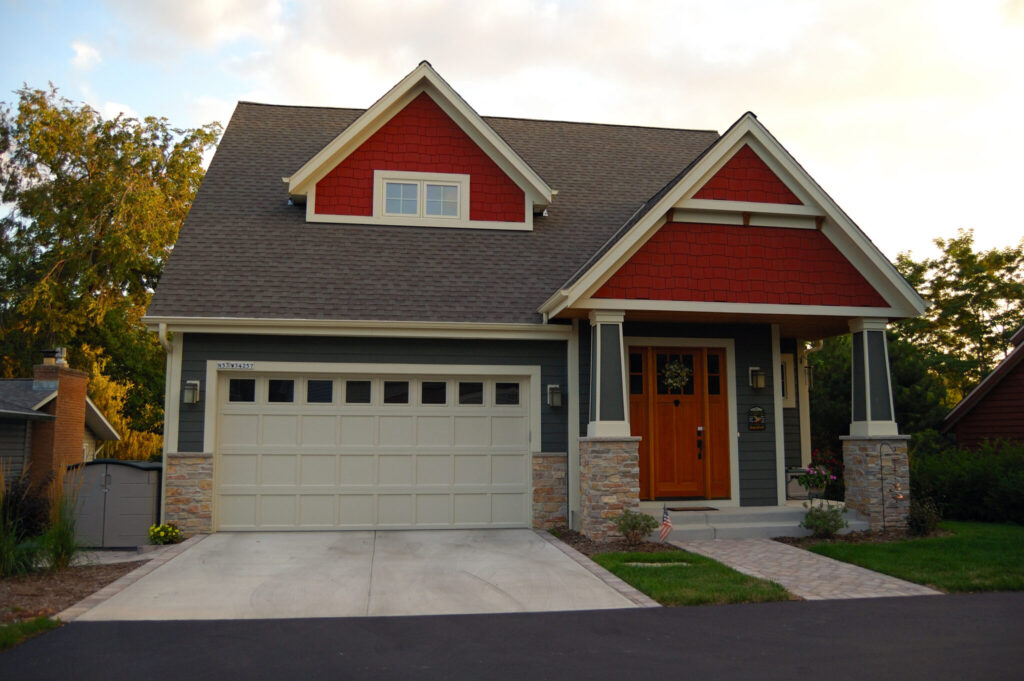
A lot of the housing stock around Milford dates to the mid-20th century, with capes and colonials carrying single attached garages built for one car and sized accordingly – narrower openings, lower headroom, and in some cases original wood doors that are still hanging on with repeated hardware repairs rather than full replacement. Those older wood sectional doors are heavier than modern steel or composite doors of the same size, which means the springs on them see more strain and tend to be the first thing to go.
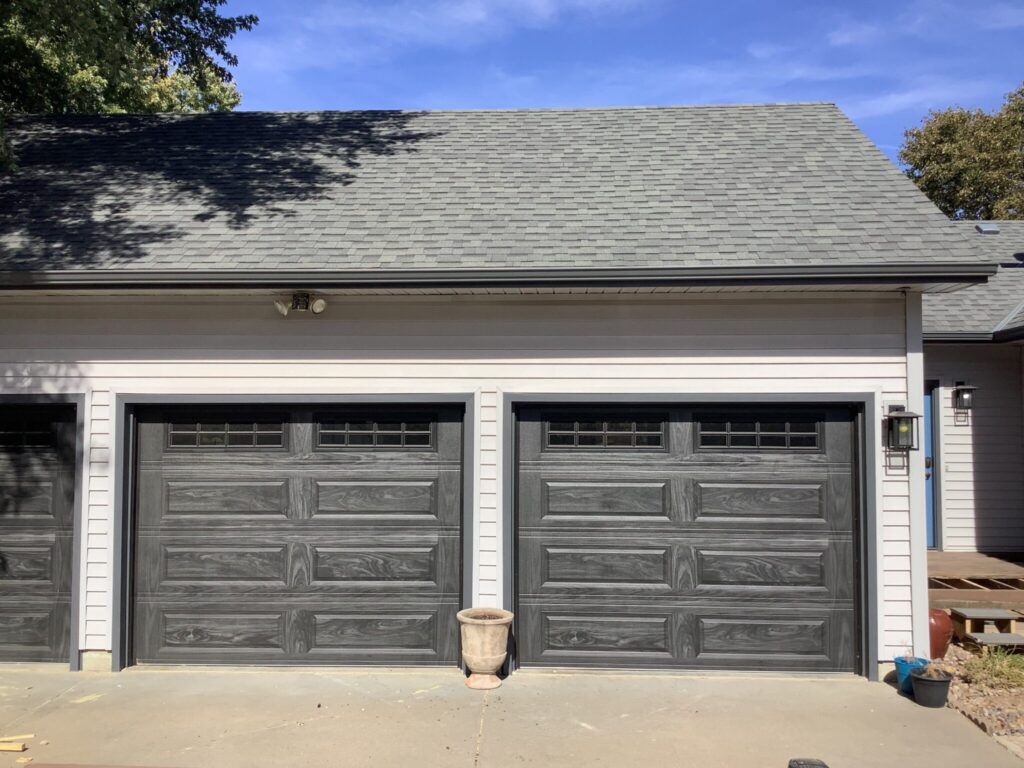
Newer construction on the outskirts of town, and the subdivisions built from the 1980s onward, more commonly run two-car garages with a single wide door or two single doors side by side, almost always steel and almost always opener-driven from day one. Detached garages still show up on older lots near the town center, usually set further back from the house, which changes the opener wiring and sometimes the door size compared to an attached garage built flush with the house.
What it costs
None of that changes how we diagnose a failure, but it does change what parts we’re likely to be carrying when we show up and whether we’re dealing with a door that’s forty years old or four.
What it costs
A straightforward spring replacement or cable repair generally runs between {PRICE_LOW} and {PRICE_HIGH}, and that range moves depending on spring type, whether both springs need replacing rather than just the broken one, door size and weight, and whether track or roller damage turns up once we’re in there. We’ll tell you what we find and what it costs to fix before any work starts, not after.
How fast we can get there
We don’t quote a flat number over the phone for emergency work because a door that looks like a simple spring job sometimes turns out to have a bent track underneath it, and we’d rather give you an honest figure on site than a low one that changes later.
Got Questions?
Emergency Repair FAQs
My garage door won't move at all and the car is trapped inside. What should I do?
Don't force it by hand and don't pull the emergency release while the door is only partway open, since that releases whatever control is left on a door that may be held by a damaged spring or cable. Call us and we'll walk you through whether it's safe to move the car another way or whether to leave it until we arrive.
Is a loud bang from the garage always a broken spring?
It's the most common cause by a wide margin, especially on older doors that have been cycling for years. It can also be a cable snapping off a drum, which sounds similar and carries the same instruction: leave the door alone until someone can look at it.
Can I replace a broken torsion spring myself to save money?
No. A torsion spring holds enormous stored tension even when it's broken, and winding or unwinding one without the right bars and technique has put people in the hospital. This is one repair we always do in person, never as a phone-talked DIY job.
Why does my opener run but the door won't go all the way up or down?
That's usually a limit setting that's drifted, a safety sensor that's misaligned or dirty, or a door that's become unbalanced and is now too heavy for the opener to manage on its own. We check all three during an emergency call rather than guessing at one.
Do older wood garage doors in Milford need different parts than newer steel ones?
Often yes. Wood doors are heavier than steel or composite doors of the same size, so they need springs rated for that extra weight, and original hardware on an older door sometimes isn't sized the same as what's sold today. We carry a range of spring sizes for exactly this reason.
How fast we can get there
Milford is about 8.2 miles from our base in Bellingham, which keeps it a short run for us on most days. We don’t promise a fixed arrival window on emergency calls because traffic on Route 140 and how many calls are already ahead of yours both affect it, but it’s close enough that we’re not starting the drive from across the region.
Call AB Garage Door
If your door is stuck, off its track, or making a noise it’s never made before, call {PHONE}. Tell us what happened – a bang, a cable that let go, a door that stopped responding – and we’ll tell you what to expect before we get there.
Request a Free Quote
Prefer to send details first? Reach out through our contact form with a description or a photo of the door and we’ll follow up with next steps and a realistic cost range for the repair.