
- Services
- Garage Doors
- Service Areas
Attleboro, MA
Bellingham, MA
Canton, MA
Framingham, MA
Franklin, MA
Franklin, MA
Mansfield, MA
Milford, MA
Natick, MA
North Attleboro, MA
Uxbridge, MA
Walpole, MA
Woonsocket, RI
Ashland, MA
Ashland, MA
Blackstone, MA
Cumberland, RI
- About
- Contact
- Services
- Garage Doors
- Service Areas
Attleboro, MA
Bellingham, MA
Canton, MA
Framingham, MA
Franklin, MA
Franklin, MA
Mansfield, MA
Milford, MA
Natick, MA
North Attleboro, MA
Uxbridge, MA
Walpole, MA
Woonsocket, RI
Ashland, MA
Ashland, MA
Blackstone, MA
Cumberland, RI
- About
- Contact
Need a quick offer? Call us now
(617) 655-6581
- Open 24/7
- Emergency Repair
Garage Door Cable Repair in Milford, MA
One side of the door looks like it has dropped two inches lower than the other, and the whole thing is hanging at an angle in the opening. Or it came down fine and now will not budge going back up, with a loop of frayed wire sitting loose by the bottom bracket. Either way, a cable has let go, and the door is not safe to run again until someone deals with it properly.
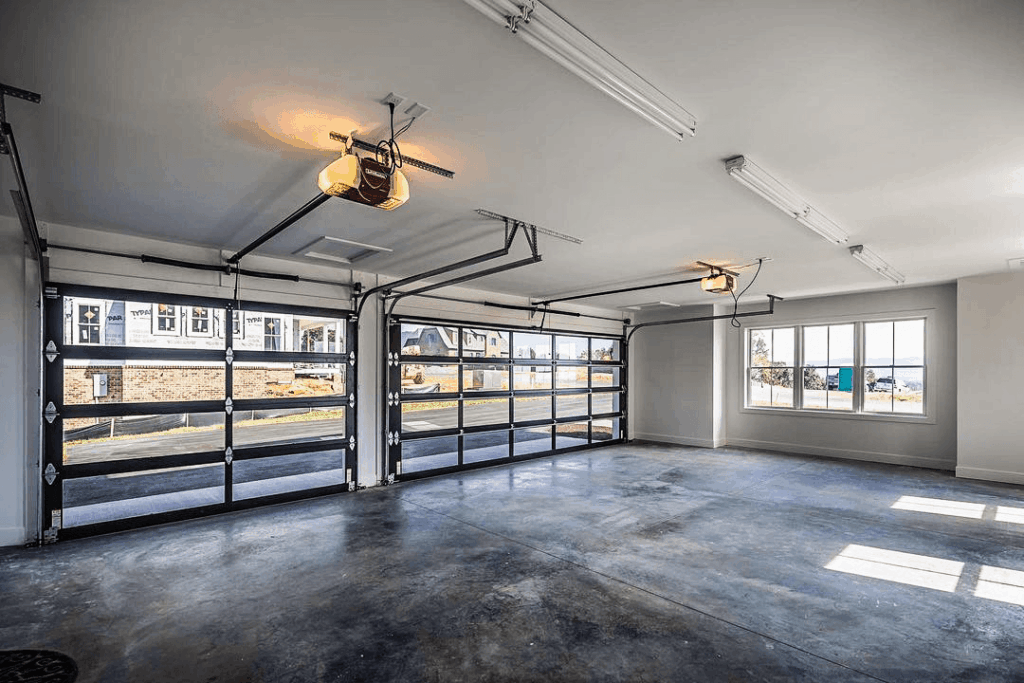
We get calls like this from the Plains, from the Cedar Swamp area, and from the older streets around downtown Milford where the garages are closer in age to the houses than anything that has been added since. The fix is the same no matter which street you are on: find why the cable failed, replace it correctly, and check the rest of the system before anyone touches the opener button again.
Garage Door Cable Repair in Milford
The cables run from the bottom corner brackets of the door up to the cable drums mounted on the torsion shaft at the top of the opening, or in older setups, through a pulley system tied into the spring. Their job is to carry the door’s weight in step with the springs as it travels. When a cable frays, slips off a drum, or snaps outright, the door loses that support on one side. It drops crooked, jams in the tracks, or slams down hard if the spring side still has tension in it.
Most cable failures we see in Milford trace back to one of three things: a worn cable that has been fraying quietly for months, a drum that has slipped out of alignment on the shaft, or a bottom bracket that has rusted or bent and is chewing through the cable end. Replacement means pulling tension off the torsion spring safely, removing the old cable from the drum and bracket, fitting a new cable rated for the door’s weight, and re-tensioning the system so both sides lift evenly. If the drum is worn or the bracket is damaged, those get replaced at the same time, because a new cable on a bad drum just fails again.
This is not a job for the homeowner to attempt. The cable failed because the spring system is still holding tension against the door, and that tension is what makes torsion and extension springs dangerous to work on without the right bars and clamps. We explain what broke and what it will take to put right. We do not hand out a DIY procedure for it.
What we look at
What we look at
A cable rarely fails on its own. Before we replace anything, we check the rest of the system that put stress on it in the first place.
Door balance and movement
With the opener disengaged, we check whether the door holds its position partway up, or whether it wants to fall or fly open. A door that is out of balance is putting uneven load on one cable, which is often exactly how the failure started.
Spring type and cycle rating
We confirm whether the door runs on torsion springs or extension springs, and roughly how many cycles the current springs were rated for against how many they have likely done. Springs nearing the end of their rated life put more strain on cables and drums as they weaken unevenly.
Cable and drum condition
Both cables get inspected, not just the one that failed, since fraying rarely shows up on only one side. We also check the drums for wear grooves, correct seating on the shaft, and whether the set screws have loosened over time.
Track alignment, opener settings, and safety reversal
A door that has been dropping or binding on one side often knocks the tracks slightly out of alignment. We check the tracks, the opener’s force and limit settings, and run the safety reversal test to confirm the door stops and reverses correctly before we call the repair finished.
Homes in Milford
None of this adds much time to the visit. It is the difference between a cable replacement that lasts and one that fails again in a year because the real cause never got looked at.
Homes in Milford
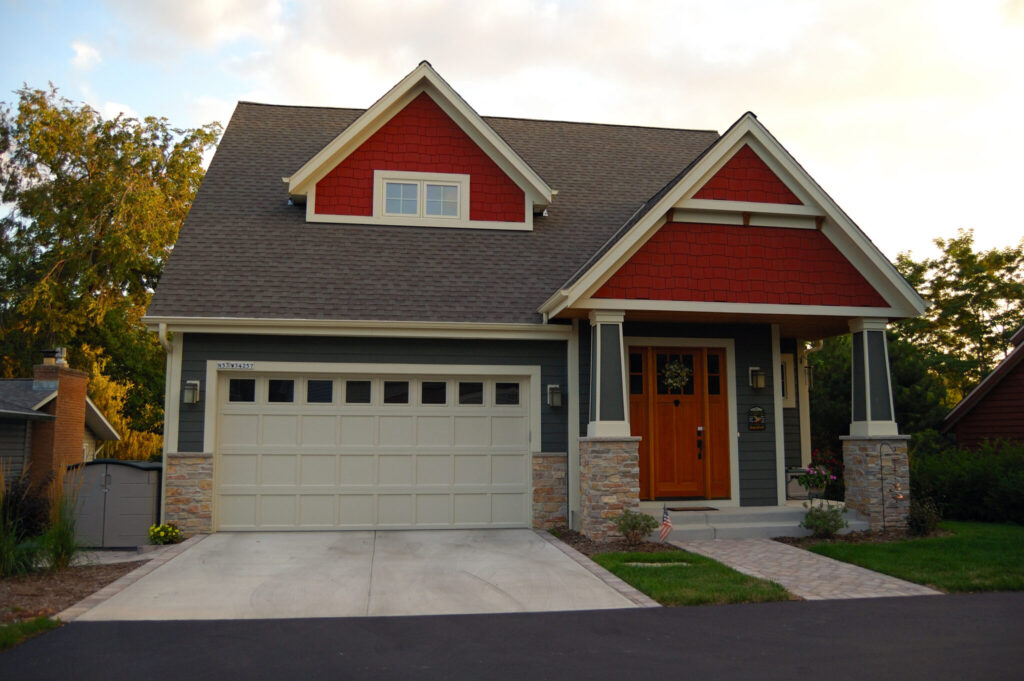
Milford has a mix of housing stock that keeps us on our toes. Around the downtown and the older residential streets near Draper Park, you still find early twentieth-century homes with detached single-car garages, some with wood-panel doors that have been patched and repainted for decades rather than replaced. Those doors are often lighter than a modern steel door, but their hardware is older too, and original cables and pulleys on these can be well past due for replacement even if they have not failed yet.
Further out toward the Hopedale and Mendon lines, and in the newer developments off Rte 16 and Congress Street, garages are more commonly attached two-car setups with standard 16-foot double doors or paired single doors, running factory torsion spring systems from the 2000s or later. These see heavier daily use from two vehicles cycling in and out, which is the main reason cables and drums on these doors wear faster than on a door used once a day.
What it costs
Whichever type of home you are in, the repair principle does not change. What changes is the cable length, the drum size, and sometimes the bracket style, which is why we look at the actual door before quoting anything.
What it costs
A straightforward cable replacement on one side, with sound drums and brackets, runs toward the lower end of the range, typically {PRICE_LOW}. If both cables need replacing, or the drums, bottom brackets, or rollers are worn enough to need replacing alongside the cable, the job moves up toward {PRICE_HIGH}. Older wood doors sometimes need custom bracket work that affects the price too. We give you the number before we start work, not after.
How fast we can get there
There is no flat rate that fairly covers every door in Milford, and we would rather tell you that than quote a number over the phone that does not hold once we are looking at the actual hardware.
Got Questions?
Common questions
Can I drive on a door with a broken cable if it's only stuck halfway?
No. A door hanging on one cable can drop suddenly or come off the tracks entirely. Leave the car in the driveway and call for a repair rather than forcing the door with the opener.
Why did my cable snap when the door seemed fine yesterday?
Cables usually fray gradually from the inside of the strands outward, so there is often no visible warning. The last few strands give way all at once, which is why it feels sudden even though the wear built up over months.
Is a cable repair the same as a spring repair?
No, though the two are connected. The spring stores the lifting force, while the cable transfers that force to the door. A failed cable does not always mean the spring has to be replaced, but we check both since one often strains the other.
Do older wood garage doors in Milford need a different cable setup?
Often yes. Many of the older wood doors around Milford use lighter bottom brackets and sometimes a different pulley arrangement than a standard steel door, so we match the replacement cable and hardware to what is actually on the door.
Will you replace both cables even if only one broke?
We will tell you the condition of both and let you decide, but if the intact cable is showing fraying or has done comparable cycles, we usually recommend replacing it at the same time rather than making a second trip.
How fast we can get there
Milford sits about 8.2 miles from our base in Bellingham, which is a short run for us along Rte 16 or Hartford Ave most days. We are not going to promise a guaranteed arrival window here, since traffic and the rest of the day’s calls both play a part, but it is one of the closer towns we cover and we can usually fit a cable repair in without a long wait.
Call AB Garage Door
If a cable has gone and the door is stuck crooked or will not move, stop using the opener and call us. Trying to force it with the opener can bend tracks or damage the opener itself, on top of the cable problem you already have.
Request a Free Quote
Tell us what the door is doing, whether it is a single or double, and roughly how old the setup is if you know it. We will give you a straight answer on what is likely wrong and what it will take to fix before we ever get to your driveway.