
- Services
- Garage Doors
- Service Areas
Attleboro, MA
Bellingham, MA
Canton, MA
Framingham, MA
Franklin, MA
Franklin, MA
Mansfield, MA
Milford, MA
Natick, MA
North Attleboro, MA
Uxbridge, MA
Walpole, MA
Woonsocket, RI
Ashland, MA
Ashland, MA
Blackstone, MA
Cumberland, RI
- About
- Contact
- Services
- Garage Doors
- Service Areas
Attleboro, MA
Bellingham, MA
Canton, MA
Framingham, MA
Franklin, MA
Franklin, MA
Mansfield, MA
Milford, MA
Natick, MA
North Attleboro, MA
Uxbridge, MA
Walpole, MA
Woonsocket, RI
Ashland, MA
Ashland, MA
Blackstone, MA
Cumberland, RI
- About
- Contact
Need a quick offer? Call us now
(617) 655-6581
- Open 24/7
- Emergency Repair
Commercial Garage Door Service in Milford, MA
A roll-up door stuck halfway over a loading dock on Fortune Boulevard does not just sit there looking bad. It stops trucks, it stops staff, and depending on the hour it can stop a whole shift. Milford’s mix of light industrial parks, retail plazas along Route 16 and 109, and older mill-adjacent commercial buildings means the doors AB Garage Door gets called to here are rarely the same unit twice.
Some are steel sectional doors on heavy-duty torsion springs rated for hundreds of cycles a day. Others are older wood or hollow-metal doors on a converted retail space that was never built for commercial traffic in the first place. Either way, the call usually comes in the same way: the door won’t open, won’t close all the way, or is making a noise nobody likes the sound of.
Commercial Garage Door Service in Milford
Most commercial failures here come down to a handful of causes. A torsion spring on a high-cycle counterbalance system reaches the end of its rated life and snaps, usually with a bang loud enough that staff think something fell off a shelf. A cable jumps the drum because a roller has seized or the track has pulled away from the jamb, and the door hangs crooked in the opening. An opener’s commercial-grade motor keeps running but the door barely moves because the chain or belt has slipped, or because the limit settings have drifted so the unit thinks it has already closed.
On older wood-slat or panel doors still in service around some of Milford’s smaller retail and warehouse buildings, we also see rot at the bottom panel and hinges pulling loose from softened wood, which throws the whole door out of square even before anything mechanical fails. Whatever the cause, the fix starts with identifying which part actually failed rather than replacing the whole assembly. A dead cable drum does not mean a new door. A tired spring does not mean a new opener.
We do not recommend touching a broken torsion spring yourself. It holds the full weight of the door under tension and letting it go wrong, or trying to wind it without the right bars, is how people end up in an ambulance. That part of the job is ours.
What we look at
Door balance and movement
Before we touch a spring or opener, we disconnect the opener and move the door by hand. A properly balanced commercial door should hold its position anywhere in the track with no help. If it drops on its own or fights you on the way up, the springs are no longer carrying their share of the load, and that imbalance is what burns out openers early.
Spring type and cycle rating
Commercial doors are built around torsion springs rated by cycle count, not just by weight. We check the spring type, wire gauge, and winding to confirm it matches the door’s actual daily use. A door cycling forty times a day on a spring built for ten will fail early no matter how well it’s installed, and that mismatch is common on buildings that have changed use over the years.
Cable and drum condition
Frayed strands, a cable sitting off-center on the drum, or a drum with a cracked flange all point to a system that is close to letting go. We inspect both cables and both drums, not just the side that looks like the problem, because a worn drum on one side puts uneven load on the other.
Track, opener, and safety operation
We check track alignment along the full run, not just near the bottom where damage is visible, since a door racked out of square on a commercial unit often shows up first as a slight bind higher up. On the opener, we confirm the force settings aren’t masking a mechanical problem and run the safety reversal test, checking that the door reverses cleanly when it meets resistance before it’s left in service.
Homes in Milford
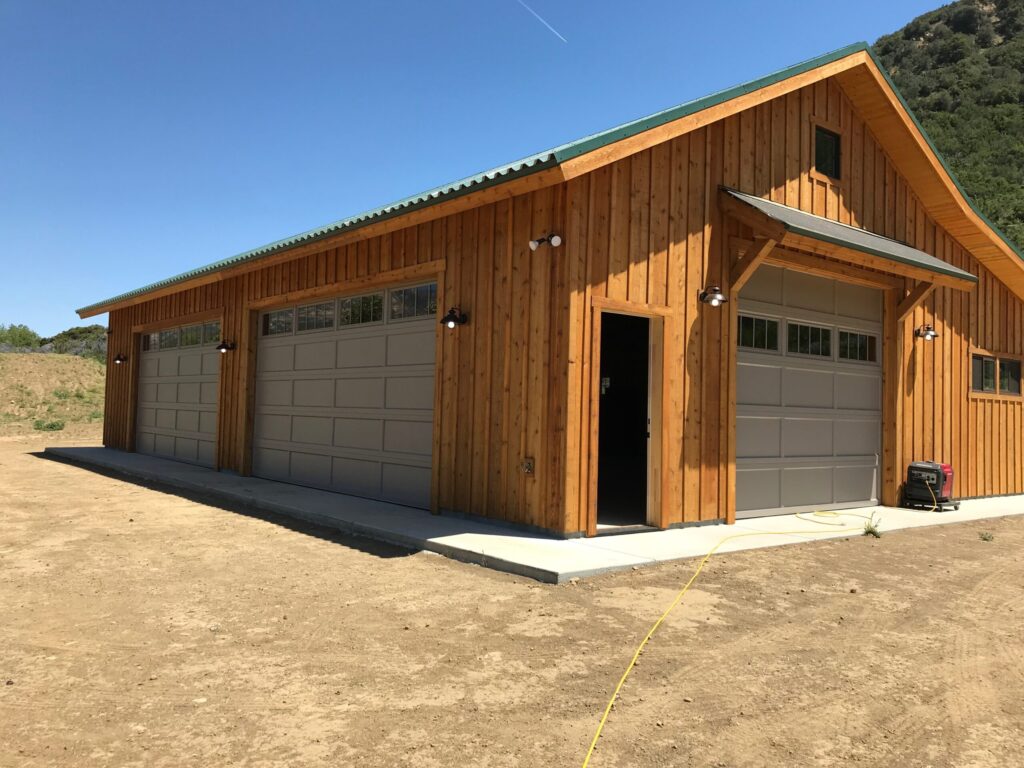
Milford’s commercial buildings split fairly cleanly into two groups. Along Fortune Boulevard, Medway Road, and the industrial parks off Route 140, you’ve got newer light-industrial and warehouse construction built with wide steel sectional doors, usually 10 to 14 feet, on commercial torsion systems designed for repeated daily cycles. These are the units most likely to fail from cycle fatigue rather than neglect, simply because they’re used hard.
Closer to downtown and along the older commercial stretches near South Main Street and the Upper Charles Trail corridor, you’ll still find smaller retail and shop buildings with single-door garage openings that were never designed for heavy daily traffic, some of them still running original wood or early steel doors from decades back. Attached loading areas behind these older storefronts tend to be tighter, which limits how much track and header clearance we have to work with when we’re replacing a spring system or swapping in a new opener.
Knowing which type of building you’re in before we arrive helps us bring the right spring stock and opener parts on the first visit instead of a second trip.
What it costs
Commercial jobs vary more than residential ones because the doors themselves vary more. A single torsion spring replacement on a standard-use commercial door typically runs in the {PRICE_LOW} to {PRICE_HIGH} range, with cost moving up for high-cycle springs, wider doors, dual-spring systems, or cable and drum replacement done at the same time. Opener repairs and track realignment are usually priced separately once we’ve seen the actual damage. We’ll always give you the number before any work starts, not after.
How fast we can get there
Milford is about 8.2 miles from our base in Bellingham, which puts most calls here within a short, direct drive down Route 16 or Route 140 depending on where your building sits. We don’t quote a fixed response time because it depends on what else is on the schedule that day, but we’ll give you a realistic window when you call rather than a vague promise.
Got Questions?
Emergency Repair FAQs
Do you work on roll-up and sectional commercial doors in Milford?
Yes. We service steel sectional doors, roll-up doors, and older wood commercial doors, along with the torsion spring systems and commercial-grade openers that run them.
How do I know if it's the spring or the opener that failed?
If the opener motor runs but the door barely moves, or it reverses before reaching the floor, that usually points to a spring or balance problem rather than the opener itself. We confirm this by disconnecting the opener and checking how the door moves by hand.
Can a commercial door be repaired or does it need full replacement?
Most calls are repairs: a spring, a cable, a drum, a roller, or an opener component. Full replacement is usually only needed when the door itself is structurally damaged or so old that matching parts no longer exist.
What cycle rating does my business need?
It depends on how many times the door opens and closes daily. A door used a handful of times a day needs a different spring than one cycling dozens of times, and we size the spring to your actual use, not a generic standard.
Do you handle emergency calls for a door stuck open overnight?
Yes, call us and describe the situation. We'll give you a realistic estimate of when we can get to your Milford location based on the day's schedule.
Request a Free Quote
Call {PHONE} to describe the problem and get a straight answer on what’s likely involved before we book a visit. AB Garage Door is licensed and insured in Massachusetts and New Hampshire, and we work on commercial doors across Milford and the surrounding towns out of our Bellingham shop.
Schedule Commercial Garage Door Service
If a door at your Milford property is stuck, off-track, or making a noise you haven’t heard before, tell us what you’re seeing and hearing when you call. That detail, along with the door’s approximate age and size, helps us bring the right parts the first time.