
- Services
- Garage Doors
- Service Areas
Attleboro, MA
Bellingham, MA
Canton, MA
Framingham, MA
Franklin, MA
Franklin, MA
Mansfield, MA
Milford, MA
Natick, MA
North Attleboro, MA
Uxbridge, MA
Walpole, MA
Woonsocket, RI
Ashland, MA
Ashland, MA
Blackstone, MA
Cumberland, RI
- About
- Contact
- Services
- Garage Doors
- Service Areas
Attleboro, MA
Bellingham, MA
Canton, MA
Framingham, MA
Franklin, MA
Franklin, MA
Mansfield, MA
Milford, MA
Natick, MA
North Attleboro, MA
Uxbridge, MA
Walpole, MA
Woonsocket, RI
Ashland, MA
Ashland, MA
Blackstone, MA
Cumberland, RI
- About
- Contact
Need a quick offer? Call us now
(617) 655-6581
- Open 24/7
- Emergency Repair
Emergency Garage Door Repair in Dover, MA
A loud bang from the garage usually means a torsion spring has let go, and on the long driveways and oversized garages common on Dover’s larger lots, that spring is often carrying more door than a standard suburban setup. If your car is trapped behind a door that won’t move, or an opener is grinding and going nowhere, you’re in the right place.
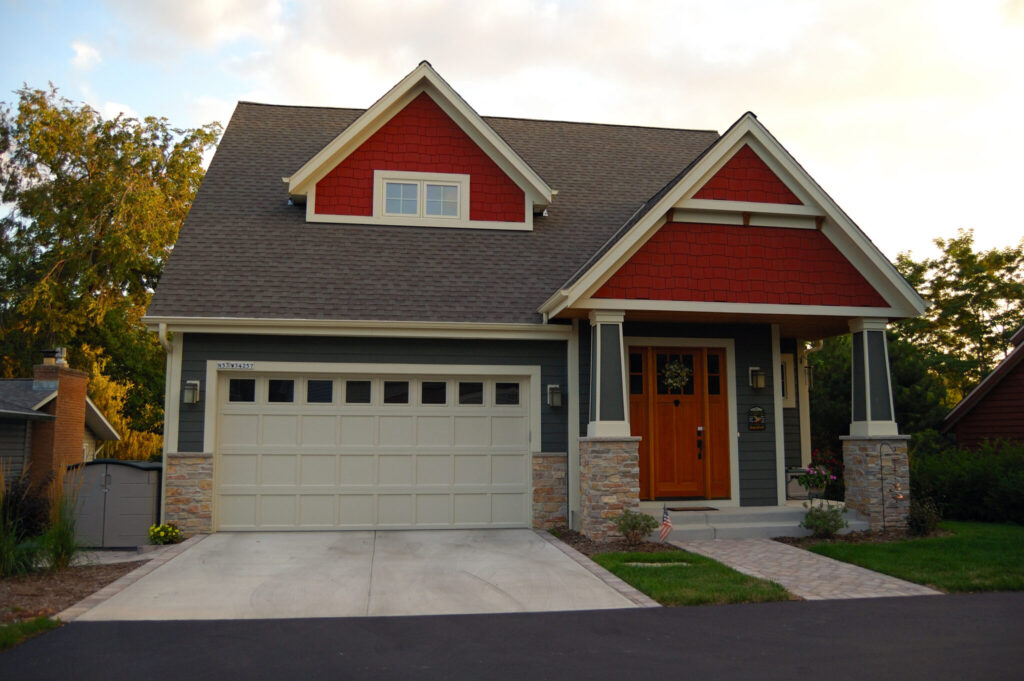
Do not force the door up by hand, and do not pull the emergency release cord while the door is sitting part way open on a broken spring. With no spring tension holding it, a heavy wood or insulated steel door can drop fast. Keep clear of the opening, keep the car where it is, and call us. We’ll walk you through what’s safe to do while you wait.
Emergency Garage Door Repair in Dover
Most emergency calls in Dover come down to one of three things: a broken torsion spring, a snapped or frayed lift cable, or an opener that’s lost its grip on the door. A torsion spring sits on a shaft above the door and winds and unwinds as the door travels. Cycle-rated for a set number of open-and-close cycles, it eventually fatigues and breaks, usually with a sharp crack you can hear inside the house. Extension springs, mounted above the horizontal tracks on either side, fail the same way but with less drama and more risk if the safety cables aren’t in place to catch them.
Cables run from the bottom brackets up to the drums at each end of the torsion shaft. When a cable frays or jumps its drum, the door hangs crooked or refuses to move evenly, and forcing it can bend the track or rip a bottom bracket loose. On openers, the common failure is a worn drive gear, a slipping belt, or limit and force settings that have drifted so the unit thinks it’s hit an obstruction when it hasn’t. We diagnose which of these it is before we touch anything, then replace the specific part under load-safe conditions, not the whole assembly unless the whole assembly needs it.
What we look at
What we look at
Before we quote a repair we check the mechanics that actually caused the failure, not just the symptom you called about.
Door balance
We disconnect the opener and move the door by hand to see where it holds position. A properly balanced door stays put at any height. If it drops or shoots up, the springs are mismatched to the door’s weight, which is often what caused the original spring to fail early in the first place.
Spring type and cycle rating
We confirm whether you’ve got torsion or extension springs and what cycle rating was installed. A door that’s used several times a day needs a higher cycle rating than one in a garage that sees a car twice a week. Installing to the wrong rating is the most common reason we see repeat spring failures within a year or two.
Cables, drums, rollers, and tracks
We check both lift cables for fraying at the drum end, inspect the drums for wear grooves, and run a hand along the tracks for dents or spread sections that throw rollers off their path. Worn rollers get replaced before they chew up the track further.
Opener settings and safety reversal
We test the auto-reverse function with a block of wood on the floor under the door. If the door doesn’t stop and reverse on contact, the force and limit settings get corrected on the spot. This is a federally required safety feature on residential openers, not an optional adjustment, and it’s one of the first things we check after any opener repair.
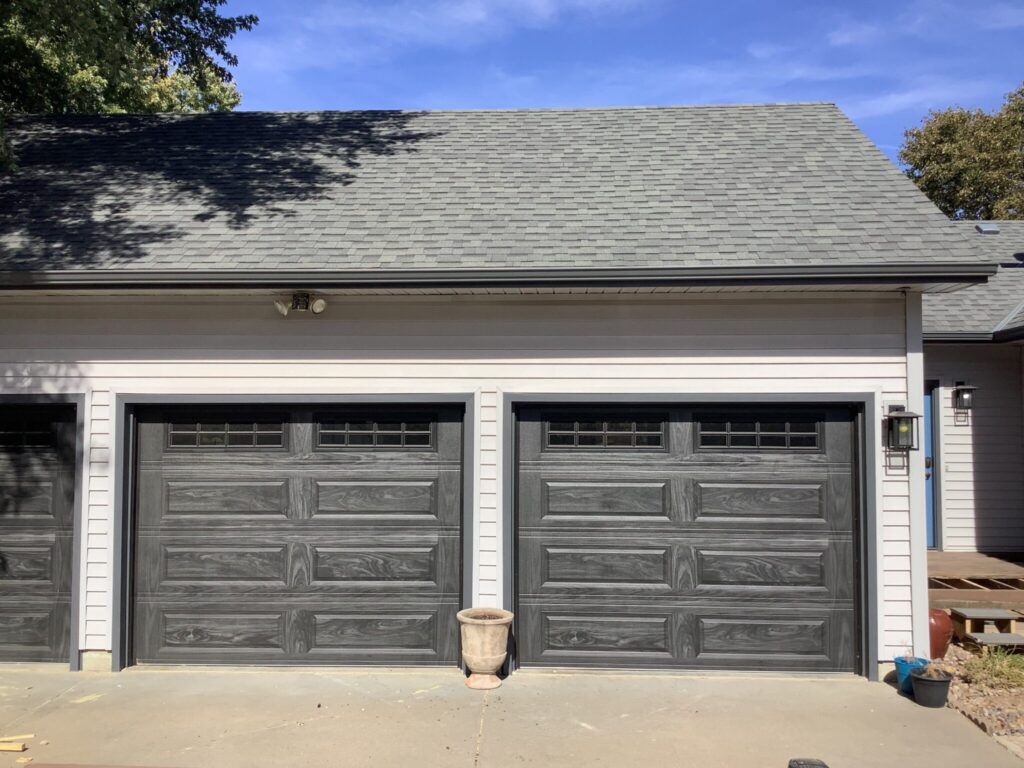
Homes in Dover
Dover’s housing stock leans heavily toward larger single-family lots, many built from the 1960s through the 1990s with attached two- and three-car garages sized for full-size vehicles and equipment storage. Doors on these are typically wider sections, 16 feet across for a double bay, which means heavier panels and springs wound to handle that extra weight. Some of the town’s older colonial and farmhouse-style properties still run detached garages or barns converted for vehicle storage, often with an original wood carriage door that’s been retrofitted with a motor rather than replaced outright.
We still find a fair number of those original wood doors in service on Dover’s older properties, and they bring their own wear points: swollen panels in wet weather, hinges that have stretched over decades, and track hardware sized differently than what current steel doors use. When we’re called to one of these, we check hardware compatibility before ordering parts, since a standard off-the-shelf roller or hinge doesn’t always fit a 40-year-old wood door frame.
What it costs
Whatever the age of the door, the fix depends on what actually broke, not a generic package price.
What it costs
A straightforward spring replacement generally falls between {PRICE_LOW} and {PRICE_HIGH}, with the spread driven by spring type, how many you need, and the door’s weight and cycle rating. Cable replacement, roller swaps, or an opener force adjustment usually sit toward the lower end on their own. Costs move up when a broken cable has also damaged a bracket or bent the track, or when a wood door’s hardware needs sourcing rather than stocking. We give you a number before we start work, not after.
How fast we can get there
Bellingham sits about 12 miles from Dover, which puts most of our emergency calls to you within a reasonable drive on Route 109 or through Medfield.
Got Questions?
Emergency Repair FAQs
My garage door is half open and my car is stuck behind it. What should I do?
Don't force it by hand and don't pull the emergency release cord while it's part way up, since a door with a broken spring can drop suddenly once released. Leave it where it is and call us. In most cases we can get the door moving safely during the repair rather than you trying to clear it yourself.
Is it safe to use the garage door if only one spring has broken?
No. Most residential doors use two torsion springs working together, and if one breaks the other is carrying the full weight of the door alone. It will fail faster under that load, and the door is likely out of balance in the meantime, which puts extra strain on the opener too.
Do you work on older wood garage doors, not just steel ones?
Yes. We see a number of original wood doors still in service on Dover's older properties and we service the hardware on these as well as modern steel doors, checking compatibility before ordering replacement parts since older frames sometimes use different hinge and roller sizing.
Why did my garage door opener stop working with no warning?
Often the opener itself is fine but the door isn't moving freely, so the motor hits its force limit and stops, or a drive gear or belt has worn out from carrying an unbalanced door for months. We test the door separately from the opener to find out which one actually failed.
How much notice do you need for an emergency call in Dover?
None, you can call as soon as the problem happens. We're about 12 miles out from our Bellingham base, so give us a call and tell us what's happening and we'll let you know a realistic time for that day.
How fast we can get there
We don’t promise a fixed arrival window because traffic on 109 and the back roads through Medfield varies through the day, but Dover is a regular stop for us given the distance from our Bellingham base. Call ahead and we’ll give you a realistic estimate for that day based on where our crew already is.
Call AB Garage Door
If your door is stuck, your spring has broken, or the opener won’t respond, call {PHONE}. Tell us what you’re seeing and hearing and we’ll tell you what we think has failed before anyone drives out. We’re licensed and insured in Massachusetts and New Hampshire ({LICENSE_MA}, {LICENSE_NH}) and handle residential and commercial doors throughout Dover and the surrounding towns.
Request a Free Quote
Send us a photo of the broken spring, cable, or opener panel along with your address and we’ll give you a straight estimate before we schedule the visit. For reference on how garage door springs are rated for cycle life, see the [EXTERNAL LINK: DASMA – Door and Access Systems Manufacturers Association technical resources on spring cycle ratings and safety standards].