
- Services
- Garage Doors
- Service Areas
Attleboro, MA
Bellingham, MA
Canton, MA
Framingham, MA
Franklin, MA
Franklin, MA
Mansfield, MA
Milford, MA
Natick, MA
North Attleboro, MA
Uxbridge, MA
Walpole, MA
Woonsocket, RI
Ashland, MA
Ashland, MA
Blackstone, MA
Cumberland, RI
- About
- Contact
- Services
- Garage Doors
- Service Areas
Attleboro, MA
Bellingham, MA
Canton, MA
Framingham, MA
Franklin, MA
Franklin, MA
Mansfield, MA
Milford, MA
Natick, MA
North Attleboro, MA
Uxbridge, MA
Walpole, MA
Woonsocket, RI
Ashland, MA
Ashland, MA
Blackstone, MA
Cumberland, RI
- About
- Contact
Need a quick offer? Call us now
(617) 655-6581
- Open 24/7
- Emergency Repair
Emergency Garage Door Repair in Framingham, MA
A torsion spring letting go sounds like a gunshot in a closed garage, and if it happened in the last hour in Framingham, your car is probably sitting half-trapped behind a door that will not move on its own. That bang is the spring, not the door itself, and the door is now unsupported.
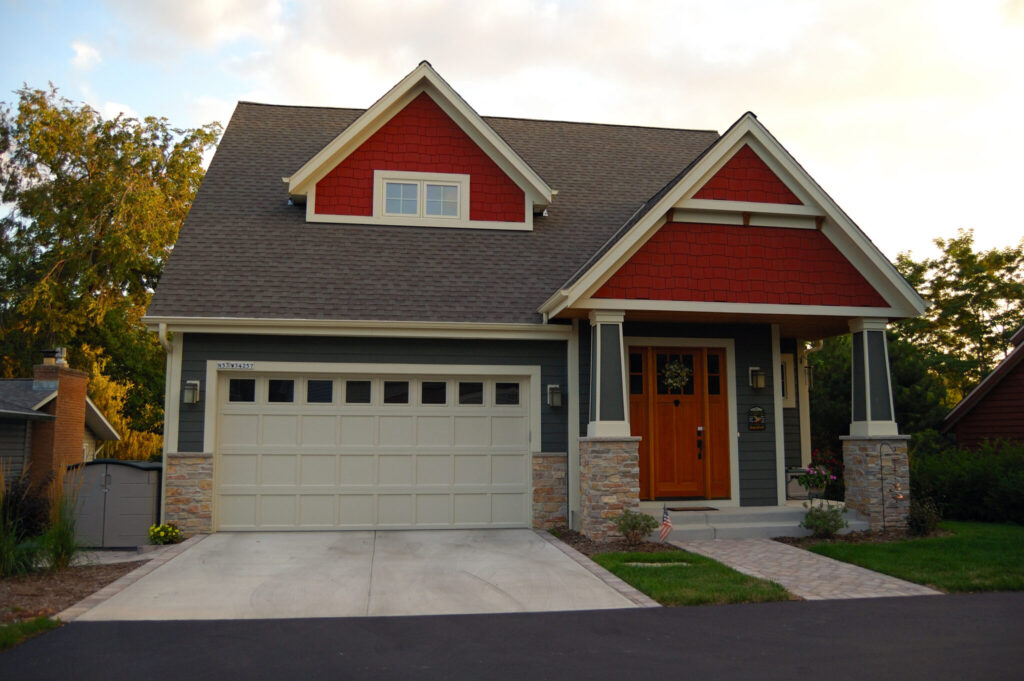
Do not force the door up by hand, do not pull the red emergency release cord while the door is anywhere other than fully down, and do not stand or walk under a door that is stuck partway. A door held on worn cables or a single remaining spring can drop without warning. Leave it where it is and call us.
Emergency Garage Door Repair in Framingham
Most of the emergency calls we get from Framingham break down into a short list: a broken torsion spring (the coiled spring mounted on a shaft above the door, under heavy tension, doing the actual lifting work your opener motor is not built for), a snapped lift cable or a cable that has jumped off its drum, an off-track door where a roller has left the track lip after an impact or a dropped-track fastener, or an opener that has stopped responding because the gears have stripped or the circuit board has failed. Each of these has a specific repair, not a generic one. A broken torsion spring gets replaced in a matched pair sized to the door’s weight and cycle rating, never patched. A jumped cable means pulling the drum, checking the cable for fraying, and re-seating it correctly under tension, which is not a job to attempt with the spring still loaded. An off-track door gets realigned once we know why it left the track, otherwise it happens again in a month. We tell you which one you have and what it involves before we start any work.
What we look at
What we look at
Before any repair, we run through the same diagnostic steps on every call. This is what tells us whether we are replacing a spring, adjusting an opener, or dealing with a track problem that looks like a spring problem.
Door balance
With the opener disconnected, a properly balanced door should hold its position anywhere along the track with hand pressure alone. If it drops when released or shoots up on its own, the springs are no longer matched to the door’s weight, which is the single biggest cause of premature opener failure and roller wear.
Spring type and cycle rating
We check whether you have torsion springs on a shaft above the opening or extension springs stretched along the horizontal tracks, and what cycle rating they were installed at. A spring rated for fewer cycles than the door actually sees will fail early, and replacing it with the same undersized spring just restarts the clock.
Cables, drums, rollers, and tracks
Cables fray at the drum end long before they snap outright, and a worn drum groove will let a cable slip off under load. We check both, along with roller condition and whether the tracks are still plumb and properly spaced, since a bent track will bind a door even with a perfectly good spring.
Opener settings and safety reversal
Limit settings tell the opener where fully open and fully closed are. Set wrong, the opener either strains against a door that is not actually at the end of its travel or reverses before it should. We test the safety reversal on every call by placing a block in the door’s path, because an opener that does not reverse on contact is not safe to leave running regardless of what else is wrong.
Homes in Framingham
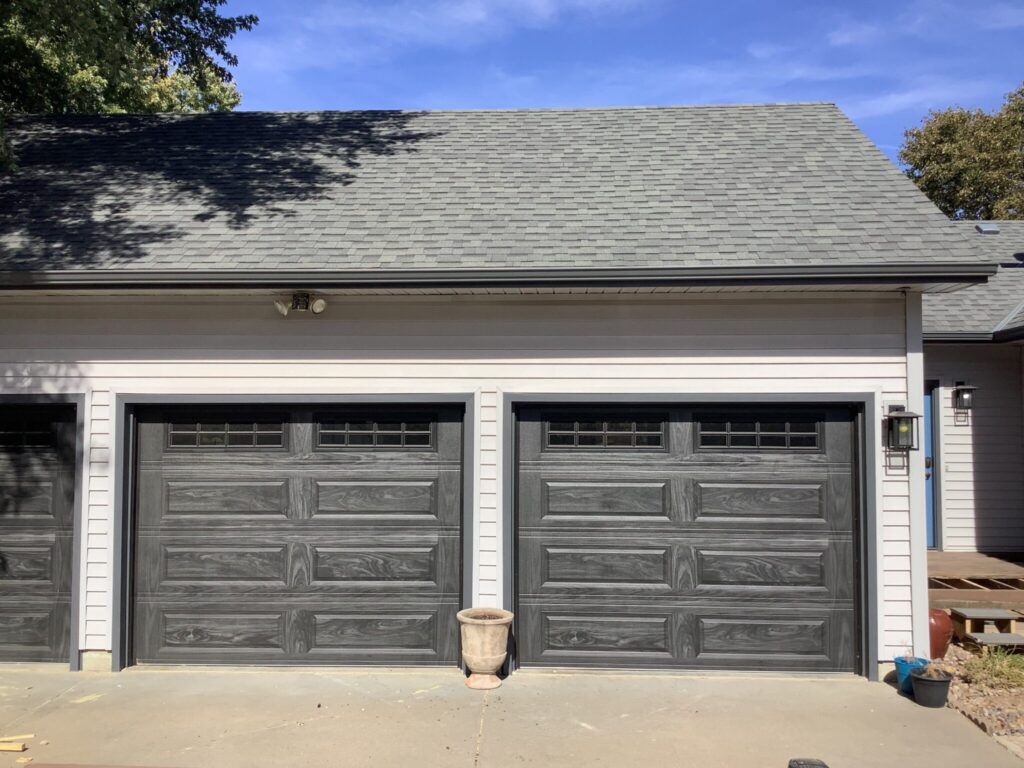
Framingham’s housing stock spans a wide range of build eras, from older homes near the downtown and Nobscot areas with single attached garages and narrower door openings, to the ranch and split-level houses built through the postwar decades with wider double-door layouts, to newer construction in the outer parts of town with two-car attached garages built to current standard widths. That range matters for repair because door size and age both affect spring sizing. An older single door on a smaller house needs a different spring than a 16-foot double on a newer build, and using the wrong one is a common cause of the early failures we get called out for.
We still find a number of original wood doors in service on the town’s older housing stock, carrying springs and hardware that may be decades old and no longer matched to the door’s current weight, especially if the door has been repainted or had panels replaced over the years. On detached garages set back from the house, we also see more weather-related track and roller wear, since those structures take more direct exposure than an attached garage sheltered by the house itself.
What it costs
None of this changes how we diagnose the problem. It does mean we show up expecting a wider range of door ages and spring configurations in Framingham than in a town with more uniform housing stock, which is useful when we are figuring out why a door failed in the first place.
What it costs
A straightforward torsion spring replacement, using springs matched to your door’s weight and cycle rating, typically runs between {PRICE_LOW} and {PRICE_HIGH}. Where you land in that range depends on spring size, whether you need one spring or a matched pair, cable condition, and whether the drums or rollers also need replacing. A cable repair or an off-track realignment can be less if the springs themselves are fine. An opener repair depends on whether it is a settings adjustment or a failed gear or board. We give you the actual number for your door before any work starts, not an estimate that changes once we are inside the garage.
How fast we can get there
We do not add an emergency surcharge on top of the quoted repair price for calls during normal working hours.
Got Questions?
Emergency Repair FAQs
My door is stuck halfway open with my car behind it. What should I do right now?
Leave it exactly where it is. Do not pull the emergency release cord while the door is partway up, and do not try to force it by hand, since a door held on a single remaining spring or a worn cable can drop without warning. Keep people and cars clear underneath and call us.
Is it ever safe to replace a torsion spring myself?
No. A torsion spring is wound under enough tension to cause serious injury if it releases uncontrolled, and the tools and technique needed to wind and unwind it safely are not something to improvise. This is a repair we handle on site, not one we talk you through.
Why did my spring break with no warning?
Torsion springs are rated for a set number of open-close cycles, often in the range of thousands depending on the spring. Once a spring reaches the end of its rated life it can fail on an otherwise ordinary cycle, which is why it often feels sudden even though the spring has been wearing down for a long time.
Can you tell me the cost over the phone before you come out to Framingham?
We can give you a realistic range based on what you describe, including door size and what you heard or saw happen, but the firm number comes after we have looked at the spring size, cable condition, and door balance in person.
My opener runs but the door barely moves. Is that the opener or the spring?
That pattern usually points to the spring, not the opener. A motor straining to lift a door that is out of balance is doing work the spring is supposed to be doing, and continuing to run it that way tends to damage the opener's gears on top of the existing spring problem.
How fast we can get there
Framingham is about 13.5 miles from our base in Bellingham, a straightforward run along routes we cover regularly for other towns in the same corridor. We are not going to promise a fixed arrival window here, because that number depends on where our trucks already are and what else is on the schedule that day. Call and we will tell you honestly how soon we can be there.
Call AB Garage Door
If your door is stuck, off track, or the opener has gone quiet, call {PHONE}. Tell us what you heard or saw when it happened, which helps us bring the right parts the first time instead of a second trip.
Request a Free Quote
Prefer to describe the problem in writing first? Send us the details through our quote form and we will call back with next steps and an honest read on cost before anyone drives out.