
- Services
- Garage Doors
- Service Areas
Attleboro, MA
Bellingham, MA
Canton, MA
Framingham, MA
Franklin, MA
Franklin, MA
Mansfield, MA
Milford, MA
Natick, MA
North Attleboro, MA
Uxbridge, MA
Walpole, MA
Woonsocket, RI
Ashland, MA
Ashland, MA
Blackstone, MA
Cumberland, RI
- About
- Contact
- Services
- Garage Doors
- Service Areas
Attleboro, MA
Bellingham, MA
Canton, MA
Framingham, MA
Franklin, MA
Franklin, MA
Mansfield, MA
Milford, MA
Natick, MA
North Attleboro, MA
Uxbridge, MA
Walpole, MA
Woonsocket, RI
Ashland, MA
Ashland, MA
Blackstone, MA
Cumberland, RI
- About
- Contact
Need a quick offer? Call us now
(617) 655-6581
- Open 24/7
- Emergency Repair
Emergency Garage Door Repair in North North Attleboro, MA
A torsion spring letting go sounds like a gunshot in a closed garage, and it usually happens in the cold snap right after a run of mild weather, when the steel has gone through one too many temperature swings. If that just happened to you, or your door stopped halfway and the opener is clicking uselessly, you are in the right place.
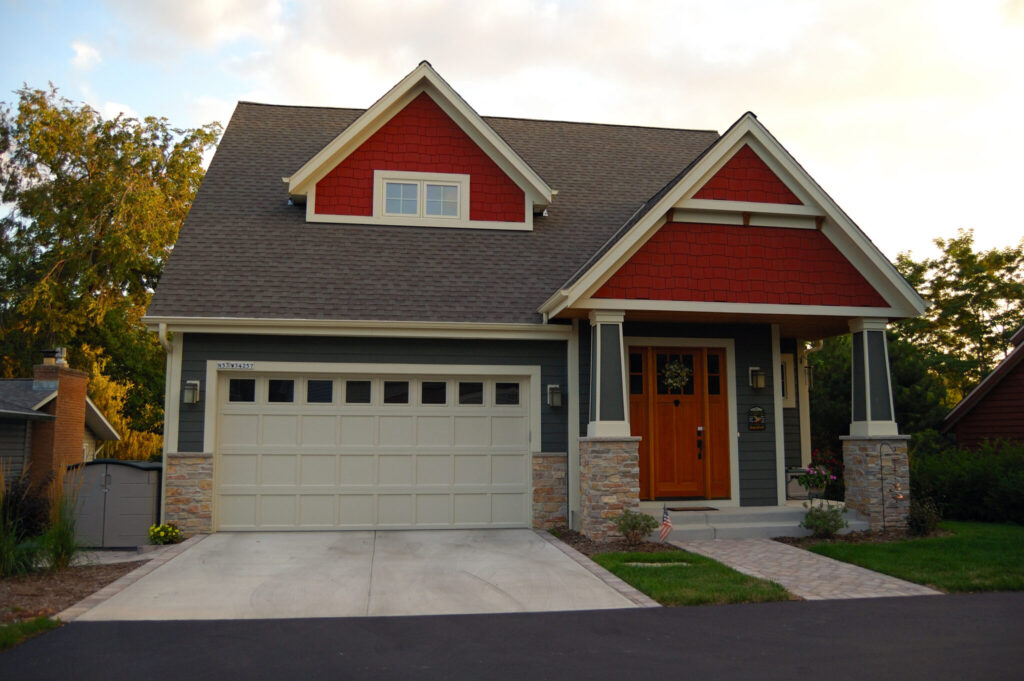
Do not force the door up by hand. Do not pull the red emergency release cord while the door is part way open, because with a broken spring or a slipped cable there is nothing holding the weight of the door and it can drop. Do not stand or park underneath it. Switch the opener off at the wall if it keeps trying to cycle, and call us from a safe distance from the door itself.
Emergency Garage Door Repair in North North Attleboro
Most emergency calls in North North Attleboro break down into a handful of real mechanical failures, not vague “it’s not working.” A torsion spring (mounted on a bar above the door) snaps and the door becomes too heavy to lift by hand or opener. An extension spring, the kind that stretches along the upper track on older setups, lets go or the safety cable fails to catch it. A cable jumps the drum at the end of the shaft, which throws the door off-square in the opening. Rollers wear out of their track and bind, or a section’s hinge cracks and the door won’t travel straight.
We diagnose the actual failure before touching anything. If it’s a spring, we replace it with a correctly sized torsion or extension spring rated for your door’s weight and cycle count, never a universal guess. If it’s a cable or drum, we rewind and reset both sides so the door pulls evenly instead of racking. If the opener is the problem, we check the force and limit settings before assuming the motor itself has failed, because a door that’s out of balance will burn out a perfectly good opener within a year.
What we look at
What we look at
Every emergency visit starts with the same checks, in the same order, because skipping one is how doors get re-opened wrong and fail again within weeks.
Door balance
With the opener disconnected, we lift the door by hand to roughly waist height and let go. A balanced door stays put. If it drops or shoots up, the spring tension is wrong for the door’s weight, and that’s often the real reason an opener has been “dying” for months before it actually quit.
Spring type and cycle rating
Torsion springs sit on a shaft above the door; extension springs run along the horizontal tracks. We confirm which you have, measure the wire diameter and coil length, and match the replacement to a cycle rating that suits how often the door actually opens and closes, not just the cheapest option on the shelf.
Cables, drums, rollers, and tracks
We check both lift cables for fraying at the drum, confirm the drums themselves haven’t cracked or slipped on the shaft, and run the door slowly to watch the rollers through the track. A track that’s pulled away from the wall or dented from a vehicle strike will bind the door long before the opener shows a fault code.
Opener settings and safety reversal
We test the up and down force settings and the travel limits, then push a 2×4 flat on the floor under the door and run it down to confirm the safety reversal kicks in on contact. If a door won’t reverse off an obstruction, it does not get signed off as finished, full stop.
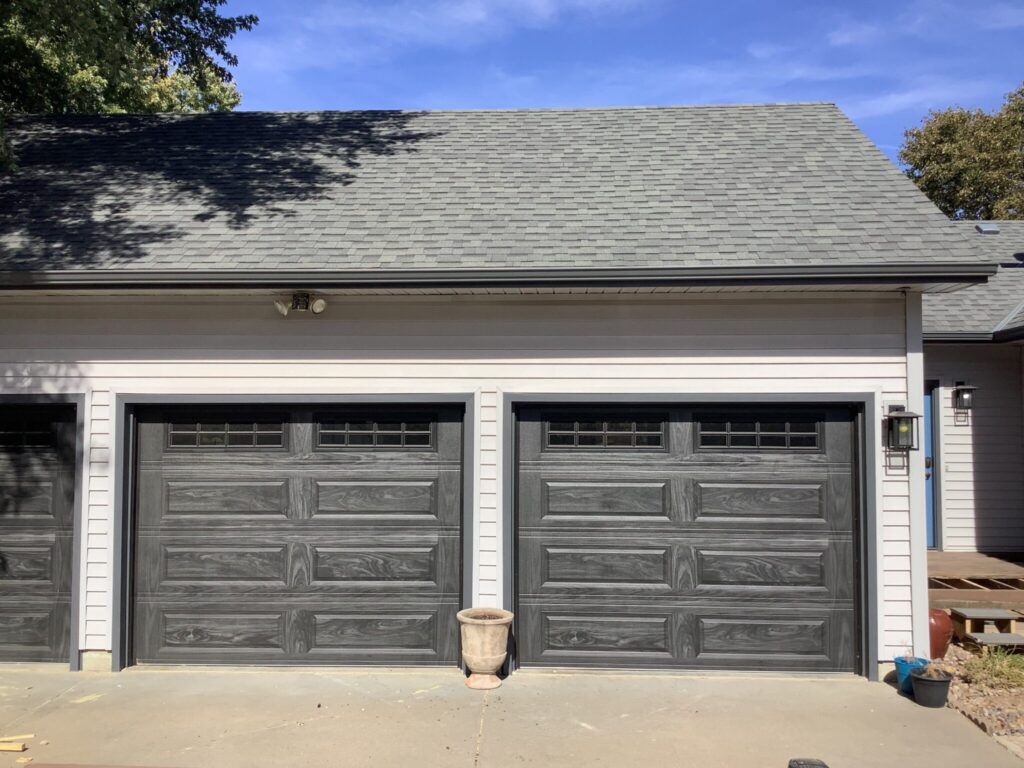
Homes in North North Attleboro
North North Attleboro’s housing runs from older capes and colonials closer to the center, many built with single-car attached garages or a detached one-car structure set back from the house, through to the larger colonial and split-level builds from the 1970s and 80s further out toward Plainville and North Attleboro, which more often carry a double-wide door on an attached two-car garage. We still get called to older single-panel wood doors on some of the pre-war properties near downtown, and those need a different approach than a sectional steel door, since the whole panel pivots rather than traveling in sections.
The mix matters for parts. A single-car door from an older build may need a narrower torsion spring and a shorter track run than the wider doors common on newer two-car garages, and we carry stock for both rather than assuming every call is a standard width.
What it costs
None of this requires guesswork on our end once we’re looking at the door. Pricing, though, depends on what actually failed.
What it costs
A single spring replacement on a standard residential door typically runs {PRICE_LOW} to {PRICE_HIGH}, with the final number depending on spring type, whether both springs need replacing together (which we usually recommend if one has failed from age), and whether cables or rollers also need attention while the door is apart. A cable or roller repair on its own tends to sit toward the lower end of that range. We give you the number before we start work, not after.
How fast we can get there
Distance from our base affects how quickly we can get moving once you call, so it’s worth knowing where you stand.
Got Questions?
Emergency Repair FAQs
My garage door is stuck half-open with my car underneath it. What should I do right now?
Do not pull the emergency release cord and do not try to force the door up. Both can bring the full weight of the door down suddenly if a spring or cable has failed. Switch the opener off at the wall and call us so we can tell you what's likely wrong before anyone touches the door.
Is it safe to leave my car in the garage until a technician arrives?
Yes, as long as you're not opening or closing the door further. Leave the door exactly where it is and keep clear of the opening underneath it.
Can you repair just the broken spring, or do both need replacing?
If one torsion spring has broken from age or wear, we usually recommend replacing both since they're generally installed as a matched pair and the second one is often close behind. We'll tell you what we find on your door specifically rather than applying a blanket rule.
How long does an emergency spring or cable repair take once you're on site?
It depends on the failure, whether we're replacing one spring or two, and whether cables or rollers also need attention. We'll give you a realistic estimate once we've looked at the door rather than guessing over the phone.
Do you work on older wood garage doors in North North Attleboro, not just steel sectional doors?
Yes. Some of the older properties near the town center still have single-panel wood doors, and the spring and hardware setup on those is different from a modern sectional door. We carry parts and know-how for both.
How fast we can get there
North North Attleboro is about 8.1 miles from our base in Bellingham, a straight run down Route 1 and 123 depending on which side of town you’re on. We don’t promise a fixed arrival window on this page because traffic and whatever job we’re mid-repair on both affect it, but it’s a short trip from Bellingham and we work North North Attleboro regularly enough to know the common entry points into the neighborhoods off South Washington Street and Landry Avenue.
Call AB Garage Door
If your door is stuck, off-track, or making a noise it shouldn’t, call {PHONE}. Tell us what you’re seeing and hearing, including whether the door moved at all before it stopped, and we’ll tell you what we think has failed before we even arrive.
Request a Free Quote
Prefer not to call right away? Send us the details through our quote form and we’ll follow up with a realistic estimate once we know what’s actually wrong with the door.