
- Services
- Garage Doors
- Service Areas
Attleboro, MA
Bellingham, MA
Canton, MA
Framingham, MA
Franklin, MA
Franklin, MA
Mansfield, MA
Milford, MA
Natick, MA
North Attleboro, MA
Uxbridge, MA
Walpole, MA
Woonsocket, RI
Ashland, MA
Ashland, MA
Blackstone, MA
Cumberland, RI
- About
- Contact
- Services
- Garage Doors
- Service Areas
Attleboro, MA
Bellingham, MA
Canton, MA
Framingham, MA
Franklin, MA
Franklin, MA
Mansfield, MA
Milford, MA
Natick, MA
North Attleboro, MA
Uxbridge, MA
Walpole, MA
Woonsocket, RI
Ashland, MA
Ashland, MA
Blackstone, MA
Cumberland, RI
- About
- Contact
Need a quick offer? Call us now
(617) 655-6581
- Open 24/7
- Emergency Repair
Garage Door Cable Repair in Ashland, MA
One cable lets go and the door drops crooked, one side low, binding hard against the track. If that’s what you’re looking at right now in Ashland, stop trying to force it up or down. The door is no longer balanced and the opener will fight it, which is how openers burn out and how people get hurt.
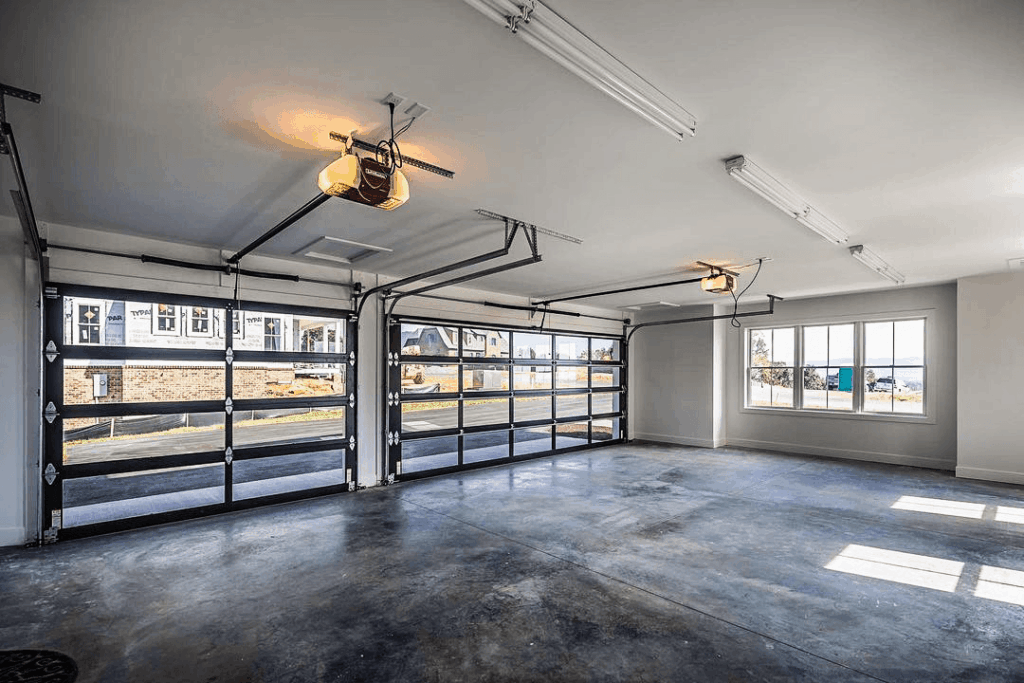
Cable failures aren’t rare around here. A lot of Ashland garages still have the original lift hardware from whenever the house was built, and cables are a wear part. They stretch, fray at the drum, and eventually give out, usually without much warning beyond a bang or a sudden lean.
Garage Door Cable Repair in Ashland
The cables run from the bottom bracket on each side of the door up to a drum mounted on the torsion shaft above the opening, or on an extension spring door, back to a pulley near the spring itself. They carry the door’s weight in partnership with the spring. When a cable snaps, frays, or jumps off its drum, that side of the door has nothing holding it up except the track, and the door tips.
Repair means removing tension from the system safely, pulling the old cable off the drum, measuring and fitting a replacement of the correct length and gauge, and re-seating it so both drums wind evenly. If the drum itself is grooved or cracked from the cable riding wrong, we replace that too. On a torsion setup this is spring work by definition, because you cannot get the cable off the drum without controlling the shaft. We do not walk homeowners through this over the phone. It’s a job that puts a bar wound against a spring under several hundred pounds of pull, and that is not a DIY repair.
What we look at
What we look at
A cable rarely fails on its own. Before we replace anything we check the system around it, because a new cable on a door that’s out of balance or running on a tired spring just fails again in a few months.
Door balance and movement
With the opener disconnected, a properly balanced door stays put wherever you leave it, halfway up, anywhere. If it drifts up or crashes down, the spring and cable are carrying the wrong load for that door’s weight, and that’s often what overstressed the cable in the first place.
Spring type and cycle rating
We confirm whether you’re running torsion or extension springs and what cycle rating they’re built for. A spring near the end of its rated cycles puts uneven, jerking load on the cables every time the door moves, which shortens cable life fast.
Cable and drum condition
We check both cables for fraying, kinks, and rust, not just the one that broke, and look at where each cable sits on its drum. A cable that’s climbed over itself or sits off-center on the drum wears through again even if it looks fine today.
Track alignment, opener settings, and safety reversal
A door that’s been running crooked on one broken cable often knocks a track out of line or strains a roller. We check the tracks, reset the opener’s force and limit settings since they were tuned for a balanced door, and test the auto-reverse so the door stops and backs up if it meets resistance instead of continuing to close.
Homes in Ashland
Most of this check takes a few minutes with the door open and a level against the opening. It tells us whether a cable replacement solves the problem or whether the spring needs attention at the same time.
Homes in Ashland
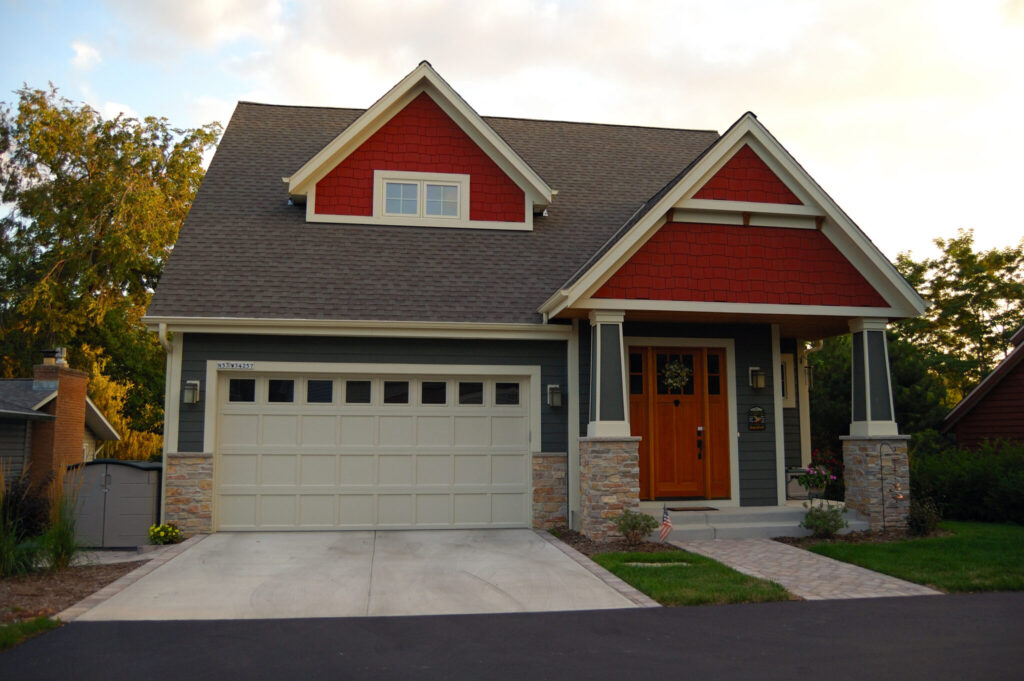
Ashland has a good mix of housing stock, from older homes near the downtown and the Fountain Street area with detached single garages and some older wood-panel doors still hanging on, out to the ranch and colonial-style homes built through the growth decades with attached two-car garages running a single wide door or a pair of single doors side by side. The wider doors on newer builds use a two-spring torsion system by default, which means two cables working in tandem, and a failure on one side without matching attention to the other is a common setup for a repeat call.
The older detached garages tend to have lighter doors and simpler single-spring setups, often with extension springs and open coil cables running alongside the horizontal track. Those cables see more exposure to moisture and road salt kicked up near the slab, so we see more rust-related fraying on those jobs than on newer torsion setups tucked up under the header.
What it costs
A straightforward cable replacement on one side, parts and labor, typically runs {PRICE_LOW} to {PRICE_HIGH}. What moves the number is whether both cables need replacing, whether the drums or spring need attention too, whether the track took damage while the door was running unbalanced, and the door’s size and weight. We give you the actual number after we’ve looked at the door, not before.
If the opener has also been overridden trying to force a stuck door, or a roller’s been bent from the door running off-track, that gets priced separately once we can see the extent of it.
How fast we can get there
Ashland is about 12.9 miles from our Bellingham base, a straight run down through the back roads or the highway depending on the time of day. We don’t quote a guaranteed arrival window here, but a snapped cable is a same-category call for us as a spring failure, and we treat it that way when you ring in.
Got Questions?
Common questions
Can I drive on the door if one cable is broken?
No. With one cable gone, the door is unevenly supported. Moving it, by hand or by opener, risks the door jumping the track or dropping suddenly. Leave it where it is until it's been looked at.
Is a broken cable always a spring problem too?
Not always, but often. Cables and springs share the load, so if a spring was already past its cycle life or undersized for the door, it puts extra strain on the cables. We check both whenever we're called for one.
Why did only one cable snap and not both?
Cables wear unevenly depending on how they sit on the drum, exposure to moisture, and small differences in door balance side to side. It's common for one to fail well before the other, which is why we inspect both rather than replacing just the one that broke.
How long does a cable repair take?
A standard single-side cable and drum replacement is usually a same-visit job once we're on site and have confirmed what else the door needs. Jobs involving track damage or spring replacement take longer.
Do older wood garage doors in Ashland use the same cable system?
Most older wood doors still run on a cable and spring lift system, torsion or extension, similar in principle to newer steel doors, just often lighter-gauge hardware. We carry cable stock that covers both older and current setups.
Call AB Garage Door
If your door is sitting crooked or won’t move in Ashland, call {PHONE} and describe what you’re seeing. We’ll walk you through what’s safe to do before we arrive, which is usually nothing more than leaving the door exactly where it is.
Request a Free Quote
Prefer to get a quote first before scheduling a visit? Reach out through our contact form or call {PHONE} and we’ll get the details on your door and give you a straight answer on cost and timing.