
- Services
- Garage Doors
- Service Areas
Attleboro, MA
Bellingham, MA
Canton, MA
Framingham, MA
Franklin, MA
Franklin, MA
Mansfield, MA
Milford, MA
Natick, MA
North Attleboro, MA
Uxbridge, MA
Walpole, MA
Woonsocket, RI
Ashland, MA
Ashland, MA
Blackstone, MA
Cumberland, RI
- About
- Contact
- Services
- Garage Doors
- Service Areas
Attleboro, MA
Bellingham, MA
Canton, MA
Framingham, MA
Franklin, MA
Franklin, MA
Mansfield, MA
Milford, MA
Natick, MA
North Attleboro, MA
Uxbridge, MA
Walpole, MA
Woonsocket, RI
Ashland, MA
Ashland, MA
Blackstone, MA
Cumberland, RI
- About
- Contact
Need a quick offer? Call us now
(617) 655-6581
- Open 24/7
- Emergency Repair
Garage Door Cable Repair in Blackstone, MA
A garage door cable rarely fails quietly. One side of the door drops, the panel hangs crooked in the track, or you hear a sharp snap followed by the door sagging to one side like it has given up on one leg. In Blackstone, where plenty of garages sit on older concrete slabs with a bit of settling over the decades, an already-uneven floor makes a cable failure even more obvious because the door doesn’t just sag, it jams hard against the track.
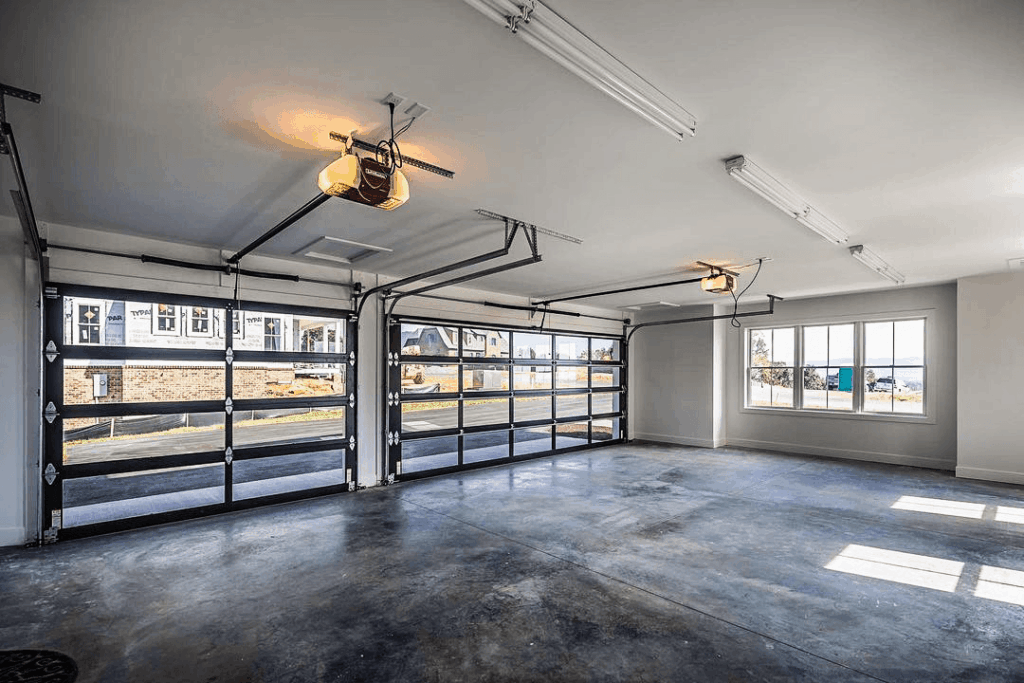
If your door is stuck half open with a car underneath it, or one cable has come off the drum and the door is hanging at an angle, do not try to force it or cut the remaining cable free. The other side is still holding a spring under serious load, and that load has to come off correctly before anyone touches the cables.
Garage Door Cable Repair in Blackstone
Garage door cables run from the bottom corner brackets of the door up to the cable drums mounted on the torsion spring shaft, or in older setups, out to a pulley system tied to extension springs. Their job is simple but unforgiving: they carry the full weight of the door every time it moves, working in tandem with the spring to counterbalance that weight. When a cable frays at the drum, slips off its groove, or snaps outright, the door loses that counterbalance on one side instantly.
Most of the Blackstone calls we get for this fall into a few categories: a cable that has jumped off the drum because the drum set screws loosened over time, a cable that has frayed through at the bottom bracket from years of cycling, or a cable that snapped because the spring it was paired with was already overdue for replacement and dumped extra strain onto the cable side. We also see rust damage on cables in detached garages that don’t get much airflow, which weakens the strands from the inside before you ever see a visible fray.
The repair itself means releasing tension from the torsion spring safely, pulling the old cable and often the drum if it’s worn or cracked, fitting correctly sized replacement cable rated for your door’s weight, and rewinding the spring to the correct number of turns so the door sits balanced again. If the door is on extension springs, the repair involves the separate cable and pulley setup along with the safety cables that should already be threaded through the spring itself.
What we look at
What we look at
A cable rarely fails in isolation. Before we replace anything, we check the whole system so you’re not back to a half-open door in six months.
Door balance and movement
We disconnect the opener and move the door by hand to see where it wants to stop. A balanced door should hold position anywhere in the track. If it slides down or shoots up on its own, the spring is mismatched to the door’s weight, and that mismatch is often what overloaded the cable in the first place.
Spring type and cycle rating
Torsion and extension springs carry different failure patterns and different cable setups. We check which type you have, how worn it is, and roughly how many open-close cycles it’s rated for against how long it’s actually been in service. A spring near the end of its cycle life is a strong predictor of the next cable to go.
Cable and drum condition
We look at both cables, not just the one that failed, along with the drums they wind onto. Set screws that have backed out, grooves that have worn a step into the drum, and fraying near the bottom bracket all tell us whether a single cable swap is enough or whether both sides need attention.
Track alignment, opener settings, and safety reversal
A cable failure sometimes bends the track or pulls a roller out of position on the way down. We check alignment, then check the opener’s force and limit settings once the door is rehung, because an opener straining against a misaligned or unbalanced door is how the next cable gets stressed early. We finish with the auto-reversal test, making sure the door reverses cleanly off resistance before we call the job done.
Homes in Blackstone
Blackstone’s housing stock gives us a decent cross-section of garage ages and styles, and the cable problems tend to track with the age of the door.
Homes in Blackstone
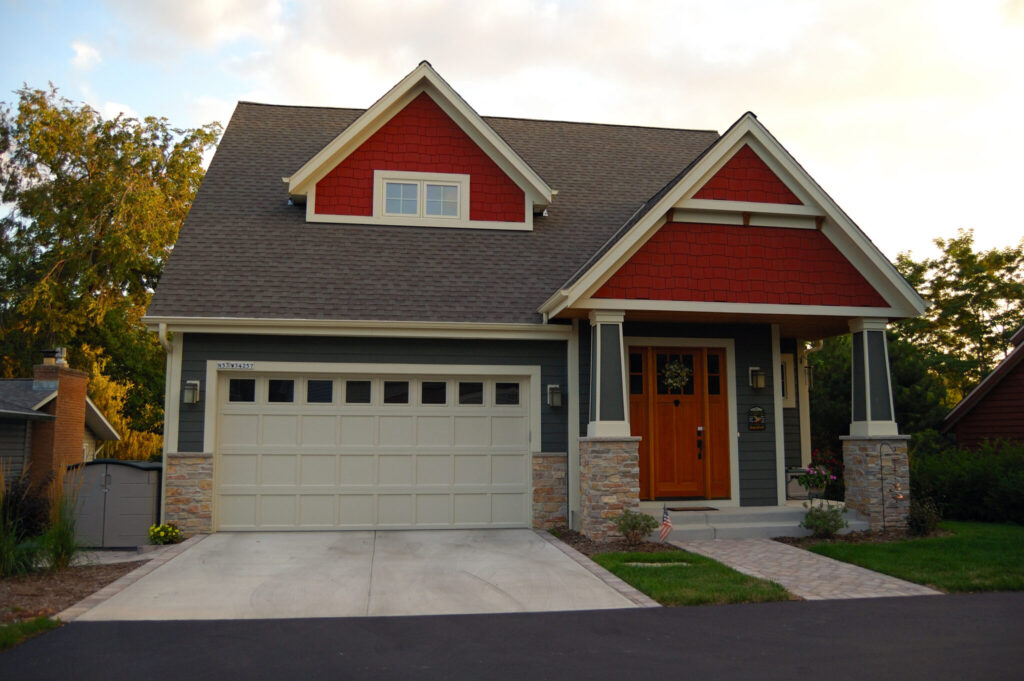
Blackstone has a good number of older homes near the center of town and along the river, many built well before attached garages were standard, which means a fair share of detached single-car garages with doors that have been replaced at least once but sometimes still run on original hardware from decades back. These older single doors, often wood or early steel panel, tend to run on extension springs with a simpler cable and pulley arrangement, and it’s common to find safety cables missing entirely, which is a separate hazard worth flagging when we’re out there.
Further out toward the newer developments, you get more attached two-car garages with wider doors, typically steel sectional doors on torsion spring systems, which carry heavier cable loads simply because the doors are bigger. Those jobs usually involve standard drum and cable replacement rather than anything unusual, but the wider double doors do put more strain on a single cable if the spring side is even slightly out of tune.
What it costs
Cost depends on what actually failed and what else turns up once we have the tension off the door.
What it costs
A straightforward single cable replacement on one side, where the drum, track, and spring are all in good shape, runs toward the lower end, around {PRICE_LOW}. If both cables need replacing, a drum has worn out and needs swapping too, or the spring that caused the cable failure needs replacing in the same visit, the job moves up toward {PRICE_HIGH}. Door size matters as well, a standard single door costs less to re-cable than a wide double door carrying more weight. We’ll give you the actual number after a look at the door, not before.
How fast we can get there
Blackstone sits close enough to our Bellingham base that getting to you isn’t the hard part.
Got Questions?
Common questions
My garage door cable snapped. Is it safe to leave the door closed until someone comes?
Yes, generally closed is the safer position. Don't try to open it manually and don't let the opener try either, since the opener can strain against the broken counterbalance and cause more damage or let the door drop suddenly.
Can I just replace the one cable that broke?
Sometimes, if the other cable and both drums are in good shape. But if one cable failed from age or wear, the other side has usually seen the same number of cycles, so we often recommend replacing both to avoid a second breakdown soon after.
Why did my cable come off the drum instead of snapping?
Usually a set screw on the drum has loosened over time, letting the cable wind unevenly until it jumps the groove. It's a quick fix if caught early, but a door left running with a loose drum will eventually fray the cable where it rubs against the drum edge.
Do older wood garage doors in Blackstone need special cables?
They need cables rated for the door's actual weight, which is usually heavier than a modern steel panel door of the same size. We check the door's weight rather than assuming based on age or material.
Will you also look at the spring while you're fixing the cable?
We check it as a matter of course, since a worn or mismatched spring is a common reason a cable fails in the first place. If it needs attention we'll explain what we're seeing and quote it separately so you can decide.
How fast we can get there
Blackstone is about 9.3 miles from our shop in Bellingham, a short run down through the local roads. We don’t make blanket same-day promises because it depends on what’s already booked that day, but it’s a quick trip for us and we’ll give you a realistic window when you call rather than a vague estimate.
Call AB Garage Door
If a cable has let go and your door is stuck or hanging crooked, don’t force it open or closed. Call {PHONE} and tell us what you’re seeing, whether it’s one side sagging, a loud bang followed by the door freezing, or a cable visibly off the drum. We’ll talk you through keeping it safe until we get there.
Request a Free Quote
Send us the details of what happened and a photo if you can get one safely, and we’ll get back to you with next steps and a straightforward quote for the repair, no pressure and no inflated estimate to scare you into booking faster than you need to.