
- Services
- Garage Doors
- Service Areas
Attleboro, MA
Bellingham, MA
Canton, MA
Framingham, MA
Franklin, MA
Franklin, MA
Mansfield, MA
Milford, MA
Natick, MA
North Attleboro, MA
Uxbridge, MA
Walpole, MA
Woonsocket, RI
Ashland, MA
Ashland, MA
Blackstone, MA
Cumberland, RI
- About
- Contact
- Services
- Garage Doors
- Service Areas
Attleboro, MA
Bellingham, MA
Canton, MA
Framingham, MA
Franklin, MA
Franklin, MA
Mansfield, MA
Milford, MA
Natick, MA
North Attleboro, MA
Uxbridge, MA
Walpole, MA
Woonsocket, RI
Ashland, MA
Ashland, MA
Blackstone, MA
Cumberland, RI
- About
- Contact
Need a quick offer? Call us now
(617) 655-6581
- Open 24/7
- Emergency Repair
Garage Door Cable Repair in Woonsocket, RI
A door that drops at one corner and hangs crooked in the opening is almost always a cable problem, not a motor problem. If you heard a snap or a clatter and the door now sits tilted with one side low, a cable has come off a drum or parted outright. The opener may still run, but it is fighting a door that is no longer hanging straight, and that is a fast way to damage the opener too.
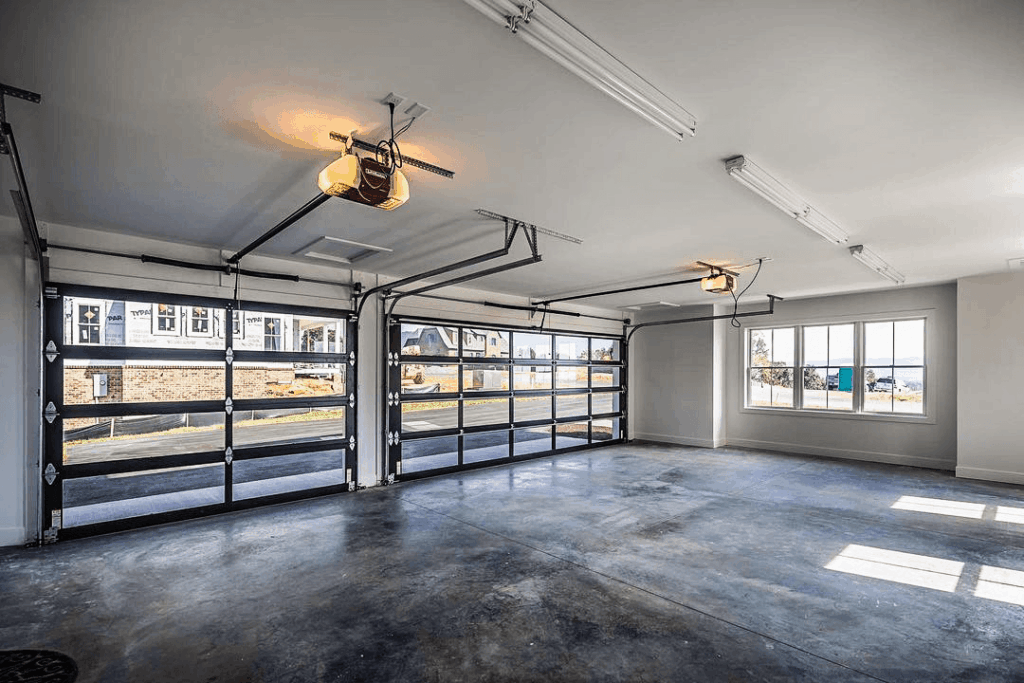
We cover Woonsocket out of our Bellingham, Massachusetts shop, a run of about 9.3 miles down Route 126 and over the state line. We work on both triple-decker two-car setups near the old mill villages and the single-family garages further out toward Harris and North Smithfield, so we see a wide range of cable sizes and drum configurations on a normal week here.
Garage Door Cable Repair in Woonsocket
The lifting cables run from the bottom bracket of the door, up around a drum mounted on the torsion spring shaft (or, on an older extension spring setup, through a pulley at the back of the horizontal track). When a cable frays, jumps its drum groove, or snaps at the bottom bracket, the door loses support on that side and drops. On a torsion system both cables and both drums usually need attention together, because one worn cable is a sign the other is close behind, and the shaft has to come down anyway to replace either one.
On older extension spring doors, common on a lot of the wood-frame garages still standing in Woonsocket’s older neighborhoods, the cable runs with a pulley and a safety container cable is often missing or never installed. Part of the repair is fitting that missing safety cable so a broken extension spring cannot fire a cable or spring section across the garage.
Repair means removing tension from the spring system, pulling the old cable off the drum or pulley, fitting new cable sized to the door’s weight and drum diameter, and re-tensioning the door to correct balance. This is not a job for stripped-down tools or a ladder on a Saturday afternoon. The torsion shaft is holding the full weight of the door in a wound spring, and an unwinding bar in the wrong hands has put people in the emergency room. We do the winding and unwinding with the correct bars, clamps, and the shaft locked off properly.
What we look at
What we look at
A cable rarely fails in isolation. Before we cut new cable we check the rest of the system, because sending you back out with a fresh cable on a door that is still out of balance just moves the failure to next month.
Door balance and movement
Door balance and movement
With the opener disconnected we move the door by hand partway up and let go. A balanced door stays put. One that slides down or shoots up tells us the springs are no longer matched to the door’s weight, and that imbalance is usually what overloaded the cable in the first place.
Spring type and cycle rating
Spring type and cycle rating
We identify whether you have torsion or extension springs, measure the wire gauge and coil length, and check what cycle rating the existing springs were built to. A door cycled more than the springs were rated for runs into cable and drum wear faster, and we size the replacement cable to match whatever spring system stays in service.
Cable and drum condition
Cable and drum condition
We inspect both cables end to end for fraying, rust, and stretch, and check the drums for cracked flanges or a groove that has worn unevenly. A drum with a chewed-up groove will cut through a brand new cable in short order, so a cracked or worn drum gets replaced alongside the cable, not left in place.
Track alignment, opener settings, and safety reversal
Track alignment, opener settings, and safety reversal
A door running crooked on a snapped cable often knocks the track out of alignment too, so we check both tracks for bends or loose brackets. Once the door is back on new cable and balanced, we reset the opener’s travel limits and force settings, then run the safety reversal test, pressing the bottom edge against a 2×4 on the floor to confirm the door reverses instead of continuing to close.
Homes in Woonsocket
None of these checks add much time to the visit, and skipping them is how a door ends up back on our schedule in three months with the same complaint.
Homes in Woonsocket
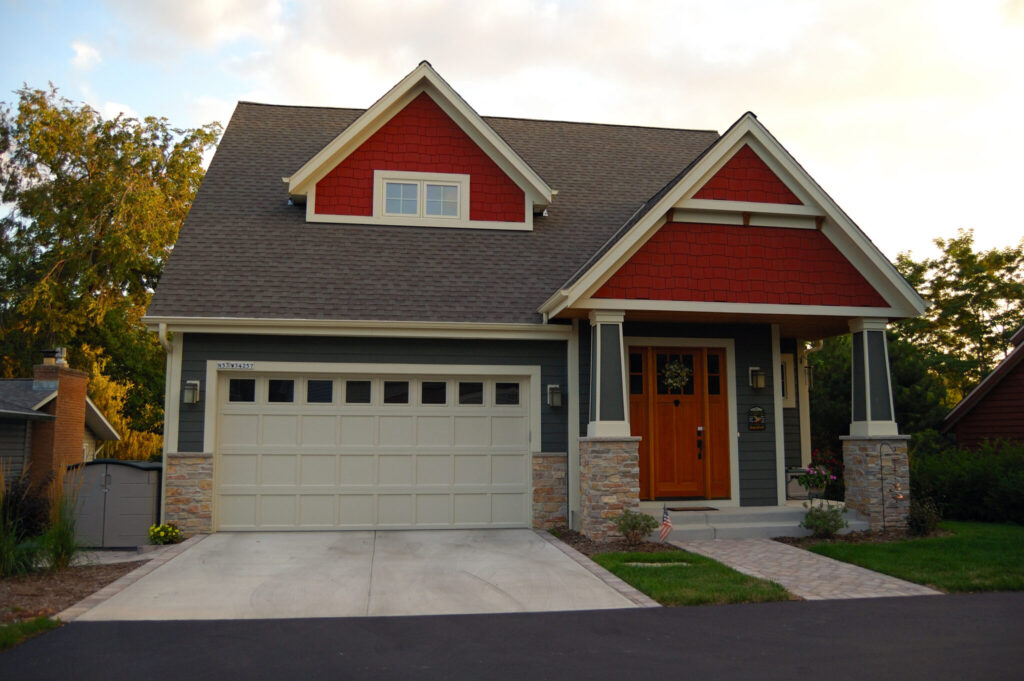
Woonsocket’s housing stock leans heavily toward the triple-deckers and worker housing built up around the old textile mills, a lot of it dating from the late 1800s through the early 1900s. Many of these properties have detached single-car garages added later, often with narrower door openings than you’d find on newer construction, and some still run older wood-panel doors with the extension spring and pulley setup described above rather than a modern torsion system.
Out toward the newer pockets of the city and the border with North Smithfield and Cumberland, you get more standard single-family homes with attached two-car garages and double-width torsion spring doors, usually steel sectional panels installed from the 1980s onward. Cable size, drum diameter, and whether a job needs one spring system serviced or two both come down to which of these two situations you’re in, and we size the repair to what’s actually on the house, not to a generic kit.
What it costs
A single-cable repair on a standard torsion system, parts and labor, typically runs between {PRICE_LOW} and {PRICE_HIGH}. What moves the number: whether one cable needs replacing or both, whether a drum is damaged and needs replacing alongside the cable, whether the springs also need rebalancing or replacing, and whether it’s a single or double-width door. An older extension spring door missing its safety cables adds a bit to the job to bring the system up to a safe standard, but it’s worth doing once rather than returning to it later.
We give you the actual number after a look at the door, not a phone guess, because a drum replacement and a plain cable swap are different jobs priced differently.
How fast we can get there
Woonsocket is about 9.3 miles from our Bellingham base, a straightforward run down Route 126. We don’t promise a fixed arrival window on this page, but a broken cable is a routine call for us and we fit it into the day’s route as soon as we can.
Got Questions?
Common questions
Can I just replace the cable myself without touching the springs?
No. On a torsion system the cable can't come off without releasing tension from the wound spring on the shaft, and that tension is dangerous to release without the right bars and clamps. On an extension system the spring itself is often under load even with the door down. Either way this isn't a safe DIY swap.
Why did only one cable snap when the door has two?
Cables wear from friction against the drum and from repeated flexing, and one side often sees slightly more load or a rougher drum groove than the other. Once one goes, we check the second closely, since it's usually not far behind and we'll often replace both at once to avoid a second visit.
Is it dangerous to keep opening the door with a broken cable?
Yes. With one cable gone the door hangs unevenly and can come off its track, jam against the frame, or put extra strain on the opener that can damage its gears. Leave the door down and call rather than running it through the opener.
Do you work on the older wood doors common in Woonsocket's mill-era garages?
Yes. Many of these run extension springs with a pulley and cable setup rather than a torsion shaft, and we carry cable and hardware sized for both systems.
How do I know if it's the cable or the spring that failed?
A broken spring usually comes with a loud bang and the door becomes very heavy to lift by hand, even with the cables intact. A broken cable usually lets one side of the door drop while the other stays up, with the door sitting at an angle. Either way, stop using the opener and call us to confirm.
Call AB Garage Door
If your door is sitting crooked or won’t budge, stop running the opener and call us at {PHONE}. Trying to force a door with a broken cable risks the other cable, the drum, or the opener’s gear set, on top of the obvious safety issue of a shaft under tension.
Request a Free Quote
Tell us what the door is doing, whether it’s a single or double garage, torsion or extension springs if you know, and we’ll get back to you with next steps and a time we can get out to Woonsocket.