- Services
- Garage Doors
- Service Areas
Attleboro, MA
Bellingham, MA
Canton, MA
Framingham, MA
Franklin, MA
Franklin, MA
Mansfield, MA
Milford, MA
Natick, MA
North Attleboro, MA
Uxbridge, MA
Walpole, MA
Woonsocket, RI
Ashland, MA
Ashland, MA
Blackstone, MA
Cumberland, RI
Dover, MA
Foxborough, MA
Holliston, MA
Hopkinton, MA
Medfield, MA
Medway, MA
Mendon, MA
Westwood, MA
Sharon, MA
- About
- Contact
- Emergency Repair
Garage Door Cable Repair in Hopkinton, MA
A cable that lets go usually does it at the worst moment: the door drops crooked, one corner hangs lower than the other, and the panel binds hard against the track. If you heard a bang followed by the door sagging to one side, that is almost always a cable off the drum, not the opener failing.
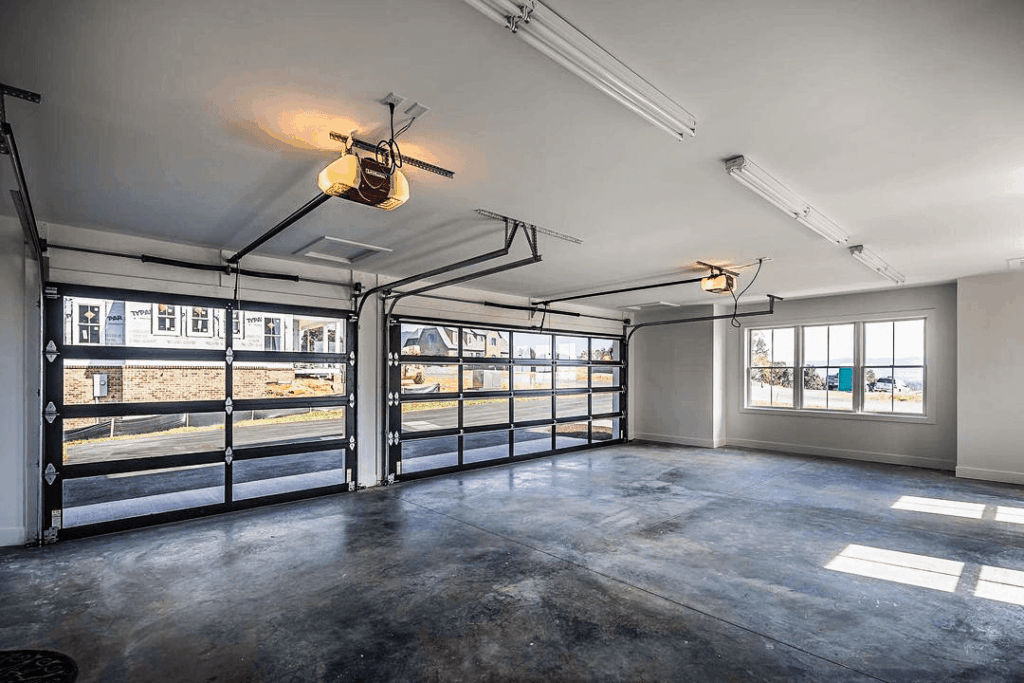
Hopkinton’s housing stock runs from old center-village colonials with narrow single-car bays to the larger subdivisions built out through the 1990s and 2000s around Lake Maspenock and off Hayden Rowe and Wood Street, many with double-wide doors on the main garage and a single bay for a third car. That spread of door sizes and ages means we see every stage of cable wear here, from decades-old galvanized cable on a door that has never had a spring service to newer doors where a single bad roller has worn a cable thin in under two years.
Garage Door Cable Repair in Hopkinton
Every residential garage door with a torsion or extension spring system runs a cable from the bottom bracket up to a drum (torsion setups) or along a pulley to the spring itself (extension setups). Those cables carry the full weight of the door on the way up and control its descent on the way down. When one frays, stretches off a drum groove, or snaps outright, the door loses that support on one side and comes down unevenly, sometimes jamming in the tracks, sometimes dropping hard enough to bend a bottom panel.
Repair means removing spring tension safely, pulling the old cable off the drum or pulley, checking the drum groove and bottom bracket for wear that caused the failure in the first place, and running a new cable sized correctly for your door’s weight and track setup. On a torsion system we also check the spring’s winding cone and shaft for play while the tension is already off, since a cable rarely fails on its own without something else contributing. We never send a customer the steps to do this themselves. The spring behind that cable can hold well over a hundred pounds of stored tension, and releasing it without the right bars and a clamped-down door causes real injuries every year.
What we look at
What we look at
A cable replacement is also a chance to catch the next failure before it happens. We go through the same checklist on every call.
Door balance and movement
Door balance and movement
With the opener disconnected, we lift the door by hand to the halfway point and let go. A balanced door stays put. If it drops or shoots up, the springs are no longer matched to the door’s weight, which is often what overloaded the cable in the first place.
Spring type and cycle rating
Spring type and cycle rating
Torsion and extension springs wear differently and the drums or pulleys they pair with wear differently too. We check which system you have, how many cycles the spring is rated for, and whether the cable gauge actually matches that spring, since mismatched replacements are a common cause of early cable failure on doors that have had partial repairs in the past.
Cable and drum condition
Cable and drum condition
We inspect both cables end to end for fraying strands, not just the one that broke, since both sides carry equal load and age at roughly the same rate. We also check the drum grooves for wear ridges and the set screws for slippage, both of which will chew through a brand-new cable in short order if left alone.
Track alignment, opener settings, and safety reversal
Track alignment, opener settings, and safety reversal
A cable failure often leaves the rollers scraping the inside of a bent track, so we check alignment on both sides. We also reset the opener’s travel limits and force settings once the cable is replaced and the door rehung, then run the safety reversal test, closing the door onto a block to confirm it reverses rather than continues pressing down. Skipping that step is how a working repair turns into a liability.
Homes in Hopkinton
Hopkinton sits far enough from the center of other service towns that homes here see a genuine range of door ages, and it shows in the calls we get.
Homes in Hopkinton
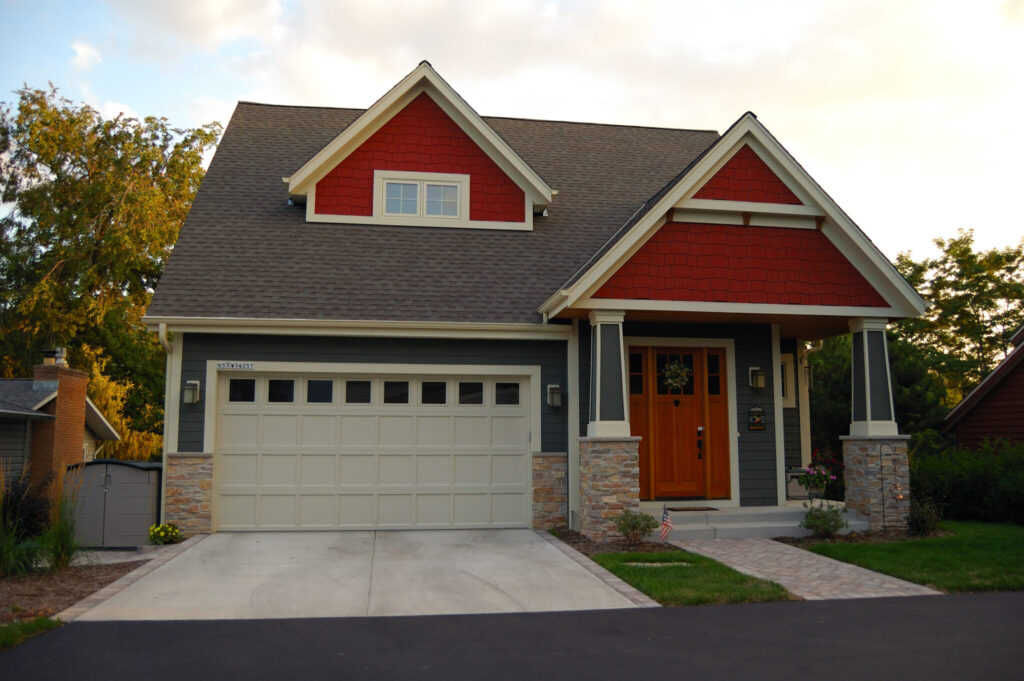
Older homes closer to downtown and around Main Street often still run original wood doors on single garages, sometimes converted barns or carriage-style structures where the track and cable setup was never upgraded to modern hardware. Those doors are heavier than a standard steel door of the same size, which puts more strain on the cable and spring system and means a like-for-like cable replacement has to account for that extra weight rather than using a generic residential cable.
Newer construction in the subdivisions off East Main Street and toward Ashland town line tends to run double-wide steel doors on attached two- and three-car garages, almost all with torsion springs mounted on a center bracket above the door. These see higher daily cycle counts from multiple drivers, and the cable wear we find here is usually tied to a roller or hinge that went bad first and threw extra load onto one side of the door before the cable itself gave out.
What it costs
Cable repair cost depends on more than just the cable itself, and we would rather explain that upfront than quote a number that does not hold once we see the door.
What it costs
A straightforward cable replacement on a standard single or double door, done alongside a spring and drum check, typically runs {PRICE_LOW} to {PRICE_HIGH}. Cost moves with door weight, whether both cables need replacing, whether the drums or bottom brackets also need parts, and whether track alignment needs correcting at the same time. We give you the number before any work starts, not after.
How fast we can get there
Hopkinton is about 12.4 miles from our base in Bellingham, a drive we make regularly for service calls in this part of MetroWest.
Got Questions?
Common questions
Why did my garage door cable snap with no warning?
Cables usually fail from gradual fraying against the drum groove or a bottom bracket that has worn rough edges. The break looks sudden because the last strands give way all at once, but the wear behind it builds for months.
Can I drive on a door with a broken cable if I only need it open once?
No. A door with a broken cable is unsupported on one side and can drop further or jump the track if forced. Leave it in its current position and call for a repair rather than operating it.
Do both cables need replacing if only one broke?
Often yes. Both cables carry equal load and age at the same rate, so if one has failed from wear the other is usually close behind. We check both before deciding.
Is this a torsion spring problem or an extension spring problem?
It can be either. Torsion spring systems use cables that wind onto a drum above the door; extension spring systems use cables that run along the track to the spring itself. We identify which system your Hopkinton home has before quoting the repair.
Will my opener need adjusting after the cable is fixed?
Usually yes. Once the door is rehung and balanced, we reset the opener's travel limits and force settings, then test the safety reversal to make sure the door responds correctly if it meets resistance while closing.
How fast we can get there
We do not promise a fixed arrival window on this page, since that depends on the day’s schedule and what else is already booked. What we can tell you is that Hopkinton is a town we cover routinely, not an edge case, and we will give you an honest window when you call rather than a vague estimate.
Call AB Garage Door
If your door is sagging, stuck, or came down hard, leave it where it is and do not try to force it with the opener. Call AB Garage Door and describe what you heard and what the door is doing now. That tells us what to bring before we arrive.
Request a Free Quote
You can also send us a description of the problem and a photo of the door if you can get one safely, and we will follow up with a quote and a time that works for your schedule. For a technical look at how cable gauge relates to spring cycle life, see [EXTERNAL LINK: DASMA technical data sheet on garage door spring and cable specifications, for homeowners who want the engineering detail].