- Services
- Garage Doors
- Service Areas
Attleboro, MA
Bellingham, MA
Canton, MA
Framingham, MA
Franklin, MA
Franklin, MA
Mansfield, MA
Milford, MA
Natick, MA
North Attleboro, MA
Uxbridge, MA
Walpole, MA
Woonsocket, RI
Ashland, MA
Ashland, MA
Blackstone, MA
Cumberland, RI
Dover, MA
Foxborough, MA
Holliston, MA
Hopkinton, MA
Medfield, MA
Medway, MA
Mendon, MA
Westwood, MA
Sharon, MA
- About
- Contact
- Emergency Repair
Garage Door Opener Repair in Sharon, MA
Your opener’s lights are blinking, the motor hums but the door doesn’t move, or it starts closing and jerks back up every time. Something in the drive system or the safety circuit has had enough, and you’re standing in the driveway trying to decide if you can still get the car out before work.
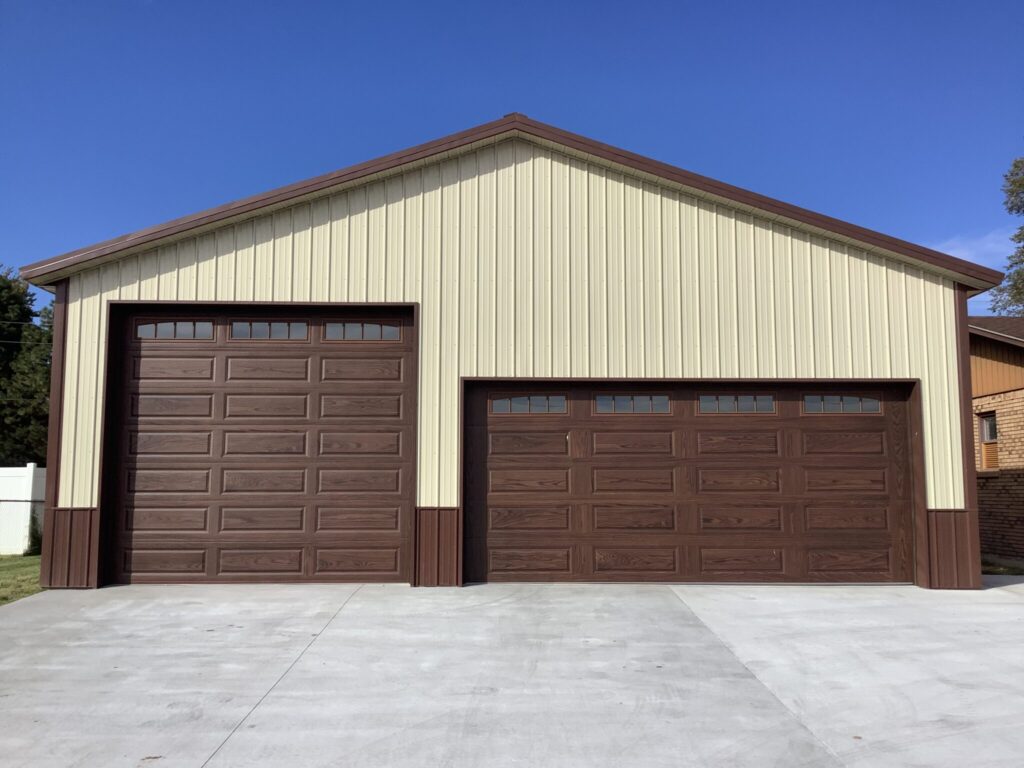
Most of Sharon’s housing stock sits on quarter-acre to one-acre lots with attached two-car garages, which means the opener is doing real work every day, not sitting idle. When one fails here, it’s usually because something mechanical downstream of it (the door itself) has been fighting the motor for months before the motor finally gave up.
Garage Door Opener Repair in Sharon
An opener rarely fails on its own. The motor, the drive (chain, belt, or screw), the trolley, and the logic board are built to move a door that’s properly balanced and running on clean tracks. When the door is heavy on one side, or a cable has started to fray, the opener absorbs that extra load every cycle. Eventually the gear set strips, the drive belt skips, or the circuit board trips a fault code trying to protect the motor from burning out.
We see a handful of recurring failures on service calls in this area: stripped plastic drive gears on older chain-drive units, worn trolley carriages that let the chain slap against the rail, failed capacitors on circuit boards after a power surge, and safety sensors knocked out of alignment by a bike or a snowblower parked too close to the track. Each of those has a specific fix. Sometimes it’s the opener head itself that needs replacing, sometimes it’s one part feeding it a bad signal. We tell you which before we start work, not after.
If the real problem turns out to be a broken torsion spring, we’ll explain what happened and what the repair involves, but we won’t have you touch it. A wound torsion spring holds enough stored energy to break bones, and that repair is ours to do, not yours.
What we look at
What we look at
Before we touch the opener itself, we check the door it’s attached to. An opener fighting a door that isn’t moving correctly will fail again within months even if we replace every part in the head unit.
Door balance and spring system
We disconnect the opener and move the door by hand. A properly balanced door stays put at any height. If it drops or shoots up, the torsion or extension springs are carrying the wrong weight for the door, and that’s the opener’s real enemy. We’ll also check the spring’s cycle rating against how old it is and how it’s been used.
Cable and drum condition
The cables that run from the bottom brackets up to the drums take the full weight of the door at the moment the springs let go of it. We look for fraying at the drum, rust at the bottom fitting, and any sign the cable has jumped the drum groove, which throws the whole door off level and strains the opener’s drive.
Track and roller alignment
Bent track or worn rollers make the door bind partway through its travel. The opener doesn’t know the difference between a heavy door and a stuck one, so it either stalls, reverses unexpectedly, or strips a gear trying to force it through. We check the tracks for plumb and the rollers for flat spots or missing bearings.
Opener force, limits, and safety reversal
Every opener has a force setting and travel limits that tell it how hard to push and where to stop. Set wrong, the door either doesn’t close fully or slams down with too much force. We test the safety reversal with a piece of wood on the floor: if the door doesn’t bounce back the instant it touches it, that’s not working correctly and needs to be fixed before the opener goes back into daily use, not left for later.
Homes in Sharon
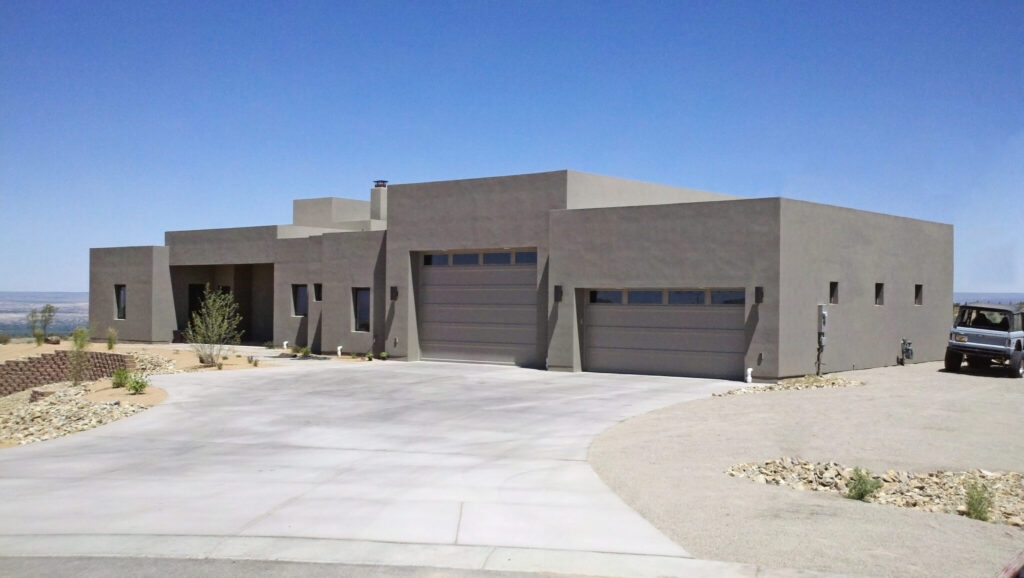
A lot of the housing around Lake Massapoag and the streets off South Main went up from the 1960s through the 1980s, with the standard attached two-car garage and a single 16-foot door, or occasionally two 8-foot doors side by side. Those openers are often original chain-drive units from a prior renovation, now well past the point where parts are easy to source, which is often why we’re replacing the head rather than repairing it.
Closer to the center and on some of the older roads toward Canton, you’ll still find detached garages built for a single car, some with older wood doors that were never designed around a modern opener’s force settings. Those need the spring and hardware checked carefully before a new opener goes on, because an opener matched to a heavier or unevenly worn wood door will fail again quickly if the door side of the equation isn’t sorted first.
What it costs
We carry openers and common replacement parts on the truck, so if the diagnosis points to a straightforward part swap, it often gets done in the same visit.
What it costs
A straightforward repair, like a new logic board, a sensor realignment, or a drive gear replacement, generally runs toward the {PRICE_LOW} end. A full opener replacement, or a repair that turns up a spring or cable problem underneath it, moves the job toward {PRICE_HIGH}. What changes the number is whether the door itself needs work alongside the opener, what drive type you’re replacing it with (chain, belt, or screw), and whether we need a part that isn’t standard stock. We give you the number before we start, not as a surprise on the invoice.
Got Questions?
Common questions
My opener runs but the door won't move. What's wrong?
Usually the trolley has disconnected from the drive carriage, or a drive gear inside the motor housing has stripped. Both are common on chain-drive openers that have been running for years without the door itself being checked for balance.
Why does my garage door reverse right before it closes?
That's the safety reversal system doing its job, or misfiring. It's triggered by the photo-eye sensors near the floor, the force setting being too sensitive, or the door catching slightly on a track that's out of alignment. We test each possibility rather than guessing.
Can I just replace the opener without touching the door?
If the door is balanced and the springs, cables, and tracks are in good shape, yes. If the door is heavy on one side or the cables are worn, a new opener will just fail the same way the old one did, often faster.
Is it safe to keep using the door if the safety sensors aren't working?
No. If the door doesn't reverse off an obstruction, don't run it on the opener until it's fixed. Use manual operation only, by pulling the release cord, until a tech has restored the safety reversal.
Do you work on older wood garage doors in Sharon?
Yes. Older wood doors are heavier and wear unevenly, so matching them to a modern opener usually means checking the spring and hardware first. We'll tell you if the door needs attention before we install anything new.
How fast we can get there
Sharon is about 10.4 miles from our shop in Bellingham, a straightforward run down Route 140 and 1A. We schedule Sharon calls alongside work in Foxborough, Norwood, and Walpole, so getting a tech to you doesn’t mean waiting on a special trip. Call and we’ll give you an honest window for the day, not a vague promise.
Request a Free Quote
Not an emergency yet, just a motor that’s slower or louder than it used to be? We’ll come out, run the same diagnostic checks, and give you a written quote for the repair or replacement before any work starts. Reach us at 508-794-7439 or through the contact form to set up a time.
Schedule Garage Door Opener Service
If your opener has stopped responding, is reversing when it shouldn’t, or is making a grinding or clicking noise it didn’t make last month, get it looked at before it fails completely and leaves the door stuck wherever it is. Call 508-794-7439 and describe what you’re seeing, and we’ll tell you honestly whether it sounds like a quick fix or something more.