
- Services
- Garage Doors
- Service Areas
Attleboro, MA
Bellingham, MA
Canton, MA
Framingham, MA
Franklin, MA
Franklin, MA
Mansfield, MA
Milford, MA
Natick, MA
North Attleboro, MA
Uxbridge, MA
Walpole, MA
Woonsocket, RI
Ashland, MA
Ashland, MA
Blackstone, MA
Cumberland, RI
Dover, MA
Foxborough, MA
Holliston, MA
Hopkinton, MA
Medfield, MA
Medway, MA
Mendon, MA
Westwood, MA
Sharon, MA
- About
- Contact
- Emergency Repair
Garage Door Spring Repair in Mendon, MA
If your door went up with a bang and now sits crooked, or it won’t lift past a foot off the slab, a spring has let go. On the bigger detached garages out past Hastings Street and the horse-farm lots toward Millville, that’s often a double door with two torsion springs, and one dead spring can make the whole system fight itself.
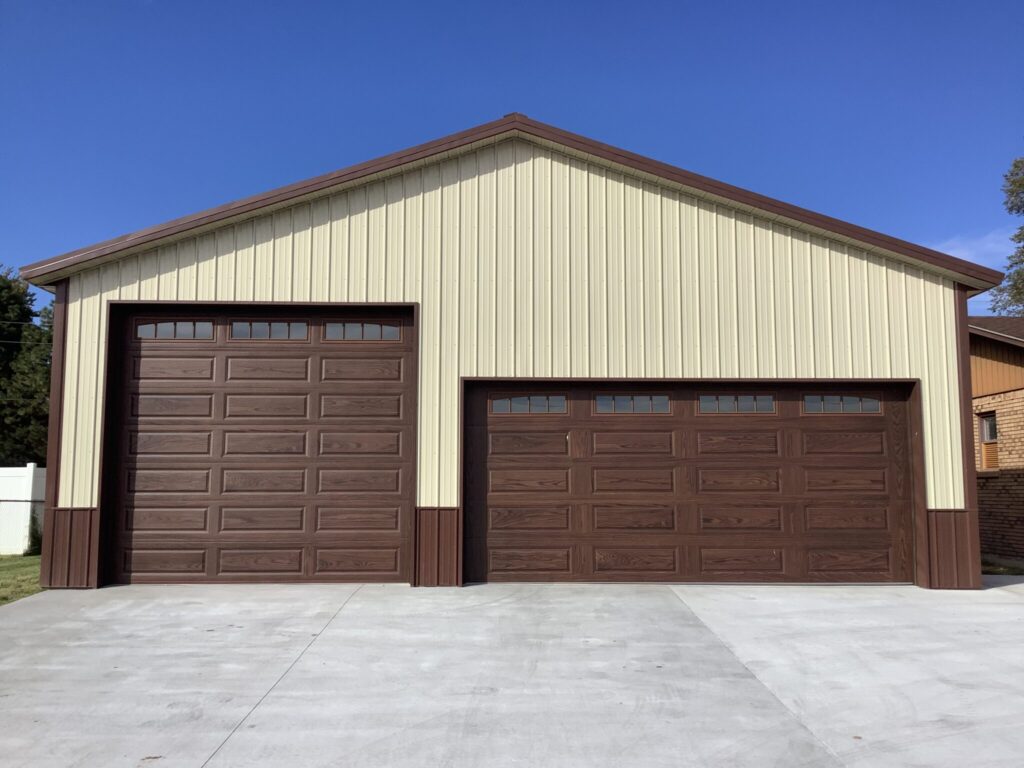
We get calls from Mendon residents whose car is trapped half in, half out of the garage, opener straining and clicking, door refusing to seat. That’s a spring problem almost every time, and it is not something to force past with the opener or pry at by hand.
Garage Door Spring Repair in Mendon
Two spring types do this work. A torsion spring sits on a shaft above the door, wound tight, and unwinds through cable drums on each end to lift the door evenly. An extension spring runs along the horizontal tracks and stretches instead of twisting. Torsion setups are more common on newer and heavier doors because they handle the weight more evenly and last longer under daily cycling.
When a torsion spring breaks, you’ll usually hear it as a loud crack, sometimes mistaken for a gunshot or a dropped beam. The door then feels dramatically heavier because the spring was doing most of the lifting work, not the opener. The opener motor isn’t built to carry that load alone, and if you keep running it against a dead spring you risk burning out the motor or stripping the gears.
Repair means replacing the spring or springs, matched to your door’s weight and the drum size on your shaft, then resetting the cable tension so the drums wind evenly on both sides. This is high-tension work. The spring is wound under enough force to cause serious injury if it’s released in an uncontrolled way, which is exactly why this isn’t a job to attempt with a borrowed winding bar and a video. We do it with the right tools, the right spring rating for your door, and we check the whole lift system while we’re in there.
What we look at
What we look at
A spring swap done properly isn’t just unbolting the old one and hanging a new one. We go through the system because a spring rarely fails in isolation.
Door balance and movement
With the opener disconnected, a correctly balanced door should hold still at any height under its own spring tension. If it drops on its own or shoots upward, the spring rate is wrong for the door’s weight, or the other spring on a two-spring system is already weak. We check balance before and after any spring work.
Spring type and cycle rating
Springs are rated by cycle count, how many open-close cycles they’re built to handle before fatigue sets in. A builder-grade spring on a door that gets used several times a day wears out faster than a higher cycle-rated one. We match the replacement to your actual usage, not just whatever fits the shaft.
Cable and drum condition
The cables connect the bottom brackets to the drums at each end of the torsion shaft. A broken spring often lets a door drop hard enough to fray a cable or knock a drum out of position. We check both before we call the job done, because a bad cable under new spring tension will fail again fast.
Tracks, opener settings, and safety reversal
We check the vertical and horizontal tracks for bends or gaps at the brackets, since a door that was dropping unevenly before the spring fully broke can knock a roller out of true. We also reset the opener’s travel limits and force settings once the new spring is in, because the force needed to lift the door changes the moment spring tension is corrected. Last, we run the safety reversal test, lowering the door onto a block to confirm it reverses on contact rather than continuing to close. That test is standard on every spring job we do, not an upsell.
Homes in Mendon
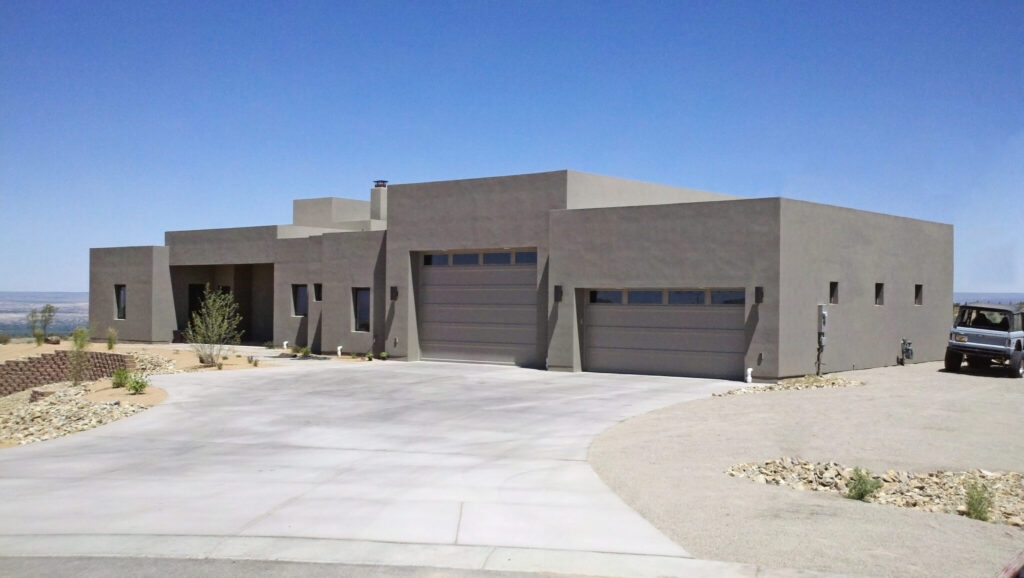
Mendon is mostly large-lot, low-density housing, colonials and capes on acreage, a fair number of newer custom builds along Hastings Street, Providence Street, and the roads toward the Charles River. Garages tend to be attached two- or three-car setups sized for full-size trucks and SUVs, and we see plenty of 16-foot double doors rather than two single bays, which means a single torsion shaft under real load.
There’s also an older stock of farmhouses and converted barns scattered through town where the garage was added later or is a detached outbuilding. On those we sometimes still find older wood doors or early steel doors running on extension springs rather than torsion, which changes both the failure pattern and the parts we carry out to the job.
What it costs
Whatever the door, the diagnosis starts the same way: confirm it’s the spring, not a cable, track, or opener fault wearing the same symptoms.
What it costs
Spring repair pricing runs between roughly {PRICE_LOW} and {PRICE_HIGH}. Where you land in that range depends on whether it’s one spring or a matched pair, the spring’s cycle rating and size, whether a cable or drum also needs replacing, and the door’s weight. A single-car door with one spring costs less to put right than a heavy double door running two torsion springs plus worn cables. We’ll tell you what we find before any work starts, not after.
Got Questions?
Common questions
Can I use my garage door opener while a spring is broken?
No. The opener isn't built to lift the full weight of the door alone, and running it against a dead spring can burn out the motor or strip the gears. Leave the door where it is and call for a repair.
Is it safe to try to fix a broken torsion spring myself?
No. A torsion spring is wound under extreme tension and can cause serious injury if released improperly. This is a job for a trained technician with the right tools, not a DIY repair.
How do I know if it's the spring and not the opener?
If the door feels suddenly very heavy, won't stay up on its own, or you heard a loud crack before it stopped working, that points to a broken spring rather than an opener fault. We confirm which it is when we inspect the door.
Do you replace one spring or both at the same time?
On a two-spring system, if one has failed the other is usually close behind since they've done the same number of cycles. We'll tell you the condition of both and let you decide, but replacing in pairs is often the more sensible long-term choice.
My garage is a converted barn with an old wood door. Can you still fix the spring?
Yes. Older wood doors and early steel doors in Mendon often run on extension springs rather than torsion springs, and we carry parts for both setups.
How fast we can get there
Mendon is about 9.1 miles from our base in Bellingham, a straightforward run out Hartford Avenue or Route 140. We don’t quote a fixed arrival window here because it depends on where our trucks are that day, but it’s a short trip from us to you, not a cross-region haul.
Request a Free Quote
If the door is usable enough to wait a day, we’re happy to give you a quote over the phone based on your door size and spring setup. Call AB Garage Door and we’ll get a technician out to Mendon to replace the spring properly and check the rest of the lift system while we’re there.
Schedule Garage Door Spring Service
Call us and describe what you’re seeing and hearing, the bang, the dead weight, the door stuck at an angle. That tells us roughly what parts to bring so the truck is equipped before it leaves Bellingham.