
- Services
- Garage Doors
- Service Areas
Attleboro, MA
Bellingham, MA
Canton, MA
Framingham, MA
Franklin, MA
Franklin, MA
Mansfield, MA
Milford, MA
Natick, MA
North Attleboro, MA
Uxbridge, MA
Walpole, MA
Woonsocket, RI
Ashland, MA
Ashland, MA
Blackstone, MA
Cumberland, RI
Dover, MA
Foxborough, MA
Holliston, MA
Hopkinton, MA
Medfield, MA
Medway, MA
Mendon, MA
Westwood, MA
Sharon, MA
- About
- Contact
- Emergency Repair
Garage Door Cable Repair in Sharon, MA
A cable that lets go usually does it at the worst moment, when the door is halfway down or the car is halfway out of the driveway. You hear a bang or a snap, the door drops unevenly, maybe stops cocked to one side on its track, and the opener either grinds against the load or stops moving altogether.
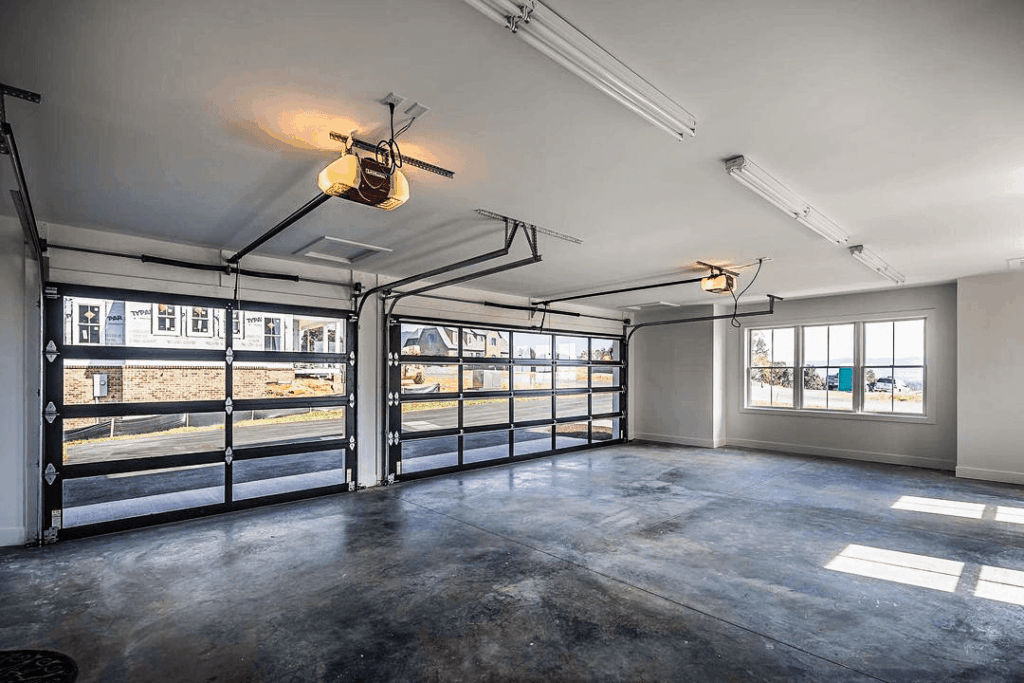
That sudden drop is not a weak point in the door. It is the cable doing exactly what cables do when the strand finally gives out after years of winding and unwinding around the drum. The fix is mechanical, specific, and not something to improvise with the door still loaded on the springs.
Garage Door Cable Repair in Sharon
Most residential doors run on a torsion spring system, with a cable running from the bottom bracket up to a drum mounted on the torsion shaft above the door. The spring supplies the lifting force, the cable transfers that force to the bottom of the door, and the drum winds the cable in and out as the door travels. When a cable frays, kinks, or snaps, it is almost always because the strand has worn thin at the drum groove, the bottom bracket has rusted and chewed through the wire, or the cable has jumped the drum and is winding unevenly.
Some older or heavier doors in Sharon are on extension spring systems instead, with the springs running along the horizontal tracks and a separate set of cables and pulleys. Either way, the cable is under load from the spring the moment the door is anywhere off the floor. We do not hand a homeowner a wrench and tell them to swap it. The spring has to be safely unloaded with winding bars or locked off before the old cable comes off the drum or bottom bracket, and the new cable has to be seated, tensioned, and the drums re-set so the door travels level on both sides. We also check the bottom bracket itself, since a bent or corroded bracket is often what destroyed the cable in the first place.
What we look at
What we look at
Before we touch a cable, we look at the whole lifting system. A cable rarely fails on its own, and replacing it without checking the rest of the setup just buys you a second call later.
Door balance and movement
We disconnect the opener and move the door by hand to see where it holds position and where it wants to fall or shoot up. A door that is out of balance puts uneven load on both cables, which is often why one side failed before the other.
Spring type and cycle rating
Torsion and extension springs carry different failure patterns and different cable setups. We check the wire size and the spring’s cycle rating against the door’s weight and daily use, since an undersized spring shortens cable life along with its own.
Cable and drum condition
We look at both cables, not just the one that broke, along with the drums and bottom brackets. If one cable has frayed from age or rust, the other is usually close behind, and we will say so rather than replace one side and leave the clock running on the other.
Track alignment, opener settings, and safety reversal
A cable failure can knock the door off its tracks or leave it binding on one side. We check track alignment, reset the opener’s travel limits and force setting so it is not straining against a door that no longer balances correctly, and run the safety reversal test to confirm the door stops and backs off when it meets resistance.
Homes in Sharon
None of this takes long on a single-car residential door, but skipping it is how a cable repair turns into a second service call within the year.
Homes in Sharon
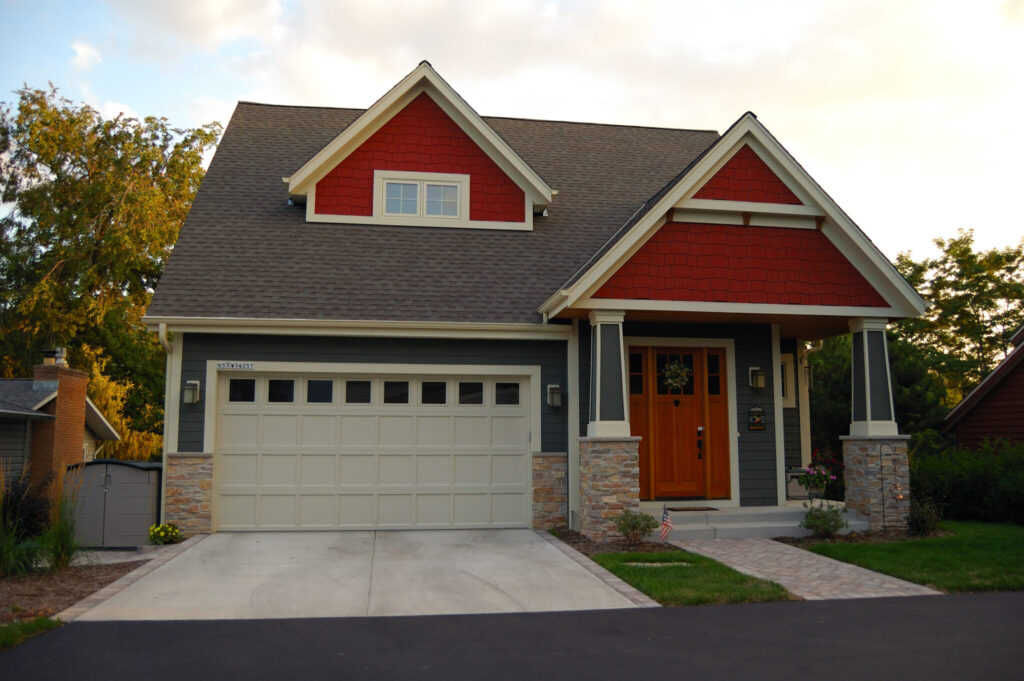
Sharon has a wide spread of building eras, from older homes near the center and around Lake Massapoag to the ranch and colonial construction that filled in through the mid-century and the larger homes built out on the newer lots toward the Foxboro and Stoughton lines. That range shows up in the garage doors we see. Older attached single-car garages on smaller lots often still run original or long-replaced wood doors with simple extension spring setups, while the larger colonials and newer builds tend toward double-wide two-car doors on torsion systems carrying more weight across a wider span.
Detached garages are still common on the older lots near the lake and the town center, which changes the picture, since a detached garage door sees less daily traffic but is more exposed to temperature swings and sometimes less maintenance over the years. On the newer streets, attached two-car garages with insulated steel doors and torsion springs rated for daily cycling are the norm. Either way, the cable and drum setup needs to match the door’s actual weight and width, not a generic size, which is something we check rather than assume.
What it costs
A straightforward single-cable replacement on a residential door typically falls between {PRICE_LOW} and {PRICE_HIGH}. What moves the number is whether both cables need replacing, whether the drums or bottom brackets are damaged and need parts beyond the cable itself, whether the door is a heavier two-car torsion setup versus a lighter single door, and whether the spring itself turns out to be at the end of its life once we are in there. We will give you the actual number before any work starts, not after.
We do not quote a cable job sight unseen over the phone beyond a rough range, because a bent bracket or a seized drum changes the job.
How fast we can get there
Sharon is about 10.4 miles from our base in Bellingham, a run we make regularly for service in this area. We will give you a realistic window when you call rather than a blanket same-day promise, since it depends on what else is already on the schedule that day.
Got Questions?
Common questions
My garage door cable snapped in Sharon. Is it safe to leave the door where it is?
If the door is partway open and stopped, leave it alone and keep people and vehicles clear of it. The remaining cable and the spring are still under load, and the door can shift or drop further without warning. Call us rather than trying to force it up or down.
Can I just replace the cable myself?
We would advise against it. The cable is attached to a torsion or extension spring system that stays under heavy tension even with the door down, and releasing or resetting that tension incorrectly is a known cause of serious injury. This is a job for someone with the right winding bars and experience.
Why did only one cable break instead of both?
Cables usually wear at different rates depending on which side takes more load, how the drums are seated, and whether one bottom bracket has corroded more than the other. We check both sides when we repair one, since the second cable is often close to the same failure point.
Will my garage door opener need adjusting after a cable repair?
Often yes. Once the cable is replaced and the door is rebalanced, the opener's travel limits and force setting may need to be reset so it is not straining against the door. We check this as part of the repair, along with the safety reversal test.
Do you work on older wood garage doors in Sharon, not just newer steel ones?
Yes. We still see original wood doors on some of the older attached and detached garages around Sharon, and the cable and spring principles are the same, though the hardware and door weight can differ from a newer insulated steel door.
Call AB Garage Door
If a cable has snapped and the door is sitting crooked or won’t move, stop trying to force it and call us. Trying to lift or lower a door with a broken cable risks the other cable or the spring letting go too. AB Garage Door is licensed and insured in Massachusetts and New Hampshire and handles cable repair and replacement across Sharon and the surrounding towns out of our Bellingham shop. Call 508-794-7439 to get a technician out to look at it.
Request a Free Quote
Not sure if it is the cable, the spring, or both? Tell us what you saw and heard when it happened and we can usually narrow it down before a technician even arrives. Reach us at 508-794-7439 or request a quote online and we will get back to you with next steps.