- Services
- Garage Doors
- Service Areas
Attleboro, MA
Bellingham, MA
Canton, MA
Framingham, MA
Franklin, MA
Franklin, MA
Mansfield, MA
Milford, MA
Natick, MA
North Attleboro, MA
Uxbridge, MA
Walpole, MA
Woonsocket, RI
Ashland, MA
Ashland, MA
Blackstone, MA
Cumberland, RI
Dover, MA
Foxborough, MA
Holliston, MA
Hopkinton, MA
Medfield, MA
Medway, MA
Mendon, MA
Westwood, MA
Sharon, MA
- About
- Contact
- Emergency Repair
Garage Door Opener Repair in Medfield, MA
The opener light blinks, the motor hums, and the door does not move. Or it closes halfway and runs back up on its own. If that just happened in your driveway on Pleasant Street or out near Hospital Hill, you are not dealing with a dead remote battery. Something downstream of the motor has changed, and the opener is reacting to it correctly.
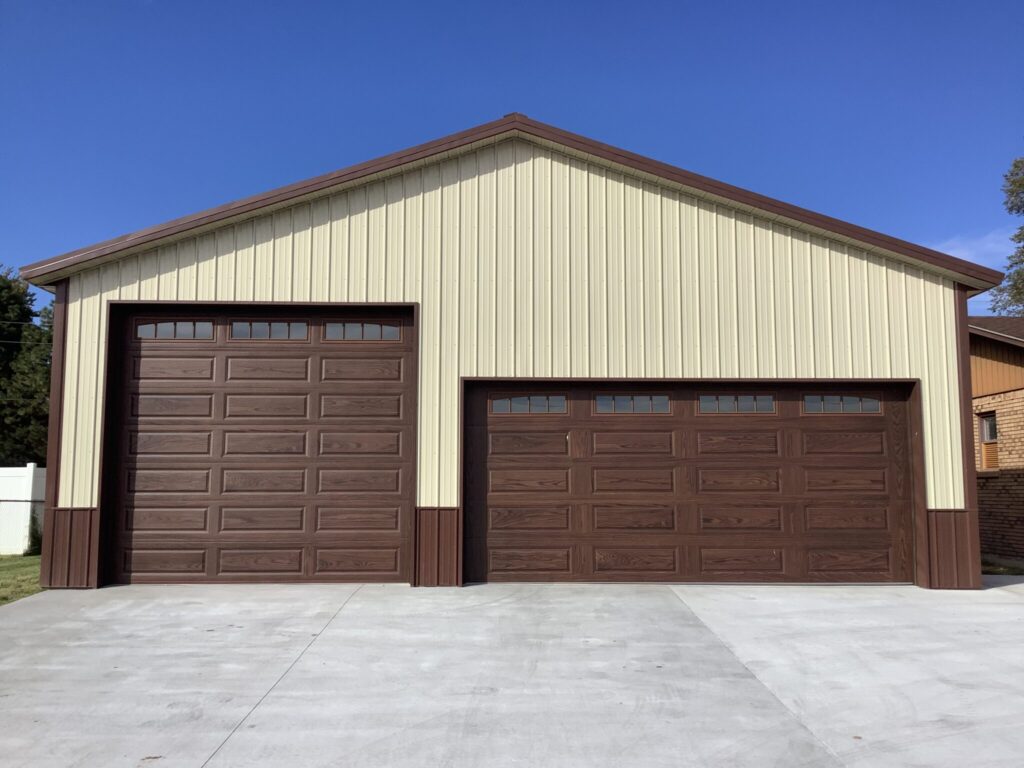
Openers rarely fail on their own. They stall, reverse, or grind because the door they are lifting has gotten heavier to move. Our job is to find out why before we touch the motor head, because replacing a circuit board on a door that is fighting a bad spring just breaks the next board too.
Garage Door Opener Repair in Medfield
Most calls split into a handful of real faults. The drive gear inside the motor head has stripped, which sounds like the unit running with no movement at the door. The belt or chain has slipped off its track, or stretched to the point the travel limits no longer line up. The logic board has lost its limit or force settings after a power surge, so the door slams down instead of easing shut, or the safety reversal kicks the door back up the instant it touches the floor. Capacitors fail on older chain-drive units and the motor hums without turning. Carriage and trolley assemblies crack where the arm connects to the door, so the opener runs its full cycle while the door sits still.
We also get called out for openers that work fine but trip constantly, which is almost always a photo-eye sensor knocked out of alignment or a door that is heavier on one side than the opener is built to carry. We repair the motor head, replace the drive gear, belt, chain or sprocket, reset force and travel limits to the door’s actual weight, and re-align or replace the safety sensors. If the opener itself is beyond repair, we fit a new unit sized to your door and set it up properly rather than on factory defaults.
What we look at
What we look at
Before we condemn an opener, we check the door it is lifting. An opener fighting an unbalanced door will fail again within months, no matter what part we replace.
Door balance and spring type
We disconnect the opener and lift the door by hand. A properly balanced door stays put at waist height and moves with one hand. If it drops or shoots up, the torsion or extension springs are no longer matched to the door’s weight. We identify which spring type is fitted, check the wire gauge against the door size, and note the cycle rating so you know roughly how much life is left in it. We do not touch a wound torsion spring ourselves on a quote visit. That’s a separate, controlled repair with the right bars and clamps, not a five-minute fix.
Cable and drum condition
Lift cables run through the drums at the top of the torsion shaft and take the full load when the springs let go or lose tension. We check for fraying, flat spots, and uneven winding on the drum, which usually means the door has been running crooked. A cable that looks fine but is seated wrong on the drum will jump the track the next time the door cycles.
Track and roller alignment
Rollers that have worn down or gone out of round make the door bind partway through its travel, and the opener reads that resistance as an obstruction and reverses. We check the vertical and horizontal track sections for gaps, bends, and loose brackets, since a track pulled even a few millimetres out of parallel puts a steady drag on the opener motor every single cycle.
Opener force, limits, and safety reversal
Every opener has a close-force setting and up and down travel limits. Set too high, the door won’t stop when it meets an obstruction, which fails the safety reversal test required on every residential opener. Set too low, the door reverses on nothing more than cold morning stiffness in the tracks. We test the reversal with a solid object under the door’s path and adjust force and limits until the door stops and reverses within the required clearance, not just whatever the previous installer left it at.
Homes in Medfield
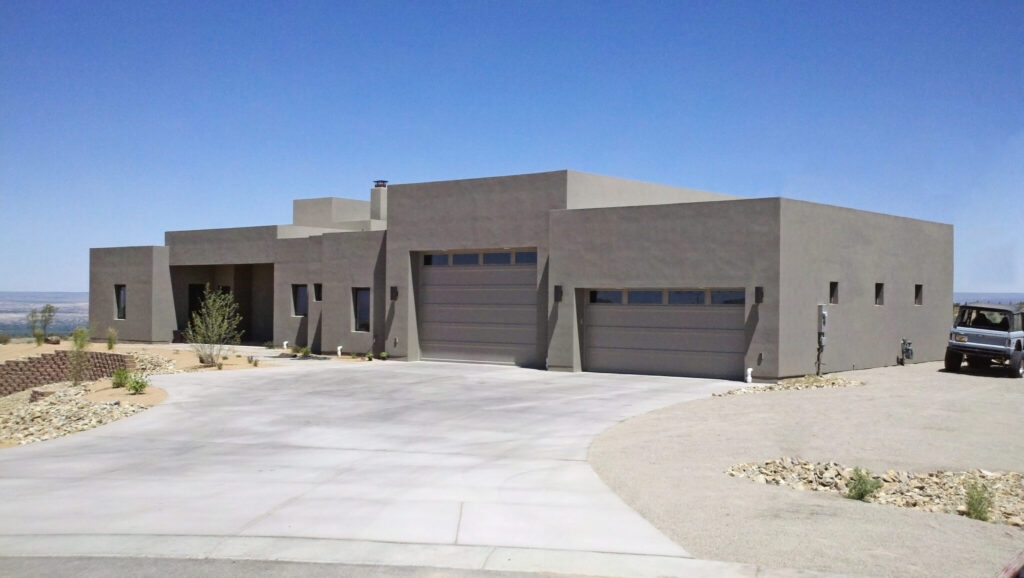
A lot of Medfield’s housing stock sits on larger lots with detached garages built well after the main house, which is common on the older colonials and capes around the town center and near Baxter Park. Those detached structures often carry a single, older 8-by-7 door with a chain-drive opener that has been in place for a couple of decades, mounted on a door built lighter than what you’d see on newer construction.
Out toward the newer subdivisions and larger lots near the Noon Hill and Rocky Narrows conservation areas, you find two-car attached garages with double-wide doors, often steel or insulated composite, paired with belt-drive openers for quieter operation close to living space. Those wider doors put more load on the spring system and the opener’s force setting, so an opener that worked fine on a single door elsewhere can be undersized or poorly set up here. Either way, the opener has to match the door it was given, not a generic default.
What it costs
We carry common replacement parts for the major residential opener brands, including drive gears, circuit boards, belts, chains, and photo-eye sensors, so most repairs finish in a single visit without a second trip for parts.
What it costs
A straightforward fix, such as a drive gear, a logic board, or a sensor realignment, generally falls toward the lower end, around {PRICE_LOW}. A full opener replacement, or a repair that turns up a worn-out spring system alongside the opener fault, runs toward {PRICE_HIGH}. What moves the number is whether the door itself needs work at the same time, the opener’s horsepower and drive type, and whether parts for an older or discontinued model are easy to source. We quote the job on site before any work starts, not over the phone from a guess.
Got Questions?
Common questions
My Medfield garage won't respond to the remote at all. Is that the opener or the door?
Check if the wall button inside the garage also does nothing. If both the remote and the wall button fail to move the door, it's usually the opener's logic board or power supply. If the wall button works but the remote doesn't, it's a remote or antenna issue, which is a much smaller fix.
The door reverses right before it touches the floor. What's wrong?
That's almost always the close-force or down-limit setting, or a photo-eye sensor that's slightly misaligned and reading a false obstruction. We test both on every opener call before adjusting anything.
Can I just replace the opener motor and leave the old chain and rail?
Only if the existing rail and chain are in good condition and match the new unit's mounting. We check wear on the old hardware first rather than assuming it's fine, since a worn chain will strip a new drive gear quickly.
How do I know if it's the opener or the springs that failed?
If the door is heavy to lift by hand with the opener disconnected, the springs are the problem and the opener is just reacting to that extra load. If the door lifts easily by hand but the opener won't move it, the fault is in the opener itself.
Do you work on older chain-drive openers, not just newer belt-drive models?
Yes. A lot of Medfield's detached garages still run older chain-drive units, and we carry parts for them. We'll tell you honestly if a unit is old enough that replacement makes more sense than another repair.
How fast we can get there
Medfield is about 7.8 miles from our base in Bellingham, a short run down Route 109. We don’t quote a fixed response time here, because the honest answer depends on where our trucks are that day, but it’s a short trip for us and not one we treat as a special case.
Request a Free Quote
Call 508-794-7439 to book a diagnostic visit, or send details through our contact form and we’ll call you back to confirm a time. We’re licensed and insured in MA and NH (license numbers {LICENSE_MA} and {LICENSE_NH}).
Schedule Garage Door Opener Service
Tell us the opener brand if you know it, whether the door moves at all, and whether it’s reversing, stalling, or silent, and we’ll bring the likely parts with us. Most Medfield opener calls are diagnosed and repaired in one visit.