
- Services
- Garage Doors
- Service Areas
Attleboro, MA
Bellingham, MA
Canton, MA
Framingham, MA
Franklin, MA
Franklin, MA
Mansfield, MA
Milford, MA
Natick, MA
North Attleboro, MA
Uxbridge, MA
Walpole, MA
Woonsocket, RI
Ashland, MA
Ashland, MA
Blackstone, MA
Cumberland, RI
Dover, MA
Foxborough, MA
Holliston, MA
Hopkinton, MA
Medfield, MA
Medway, MA
Mendon, MA
Westwood, MA
Sharon, MA
- About
- Contact
- Emergency Repair
Garage Door Opener Repair in Mendon, MA
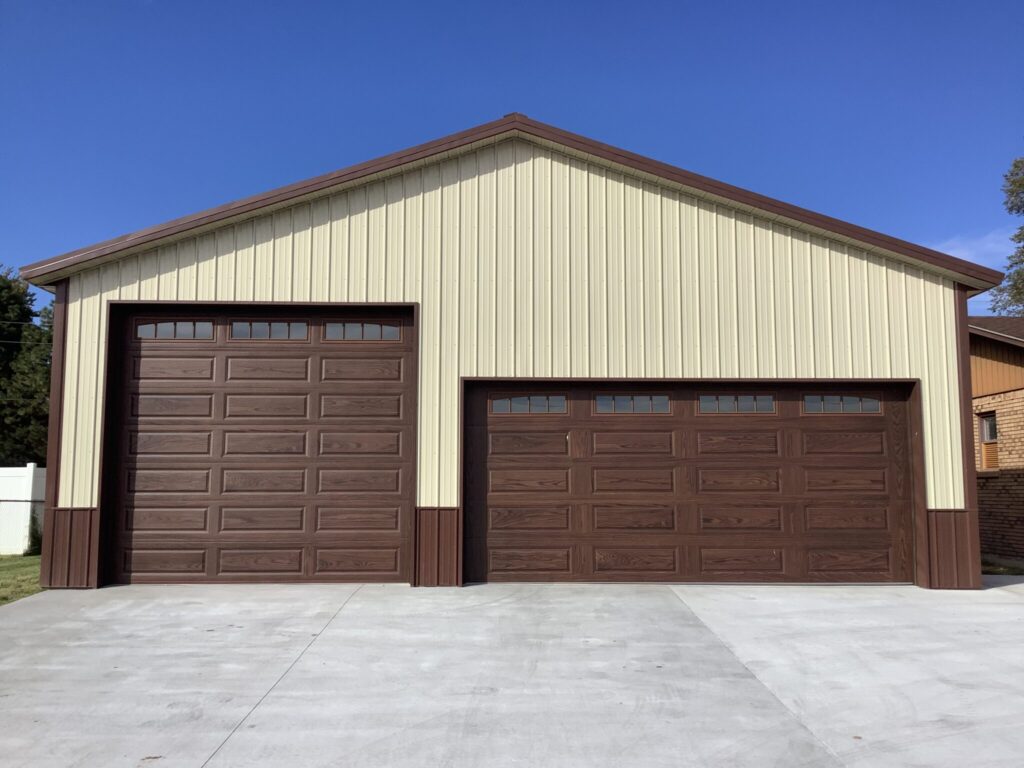
A chain-drive opener grinding away on a horse barn conversion or a detached garage back by the pool is a different repair than a belt-drive unit mounted on a two-car attached garage off Hastings Street. Mendon’s mix of larger rural lots and newer colonial subdivisions means we see both, often on the same street, and the fix depends on which one you’ve got.
If your opener is clicking, humming, reversing halfway up, or simply gone silent, the motor itself is rarely the actual problem. More often something downstream of the motor – the door’s balance, the springs, the track – is forcing the opener to work against resistance it was never built to fight. We sort out which it is before we touch a wrench.
Garage Door Opener Repair in Mendon
Most opener calls we get in Mendon break down into a short list. The logic board has failed and the unit won’t respond to the remote or the wall button at all. The drive gear inside the motor housing has stripped, which sounds like a motor running with no movement at the door. The travel limits have drifted so the door reverses before it seats, or won’t close all the way. Or the safety reversal sensors – the two small eyes mounted near the floor on each track – are misaligned, dirty, or wired loose, which is a legitimate safety fault, not a nuisance.
We also replace worn drive components: belts that have stretched and started slipping, chains that have jumped a sprocket tooth, and trolleys that have cracked where they connect to the carriage. If the opener is older than the door’s current spring system, we check whether it’s even rated for the weight it’s lifting, because an undersized opener burns out trying to compensate for a door that’s no longer balanced correctly.
What we look at
Door balance and spring system
We disconnect the opener and move the door by hand. A properly balanced door stays put at any point in its travel. If it drops on its own or shoots upward, the torsion or extension springs are no longer carrying their share of the weight, and the opener has been straining against that imbalance every cycle. We identify whether you’re running a torsion system mounted on a shaft above the door or extension springs alongside the tracks, check the wind and cycle rating against the door’s weight, and explain what a spring replacement would involve. We don’t let homeowners handle torsion spring work themselves. The wire is under enough stored tension to cause serious injury, and it’s a job for someone who does it daily.
Cable and drum condition
The lifting cables run off drums at each end of the torsion shaft, and a frayed strand or a cable that’s jumped its drum groove is one of the more common reasons a door comes down crooked or an opener strains on one side more than the other. We check cable wear at the bottom bracket, where most fraying starts, and confirm both drums are seated and turning evenly. A door lifting unevenly puts twisting load on the opener arm that it was never designed to absorb.
Track and roller alignment
Tracks that have shifted, loosened at their wall brackets, or bowed from an old impact force the door to bind as it travels. Rollers that have worn flat or cracked add friction the opener has to fight on every cycle, which is a common reason a chain or belt drive starts to sound strained even when the motor itself is fine. We check plumb on both vertical tracks, confirm the horizontal sections pitch correctly toward the rear hangers, and look at roller wear, especially on doors that have been in service long enough to be on their original hardware.
Opener force, limits, and safety reversal
Every opener has a force setting controlling how hard it pushes or pulls, and limit settings telling it exactly where the door should stop in each direction. Set wrong, the door reverses off the floor, stops short of the floor, or slams down with more force than it should. We test and reset both, then run the safety reversal test required on every opener: placing a solid object in the door’s path to confirm it reverses immediately rather than continuing to close. If it doesn’t reverse correctly, we don’t leave until it does.
Homes in Mendon
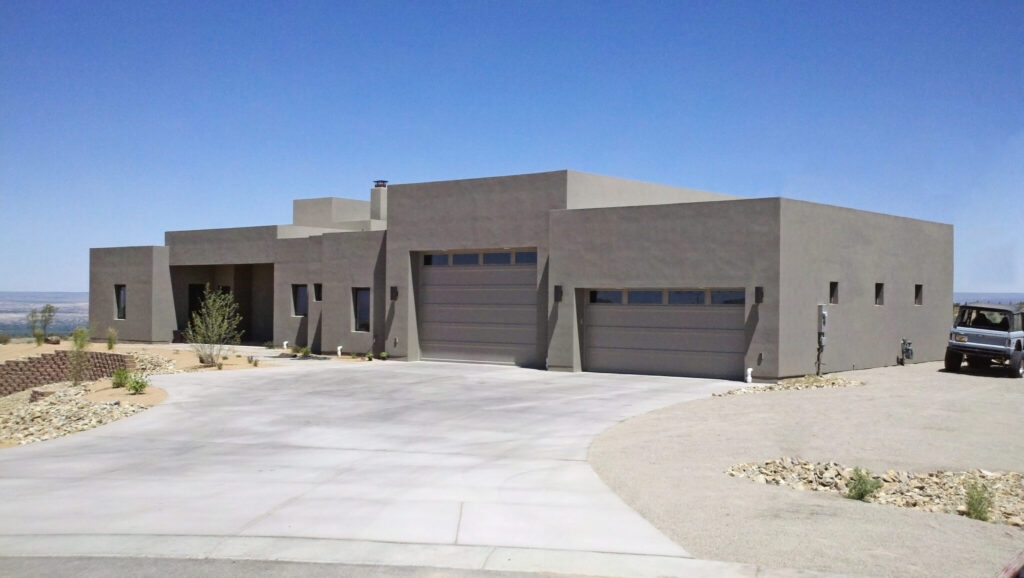
Mendon still has a fair number of properties on larger lots with detached garages and barns set back from the house, a holdover from its more rural layout, alongside newer construction in the subdivisions off routes 16 and 140 where attached two-car garages with single wide doors are standard. On the older rural properties we still find wood carriage-style doors running on hardware that’s decades old, paired with openers that have been upgraded once or twice over the years without the track or springs ever being reassessed to match.
On the newer colonial and farmhouse-style builds, doors tend to be steel sectional units, often insulated, running wider spans across a single opening rather than two narrow doors. Those wider doors put more demand on the spring system and the opener’s force rating than a standard single door, which is something we check carefully when a wider opener is reversing or struggling to fully close.
Whatever the layout, the diagnosis works the same way: balance first, then cables and drums, then tracks, then the opener’s own settings. Skipping straight to replacing the motor without checking the rest just means the new one fails the same way.
What it costs
Opener repairs in Mendon typically run between {PRICE_LOW} and {PRICE_HIGH}. A logic board swap or sensor realignment sits toward the lower end. A full opener replacement, or a repair that turns up a spring or cable problem alongside the opener fault, moves toward the higher end. We give you the actual number once we’ve looked at the door, not before.
How fast we can get there
Mendon is about 9.1 miles from our base in Bellingham, a straightforward run down Route 140. We schedule Mendon opener calls as close to the same day as the route allows. Call and we’ll tell you honestly what’s available today.
Got Questions?
Common questions
Why does my opener reverse before the door touches the floor?
Usually the down-limit setting has drifted, or the safety sensors near the floor are misaligned or picking up a reflection. It can also happen if the door is slightly out of balance and the opener's force setting trips the reversal early. We check limits, sensors, and balance together rather than guessing at one.
The opener runs but the door doesn't move. What's wrong?
This is almost always a stripped drive gear inside the motor housing, a broken belt or chain, or a disconnected trolley. It can also mean the door itself has jammed on a track issue and the opener is simply overpowered by the resistance. We check the drive train and the door separately to find which it is.
Can I just replace the opener myself to save money?
You can, but if the underlying cause is a balance, cable, or track problem, the new opener will fail the same way within months. We always check the door mechanics before recommending a straight opener swap.
Is it safe to keep using a door whose opener doesn't reverse on contact?
No. The safety reversal is there to stop the door on a person, pet, or object. If a test shows it isn't reversing, stop using the opener until it's repaired.
Do you work on both older wood doors and newer insulated steel doors in Mendon?
Yes. We service both, though the opener force and spring setup often need adjusting differently between a heavier older wood door and a wider insulated steel one.
Request a Free Quote
Not an emergency yet, just a door that’s started acting up. We’ll come out, diagnose it properly, and give you a written quote before any work starts. For the manufacturer’s own safety reversal standard, see [EXTERNAL LINK: UL 325 safety standard for residential garage door operators].
Schedule Garage Door Opener Service
If your opener is unresponsive, reversing, or making a sound it hasn’t made before, call 508-794-7439. Tell us what you’re hearing or seeing and we’ll bring the right parts on the first visit where we can.