- Services
- Garage Doors
- Service Areas
Attleboro, MA
Bellingham, MA
Canton, MA
Framingham, MA
Franklin, MA
Franklin, MA
Mansfield, MA
Milford, MA
Natick, MA
North Attleboro, MA
Uxbridge, MA
Walpole, MA
Woonsocket, RI
Ashland, MA
Ashland, MA
Blackstone, MA
Cumberland, RI
Dover, MA
Foxborough, MA
Holliston, MA
Hopkinton, MA
Medfield, MA
Medway, MA
Mendon, MA
Westwood, MA
Sharon, MA
- About
- Contact
- Emergency Repair
Garage Door Opener Repair in Westwood, MA
The opener clicks, the light blinks, and the door does not move. Or it closes halfway and reverses for no reason you can see. In Westwood, where a lot of garages sit at the end of long driveways off University Avenue or tucked behind colonial-style homes near the town common, that half-open door usually means the car is stuck inside or out until someone looks at the actual hardware, not just the remote.
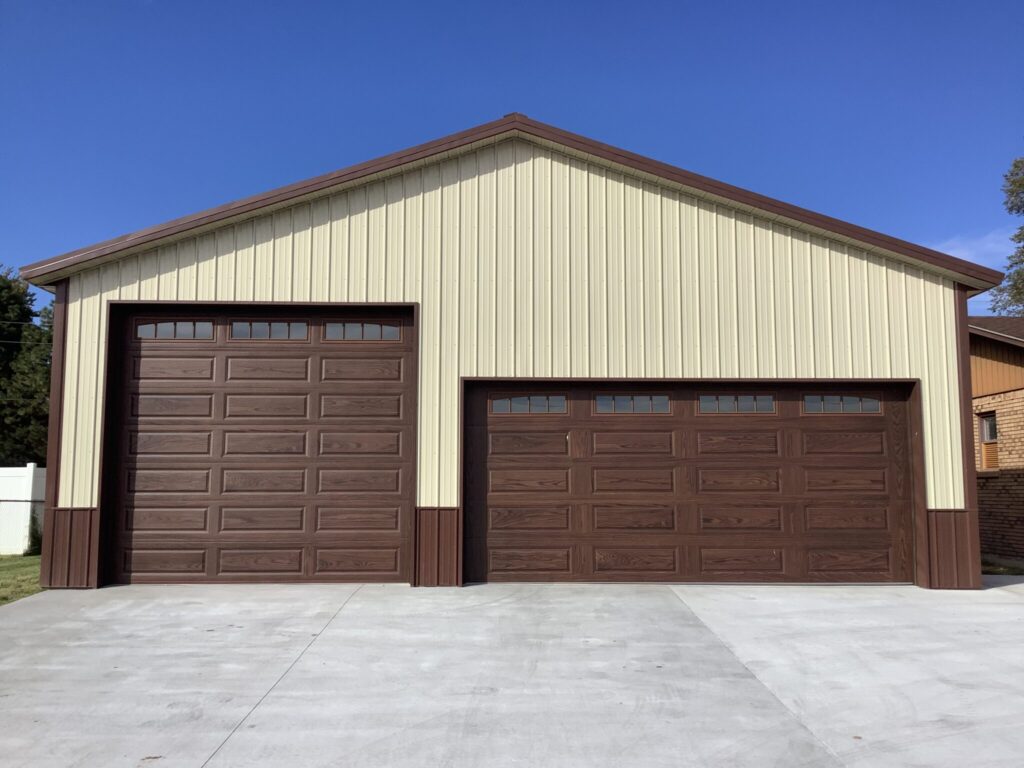
An opener rarely fails on its own. Most of the calls we get from Westwood trace back to something mechanical pulling against the motor until it gives up: a weak spring making the unit lift a door that is heavier than it should be, a frayed cable throwing the door off level, or limit settings that have drifted so the gears strip every time it runs. We look at the whole system, not just the box on the ceiling.
Garage Door Opener Repair in Westwood
When we say opener repair, we mean the drive unit itself – chain, belt, or screw drive – along with the logic board, the safety sensors at the bottom of the track, and the limit and force settings that tell the motor how far to travel and how hard to push. A door that grinds, reverses randomly, or runs the motor without moving is usually telling you one of these systems is out of spec, not that the whole unit needs replacing.
Common repairs include swapping a stripped drive gear, replacing a worn trolley or carriage that rides the rail, re-aiming or replacing a photo-eye sensor that’s gone out of alignment, and resetting travel limits after a spring or cable repair changes how the door moves. If the circuit board has taken a power surge or the motor has burned out, we’ll tell you plainly whether a repair makes sense or whether a new opener is the better spend – we don’t push a replacement just because it’s a bigger ticket.
We never ask a homeowner to touch a torsion spring. It’s wound under enough force to break bones if it lets go wrong, and that’s a job for us, not a Saturday project.
What we look at
Door balance and spring system
We disconnect the opener and move the door by hand. A properly balanced door stays put at any height on its own. If it drops or shoots up, the torsion or extension springs are carrying the wrong weight for that door, and the opener has been fighting that imbalance every time it runs – which is often what burned it out in the first place. We also check the spring’s cycle rating against how old it is, since a spring near the end of its rated cycles is a matter of when, not if.
Cable and drum condition
The lifting cables run from the bottom brackets up to the drums at each end of the torsion shaft. We check for fraying, for cable sitting unevenly on the drum, and for drums that have slipped on the shaft. A cable that’s starting to fray can jump the drum under load, and the opener will try to compensate by pulling harder – which is exactly how a trolley or gear gets damaged.
Track and roller alignment
A track that’s bent, pinched, or pulling away from the frame makes the door bind partway through its travel, and the opener reads that resistance as an obstruction. We check the tracks for level and plumb and inspect the rollers for flat spots or wear that make the door hop or stick as it moves.
Opener force, limits, and safety reversal
Every opener has a force setting, controlling how hard the motor pushes before it decides something is in the way, and a limit setting, controlling exactly where the door should stop at top and bottom. We test both, and we run the safety reversal test required by federal standard – the door must stop and reverse when it meets a 2×4 laid flat on the floor. If it doesn’t reverse, or it closes with force well past what’s needed, that’s a repair we treat as urgent, not optional.
Homes in Westwood
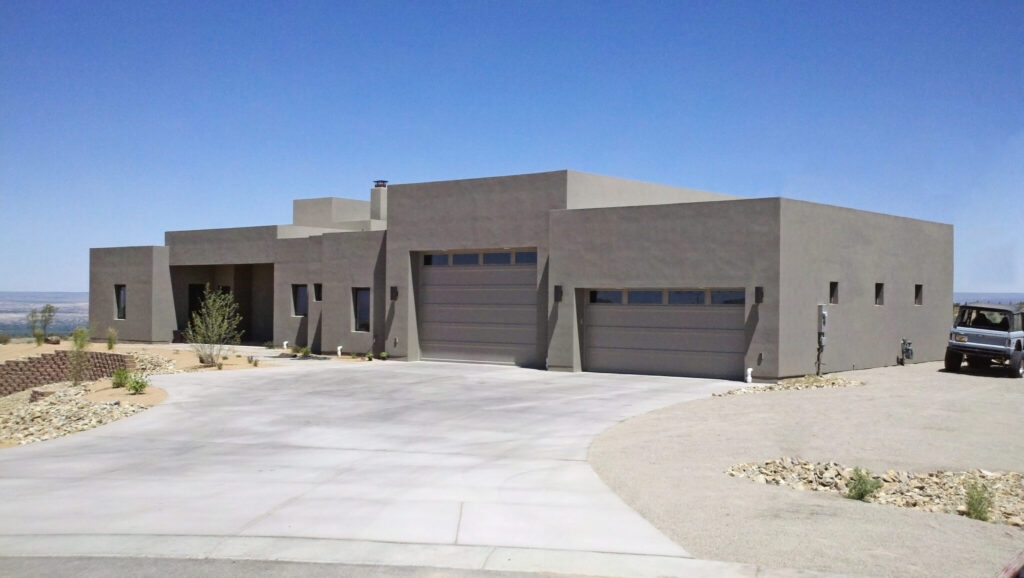
Westwood’s housing runs from older colonials near University Avenue and the town center to the larger homes built from the 1960s onward around Hartford and High Streets, plus newer construction in developments toward the Islington and Xaverian Brothers side of town. The older colonial-style homes often still carry single-car or narrow double garages, sometimes detached from the house, with openers that have been upgraded once or twice over the decades even though the door itself is original.
Newer homes, particularly the larger builds from the past twenty-five years, tend to run wider double garages with heavier insulated steel doors – which means a bigger spring system and an opener rated for more weight. When that opener struggles, it’s often because the springs were sized for the original lighter door and never adjusted when the door was replaced. We check for that mismatch on every call.
Whatever the layout, the diagnosis works the same way: we find the mechanical cause before we touch the opener settings, because resetting force or limits on a door that’s out of balance just masks the problem until it fails again.
What it costs
Opener repair in Westwood generally runs between {PRICE_LOW} and {PRICE_HIGH}. Where you land in that range depends on what’s actually wrong: a sensor realignment or limit reset is quick and inexpensive, while a stripped gear, a burned-out motor, or a repair that also needs new cables or a spring adjustment on the side costs more in parts and time. We quote the job once we’ve looked at it, not before.
How fast we can get there
Westwood sits about 11.7 miles from our base in Bellingham, a straightforward run down Route 109 or via 495 and 95 depending on the time of day. We don’t quote a guaranteed arrival window here, but we schedule Westwood calls on the same routes we run through Norfolk County regularly, so it’s not a special trip.
Got Questions?
Common questions
Why does my garage door opener in Westwood run but the door doesn't move?
This usually means the trolley has disconnected from the carriage, the drive gear has stripped inside the motor housing, or the belt/chain has slipped off its track. It's rarely the motor itself that's at fault.
My opener reverses the door before it fully closes. What's wrong?
This is either the safety reversal sensors picking up an obstruction (even dust or misalignment can trigger it), the close-force setting being too sensitive, or the door being out of balance and binding partway down. We test all three before adjusting anything.
Can I just replace the opener instead of repairing it?
Sometimes that's the right call, especially with an older unit, but if the real problem is a bad spring, worn cable, or misaligned track, a new opener will fail the same way the old one did. We check the mechanical system first.
Do older homes in Westwood need a different kind of opener repair?
Not a different repair exactly, but older single-car and detached garages often have lighter original doors paired with openers that have been swapped out over the years. We check that the opener's force and horsepower rating actually match the door it's lifting.
Is it safe to reset the limit settings myself?
Resetting limits is usually fine if the rest of the system is sound, but if the door is out of balance or the springs are worn, changing the limits just hides the real problem until the opener fails again. Worth having it checked rather than guessing.
Request a Free Quote
Call 508-794-7439 to get a straight answer on what’s wrong with your opener and what it will take to fix it. We serve Westwood and the surrounding Norfolk County towns out of our Bellingham shop, and we’re licensed and insured in Massachusetts and New Hampshire.
Schedule Garage Door Opener Service
If your opener has stopped responding, is reversing on its own, or is making a grinding or straining noise it didn’t used to make, get it looked at before it fails completely with the door open or closed in a position that traps your car. Call us and describe what the door is doing – that alone often tells us what to bring.